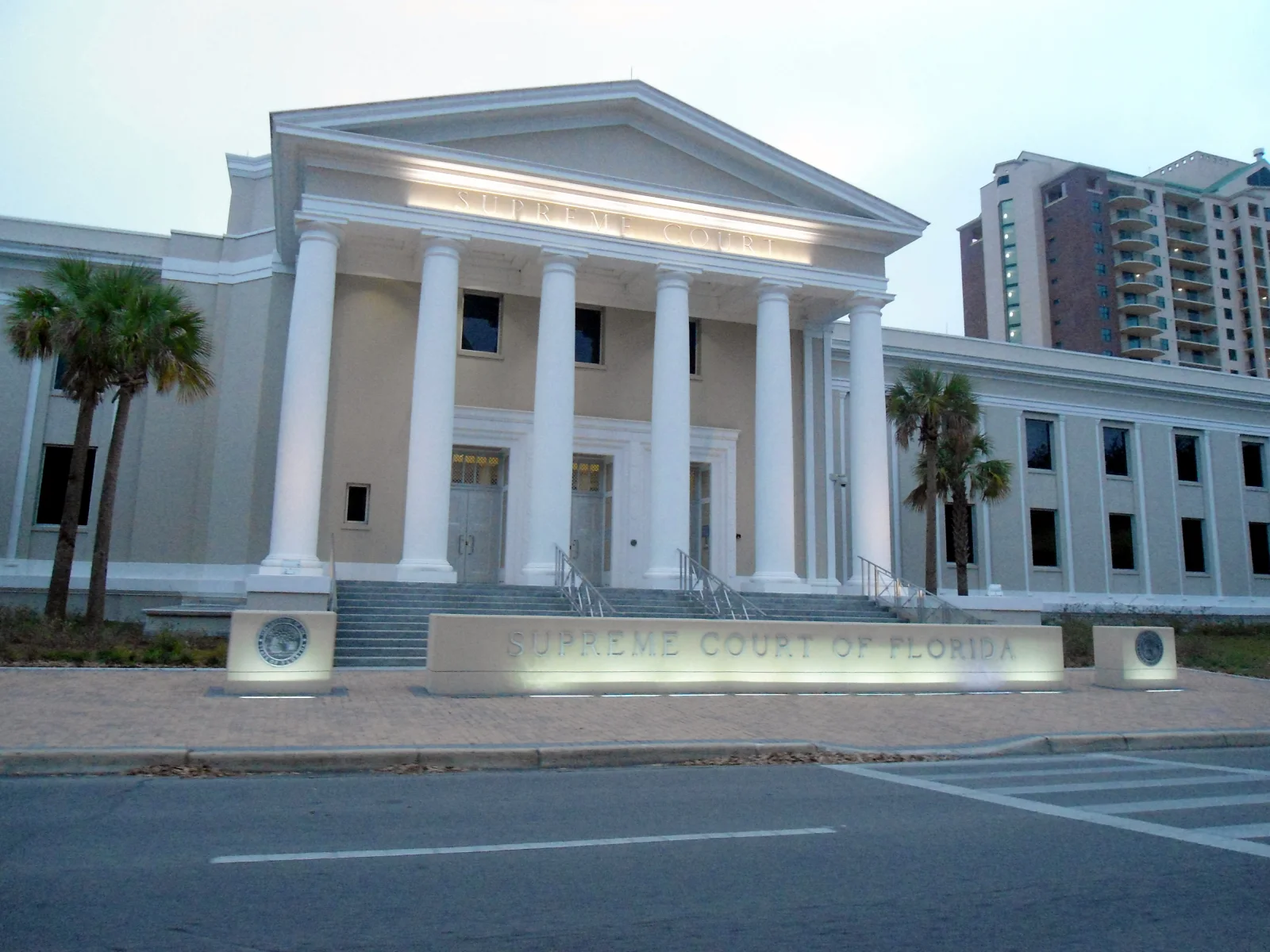
County controls the filing desk
Which Florida probate court handles an estate?
A Florida resident’s probate is normally filed in the circuit court for the county where your loved one was domiciled at death. A nonresident who owned Florida property may require ancillary administration in a Florida county connected to that property.
| Situation | Starting point | Fact to verify |
|---|---|---|
| Florida resident | County of domicile at death | Residence, intent, identification, tax, and other domicile records. |
| Recent move | County that remained the legal domicile | Whether the move changed domicile or was temporary. |
| Nonresident with Florida property | County tied to the Florida property | Title, situs, foreign probate, and ancillary requirements. |
| Unclear residence or multiple properties | Do not select a county from convenience alone | Ask Florida counsel to confirm venue before filing. |
Clerk and judge do different work
What does the Florida probate clerk do and what does the judge decide?
| Need | Clerk | Court or judge |
|---|---|---|
| Open and maintain the case | Receives documents, fees, and the original will and maintains the docket. | Reviews whether the petition supports the requested relief. |
| Copies and records | Provides available records and certified copies under county procedures. | Controls access when a record is confidential or sealed. |
| Orders and authority | Records entered orders and issues certified documents as directed. | Appoints a personal representative, decides petitions, and resolves objections. |
| Hearings and corrections | Processes filed notices and local scheduling materials. | Conducts hearings and requires corrections or additional proof. |
The petition must match the estate
Which Florida probate proceeding should be filed?
Formal administration appoints a personal representative for full administration. Summary administration may be available when the current $150,000 statutory condition is met after the required exclusions, or when more than two years have passed since your loved one died. Disposition without administration is limited to specific personal property and qualifying final expenses. Ancillary administration addresses certain Florida property owned by a nonresident.
A county form packet does not decide eligibility. Use the current statutes, Florida Probate Rules, facts, and local instructions together.
Prepare before uploading
What information does a Florida probate court filing need?
- The correct county, division, case type, and petitioner.
- The original will status and legally sufficient death evidence.
- The proposed personal representative or petitioners and their qualifications.
- Heirs, beneficiaries, spouse, minor children, addresses, and notice facts.
- Probate property, values, ownership, homestead, exempt-property, and creditor information.
- The petition, oaths, consents, waivers, notices, proposed orders, service, and filing payment that apply.
Florida attorneys use the statewide e-filing portal. Self-represented methods depend on the proceeding and county. Confirm what must be electronically filed, mailed, or delivered as an original.
Local instructions still matter
What changes from one Florida probate court to another?
| Item | Statewide foundation | County or circuit detail |
|---|---|---|
| Law and rules | Florida Probate Code and Florida Probate Rules | Administrative orders, checklists, and division procedures. |
| Court charge | State law sets service-charge caps | The clerk publishes the payable total and added services. |
| Filing | Florida e-filing supports attorney submissions | Pro se methods, original-document handling, and office location. |
| Hearings and orders | Due process and probate rules apply statewide | Scheduling, proposed-order submission, and judge-specific procedures. |
| Records | Public-access and confidentiality rules apply | Search platform, copy request, certification, and payment method. |
Estate settlement, done for you
How can Alix help with a Florida probate court case?
Alix manages estate settlement from start to finish with legal support included. A dedicated Estate Settlement Specialist handles the broader process, while a licensed attorney handles legal advice, representation, required filings, hearings, formal accountings, and other work that requires a lawyer.
| Workstream | Who handles it | What that means for you |
|---|---|---|
| Legal work | A licensed attorney | Advice, representation, court filings, notices, hearings, and formal accountings are handled by counsel. |
| Estate operations | Your Alix Estate Settlement Specialist | Asset discovery, document organization, account closures, property, creditors, transfers, tax coordination, records, and beneficiary communication are handled with you. |
| Your decisions | You, with support | You approve decisions that require your authority without running every task and handoff yourself. |
Go to the filing location
Which local Florida probate court guides are available?
| Area | Court guide | Use it for |
|---|---|---|
| Miami-Dade County | Miami-Dade County probate court | Miami probate office, records, routes, and filing preparation. |
| Duval County | Duval County probate court | Jacksonville courthouse and local probate filing. |
| Orange County | Orlando probate court | Orange County courthouse, clerk, and Ninth Circuit details. |
| Hillsborough County | Tampa probate court | Hillsborough clerk and Thirteenth Circuit details. |
| Lee County | Lee County probate court | Fort Myers filing location and Twentieth Circuit details. |
Florida local guidance
Find probate help for a Florida city or county
Common questions
Florida probate court questions
Is there one Florida probate court?
No. Probate is handled by county circuit courts. The county clerk receives filings and maintains the case record.
Which county handles Florida probate?
A resident estate is normally filed where the person was domiciled at death. Nonresident property may require an ancillary case in a Florida county connected to the property.
Can I file Florida probate online?
Florida attorneys use the statewide e-filing portal. Self-represented filing options and original-document procedures depend on the case and county.
How do I find a Florida probate case?
Use the official court-record search for the county clerk handling the case. Search availability and confidential-record access vary by county.
What is the Florida probate court filing fee?
State law sets clerk service-charge caps by proceeding, while the county publishes the current payable total and added copy, certification, recording, or service charges.
Does the clerk tell me which probate form to file?
The clerk can provide procedural information and available forms but cannot choose a legal strategy or give legal advice. The petition must match the estate’s facts and current law.
References
- Florida Courts, Probate
- Florida Probate Rules
- 2026 Florida Statutes, Chapter 733
- 2026 Florida Statutes, Chapter 735
- 2026 Florida Statutes, section 28.2401
This guide provides general information, not legal advice. Court requirements and fees can change. Confirm the current rule and county instructions for the estate.