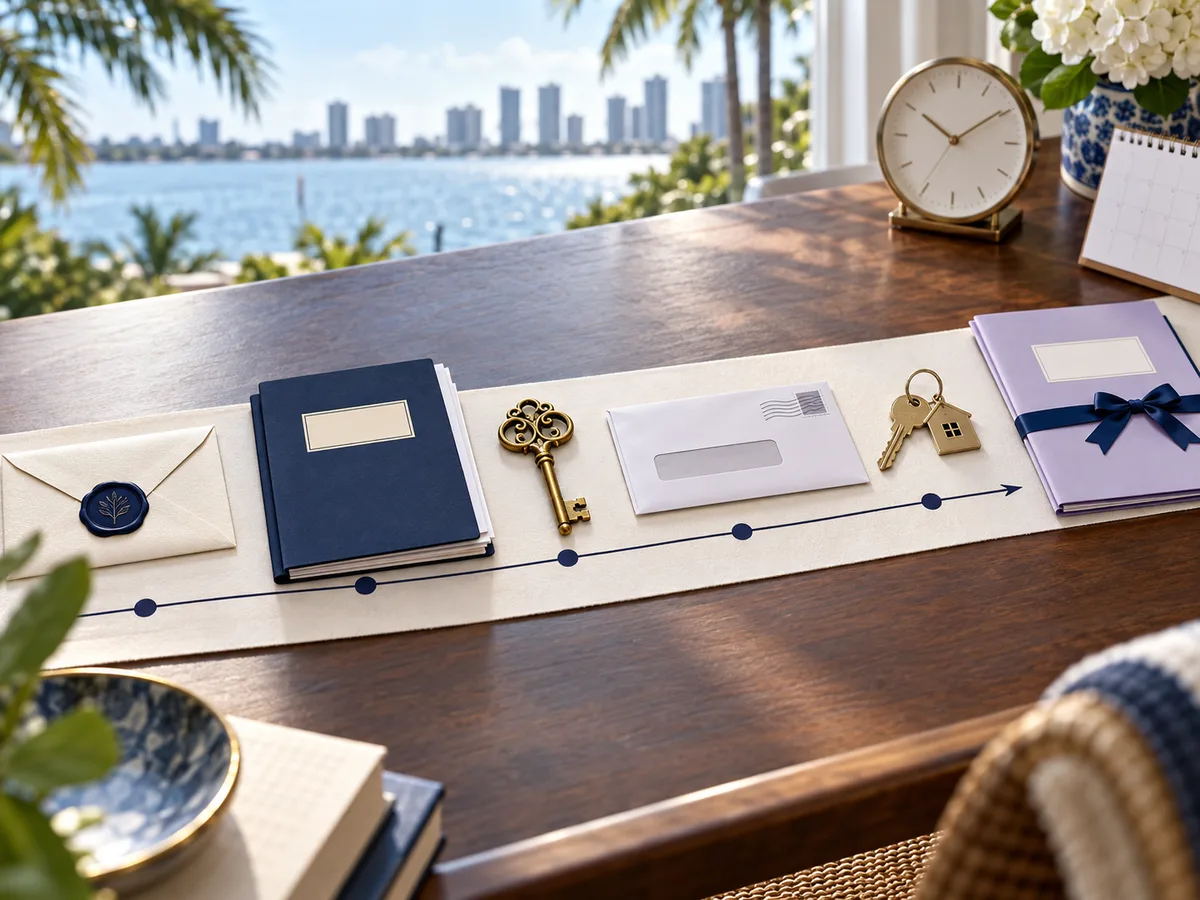
A practical sequence
What are the stages of the Florida probate timeline?
| Stage | Work completed | What controls timing |
|---|---|---|
| Before filing | Deposit the will, confirm venue, collect family and property facts, and select counsel. | Original records, immediate property needs, and who is qualified to serve. |
| Opening | File the petition and obtain the appointment order and Letters of Administration. | Complete documents, court review, bond, and any objections. |
| Creditor period | Publish and serve notice, identify claims, and preserve supporting records. | The statutory claims window and any disputed claim. |
| Inventory and administration | Find and value property, manage accounts, handle sales, tax work, and approved payments. | Asset complexity, appraisals, institutions, property, and cash flow. |
| Closing | Prepare the accounting, distributions, closing petition, and discharge. | Resolved claims, taxes, beneficiary agreement, and court requirements. |
The opening weeks
What should happen before and during the first Florida probate filing?
- Secure property, preserve mail and records, and prevent avoidable fraud or lapse of insurance.
- Locate the original will and deposit it with the proper clerk within 10 days after learning of the death.
- Confirm the county with venue and whether formal, summary, or disposition procedure fits.
- Collect the names and addresses of family members, beneficiaries, and the proposed personal representative.
- Build a preliminary asset and debt list from actual statements, deeds, titles, tax records, and mail.
- Prepare the petition and supporting documents with the attorney when formal administration applies.
A statutory waiting period
How does the Florida creditor period affect timing?
The personal representative publishes notice to creditors and serves creditors who are known or reasonably ascertainable as the law requires. A claim is normally barred unless filed by the later of three months after first publication or 30 days after service on a creditor entitled to service.
A claim filed on time still must be reviewed. The estate may pay it, object, request supporting information, or address priority and cash limits. Contested claims can extend the case beyond the basic window.
Find the bottleneck
What makes probate take longer in Florida?
| Delay | What is happening | What to organize |
|---|---|---|
| Missing or disputed will | The court may need proof, notice, or a separate dispute process. | Originals, copies, witness information, and communications. |
| Hard-to-find property | Accounts, business interests, valuables, or digital property are not yet documented. | Mail, tax returns, statements, devices, titles, and employer records. |
| Real-estate sale | Insurance, maintenance, valuation, title, authority, and closing must align. | Deed, mortgage, insurance, expenses, appraisal, and sale file. |
| Tax work | Final personal and estate income returns require complete records. | Prior returns, income documents, basis records, expenses, and sale statements. |
| Beneficiary conflict | Decisions, accounting, or distribution are disputed. | Written updates, supporting records, proposed resolution, and counsel advice. |
| Court corrections | A filing is incomplete or does not follow the current rule or local process. | Current checklist, signed forms, exhibits, service proof, and proposed order. |
Keep work moving
How can you reduce avoidable Florida probate delays?
- Use one inventory for every account, property item, debt, owner, beneficiary record, value, and next action.
- Confirm county, court route, lawyer, proposed representative, and bond needs before filing.
- Order only the certified copies institutions require and ask whether a scan is accepted first.
- Track publication, service, claim, inventory, tax, property, and court dates in one calendar.
- Reconcile estate-account transactions monthly instead of rebuilding the record at closing.
- Send beneficiaries short factual updates when a milestone, risk, or expected timing changes.
Estate settlement, done for you
How can Alix help with the Florida probate timeline?
Alix manages estate settlement from start to finish with legal support included. A dedicated Estate Settlement Specialist handles the broader process, while a licensed attorney handles legal advice, representation, required filings, hearings, formal accountings, and other work that requires a lawyer.
| Workstream | Who handles it | What that means for you |
|---|---|---|
| Legal work | A licensed attorney | Advice, representation, court filings, notices, hearings, and formal accountings are handled by counsel. |
| Estate operations | Your Alix Estate Settlement Specialist | Asset discovery, document organization, account closures, property, creditors, transfers, tax coordination, records, and beneficiary communication are handled with you. |
| Your decisions | You, with support | You approve decisions that require your authority without running every task and handoff yourself. |
Build a case-specific schedule
What facts should a Florida probate timeline include?
| Question | Why it changes the schedule |
|---|---|
| Which procedure applies? | Formal, summary, and disposition have different work and court steps. |
| Is there a house or business? | Valuation, operation, sale, title, and tax work add dependencies. |
| Are creditor or family issues expected? | Notice, objections, negotiation, and hearings can add time. |
| Which tax returns are required? | Tax information and clearance can affect closing and distribution. |
| Is estate cash available? | Opening costs and property expenses may need a funding plan. |
Florida local guidance
Find probate help for a Florida city or county
Common questions
Florida probate questions about timeline
How long does probate take in Florida?
The Florida Bar says a simple probate administration usually takes five to six months. Property, tax, claims, court, or conflict issues can make it longer.
What is the creditor period in Florida probate?
Claims are normally barred unless filed by the later of three months after first publication or 30 days after required service on the creditor.
How soon must a will be filed in Florida?
The custodian must deposit the original will with the proper clerk within 10 days after receiving information that the person who made it has died.
Can Florida probate close before three months?
Formal administration must satisfy creditor and other legal requirements. The published claims period makes a sub-three-month formal closing unlikely.
Why can a Florida probate case take more than a year?
A property sale, contested claim, litigation, beneficiary conflict, missing records, tax return, insolvency, or repeated court corrections can extend the case.
Does summary administration take less time?
It has fewer administration steps, but there is no guaranteed timeline. Completeness, homestead, creditors, beneficiaries, and court workload still matter.
References
- The Florida Bar, Probate in Florida
- 2026 Florida Statutes, section 733.702
- 2026 Florida Statutes, section 732.901
- 2026 Florida Statutes, Chapter 733
- Florida Probate Rules
This guide provides general information, not legal advice. Court requirements and fees can change. Confirm the current rule and county instructions for the estate.