How to Cancel Credit Cards After a Death
Notify each card issuer, stop new charges, review recurring payments, and ask what documents it requires to close the account. Do not use the card after the account holder dies.
Everyone assumes canceling credit cards after someone dies is straightforward until they try calling the bank without a death certificate, Letters Testamentary, or proof they're authorized to discuss the account.
The representative puts them on hold, transfers them multiple times, and after an hour, nothing gets resolved. Meanwhile, recurring charges keep hitting the card, rewards are being forfeited, and fraudsters are scanning obituaries for opportunities.
The real process takes specific documentation, multiple calls to different departments, and knowledge of which actions you can take before probate opens.
We'll break down exactly what you need, the order in which to handle things, and how to protect the estate from both legitimate creditors and identity thieves targeting the deceased.
Key Takeaways:
- You must notify credit card companies within days of death to stop interest and prevent fraud.
- Using a deceased person's card after death is identity theft, carrying 4-5 years imprisonment.
- Authorized users owe nothing on remaining balances; only co-signers remain liable for debt.
- The estate pays credit card debt from available assets, not from family members' personal funds.
- Alix handles credit card notifications, fraud protection, and all 100+ settlement tasks in one service.
Understanding Your Legal Obligations When the Cardholder Dies
When a cardholder dies, the debt doesn't automatically transfer to family members. If you were an authorized user on the card, you're not liable for the balance. The estate handles that debt using available assets.
Joint account holders face different rules. If you co-signed or opened the account together, you remain fully responsible for the outstanding balance. The card issuer can pursue you for payment regardless of who made the charges.
Community property states add another layer. In Arizona, California, Idaho, Louisiana, Nevada, New Mexico, Texas, Washington, and Wisconsin, surviving spouses may be liable for credit card debt incurred during the marriage, even on accounts they never signed. State law treats debts acquired during marriage as shared obligations.
If the estate lacks sufficient assets to cover the debt, creditors typically write off the remaining balance. Children and relatives won't inherit this debt unless they co-signed the account.
The Penalties for Using a Deceased Person's Credit Card
Using a deceased person's credit or debit card qualifies as identity theft under federal law, carrying a prison sentence of 4 to 5 years. State laws add separate penalties. Texas Penal Code Section 32.31 classifies unauthorized use of a credit card as credit card abuse, which can result in felony charges depending on the amount charged.
Your status as an authorized user or family member doesn't provide legal protection. Authorization terminates at death, making any subsequent purchases illegal, including funeral expenses or estate costs. Card issuers flag accounts after receiving death notifications and investigate suspicious activity.
Gathering Required Documents Before You Call
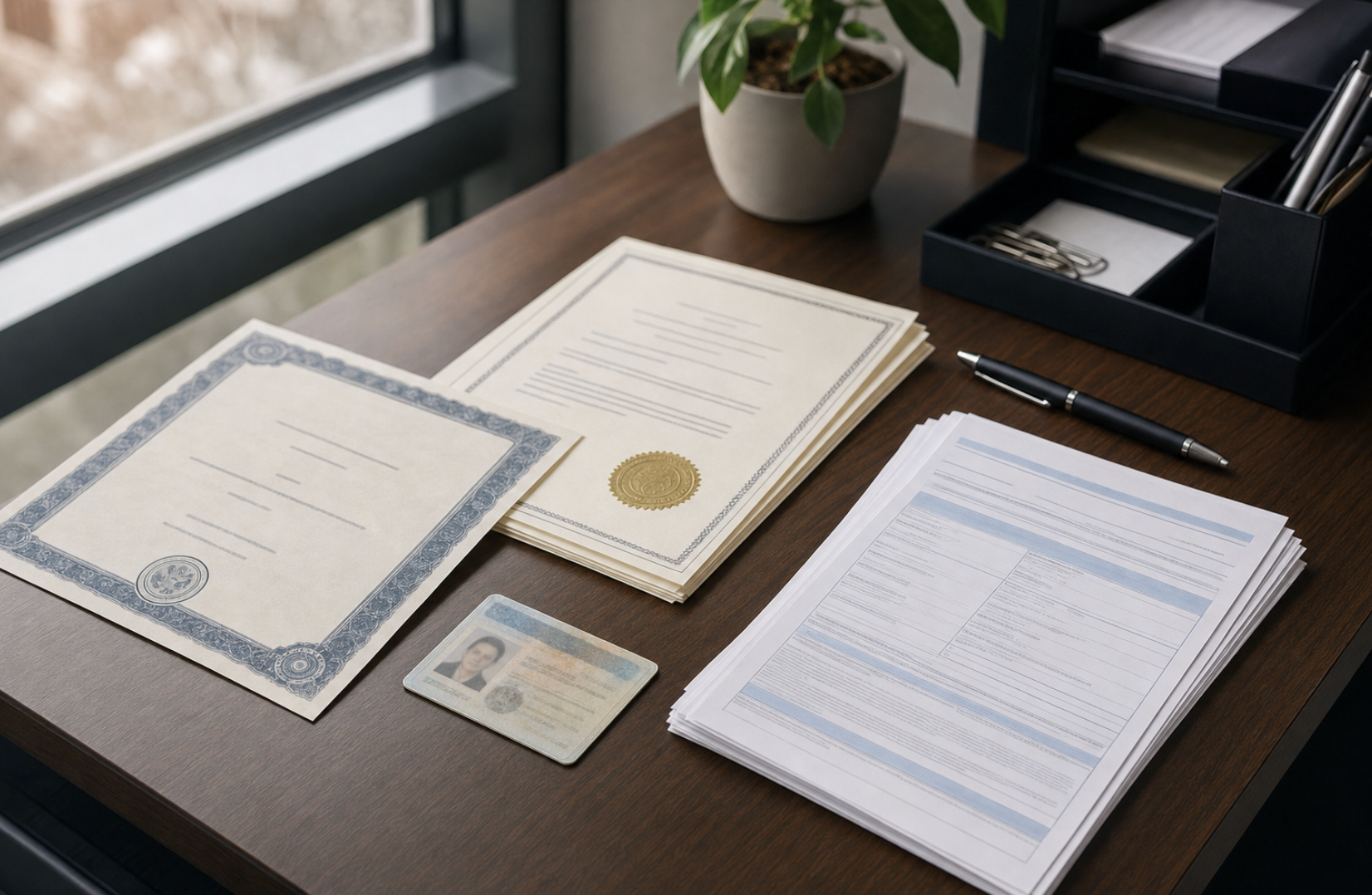
Credit card companies require specific documentation before discussing balances or closing accounts. Calling without these materials creates delays and repeated conversations.
Start with certified copies of the death certificate. Order at least 10 certified copies, since multiple institutions will need originals, not photocopies.
You'll also need:
- The deceased's Social Security number, date of birth, and last known address
- Account numbers and recent statements for each card
- Your identification proving you're authorized to act on behalf of the estate
- Letters Testamentary or Letters of Administration if probate has opened
If you're the surviving spouse, bring your marriage certificate. Some issuers accept this as proof of your right to manage the account, particularly in community property states.
| Document Type | Purpose | When It's Required | Where to Obtain |
|---|---|---|---|
| Certified Death Certificate | Proves the cardholder has died and stops interest accrual from the date of death | Required by all credit card issuers before discussing account details or closing accounts | Funeral home, local records office, or county clerk. Order at least 10 certified copies. |
| Social Security Number and Date of Birth | Verifies the deceased's identity and links to the correct account records | Required for initial account lookup and verification with all issuers | Found on tax returns, Social Security card, or previous account statements |
| Account Numbers and Recent Statements | Identifies specific accounts to close and reveals recurring charges that need attention | Required to initiate account closure and review for fraudulent or recurring charges | Physical mail statements, online account access, or contact the issuer for duplicate statements |
| Letters Testamentary or Letters of Administration | Proves legal authority to act on behalf of the estate and make financial decisions | Required for account settlements over certain thresholds and accessing detailed account information | Probate court after the appointment of an executor or administrator. Processing takes weeks to months. |
| Marriage Certificate | Proves spousal relationship and right to manage joint marital property | Required for surviving spouses in community property states or on joint accounts | Local records office. Certified copies available by mail or in person. |
| Executor/Administrator Identification | Verifies your identity as the authorized representative handling estate matters | Required along with other documentation to prevent fraud and verify authority | Government-issued photo ID, such as a driver's license or passport |
Letters Testamentary can take weeks or months to obtain through the probate court. You can begin the notification process before receiving them, but card companies will place holds on certain actions until you provide court documentation.
How to Notify Credit Card Companies of a Death
Call the customer service number on the back of each card and request the deceased accounts or estate services department. Most issuers route through general support first, but asking for the correct team reduces wait time.
Prepare the account number, death certificate details, and your relationship to the deceased. Representatives verify information and open a case file. Processing typically takes 7 to 10 business days after all required documentation is submitted.
The company stops interest from the date of death once you provide proof. They close the account, generate a final statement, and send settlement instructions for any balance.
Freezing Credit Reports to Prevent Identity Theft
Identity thieves scan obituaries for victims, using names and dates to open credit cards and loans in the deceased's name. In 2018, roughly 800,000 of the 2.5 million identity theft victims were deceased persons. Freezing credit reports blocks this fraud before it starts.
Contact all three credit bureaus directly: Equifax, Experian, and TransUnion. Each requires a separate notification since they operate independently. You can request a deceased alert or a full credit freeze, depending on the bureau's procedures.
Send a written request to each bureau, including a copy of the death certificate, the deceased's Social Security number, date of birth, and last known address. Include your contact information and proof of authority to act on behalf of the estate. The bureaus flag the credit file within a few business days, preventing new account applications from processing and alerting lenders attempting to verify credit.
Handling Outstanding Credit Card Balances and Debt
Credit card debt gets paid from estate assets during probate, not from family members' personal funds. The executor identifies all outstanding balances, verifies the claims are legitimate, and pays creditors from the estate bank account once the court approves distribution.
Creditors file claims during a statutory period set by state law, typically between three and six months after death notification. The estate reviews each claim, rejects fraudulent or inaccurate charges, and settles valid debts in order of legal priority. Credit cards fall lower on the payment hierarchy than funeral costs, taxes, and secured debts.
Around 68% of people die with credit card debt, but if the estate has insufficient assets to cover all claims, card issuers often negotiate reduced settlements. Executors can propose a partial payment to close the account, particularly when the alternative is receiving nothing after higher-priority creditors drain the estate.
When assets are exhausted, remaining credit card debt goes unpaid. Card companies write off these balances. Children, siblings, and non-co-signing relatives owe nothing, regardless of pressure from collection agencies.
What Authorized Users Need to Know
When the primary cardholder passes away, authorized user access terminates immediately. Any card use after death carries legal consequences, regardless of intent or who benefits from the purchase.
Authorized users are not liable for any remaining balances. Credit card debt belongs to the estate, not to individuals listed on the account. Issuers cannot pursue authorized users for payment or report negative information to credit bureaus based on the primary holder's debt.
Account removal affects your credit differently depending on your history. If the closed account was your oldest tradeline or carried a high credit limit, your score may drop when it leaves your report. The severity depends on your remaining accounts and overall credit mix.
Open a credit card in your own name before the authorized account closes if you don't have one. This preserves credit access and reduces score impact from losing a long-standing tradeline.
Managing Recurring Payments and Subscriptions
Review the last three months of statements to identify every recurring charge, including utilities, insurance, streaming services, gym memberships, and subscription boxes. Missing a utility payment can result in service shut-offs that damage property or create legal complications for the estate.
Transfer required bills to a different payment method right away. Contact utility companies, insurance providers, and mortgage servicers to update payment information before the card closes. Most accept new payment details over the phone with proof of authority to act on the account.
Cancel unnecessary subscriptions directly with each vendor. Card companies can stop future charges, but merchants may continue billing attempts or send accounts to collections for unpaid balances.
Claiming Credit Card Rewards Before Account Closure
Rewards programs handle death differently across issuers. Some allow executors to redeem accumulated points, miles, or cashback on behalf of the estate. Others terminate benefits immediately, forfeiting all value.
Check the cardholder agreement for each rewards program before notifying the issuer. Once the account is closed, access is lost. Redeem valuable rewards first if the terms permit estate claims. Transfer points to travel partners or cash out available balances where allowed.
Contact the rewards department separately from account closure to ask about transfer options for beneficiaries or estate redemption procedures. Act within days of death since some issuers void rewards upon receiving death notifications.
Community Property States and Special Considerations
Community property laws in nine states create joint marital ownership of assets and debts acquired during marriage. Credit card balances from your spouse's account can become your personal liability, even if your name never appeared on the application.
Each state applies these rules differently. California and Idaho presume all debt incurred during marriage is community debt unless proven otherwise. Texas law gives surviving spouses more protection for debts they didn't directly benefit from, but card issuers often challenge this distinction. Louisiana requires creditors to exhaust community property before pursuing a surviving spouse's separate assets. Assets you owned before marriage or received through inheritance typically remain shielded from your deceased spouse's credit card debt.
Protecting the Estate from Fraudulent Charges
Review statements from the date of death forward for charges you don't recognize. Fraudsters target recently deceased individuals, placing unauthorized charges before families notice the account should close.
Request final statements for all credit cards and check line by line. Look for unfamiliar merchants, duplicate charges, or purchases that don't match the deceased's spending patterns. Geography matters too: charges from distant locations after death signal potential fraud.
Dispute suspicious transactions immediately by calling the card issuer's fraud department. Explain that the cardholder is deceased and provide the date of death. Federal law protects estates from unauthorized charges, and most issuers remove fraudulent activity once you submit a death certificate.
Continue monitoring for at least 12 months after closing accounts. Thieves sometimes file claims months later, and delayed billing can surface charges made before death but processed afterward.
How Estate Settlement Services Simplify the Credit Card Cancellation Process

Canceling credit cards is just one piece of a much larger settlement puzzle. Between probate filings, asset discovery, debt negotiations, tax returns, and property transfers, executors face over 100 distinct responsibilities that typically consume 600+ hours across 18 months.
If account closures are part of a larger workload, learn when to use a probate lawyer, a settlement service, or both so you can choose the right help for legal questions and administrative tasks.
We built Alix to handle this entire process. Our team manages credit card notifications, freezes credit reports to prevent fraud, negotiates outstanding balances with creditors, and coordinates every other settlement task from start to finish. The Alix Box organizes scattered financial documents, our tech uncovers hidden assets, and our attorney network handles probate requirements across all 50 states.
The service cuts settlement work by 95%, giving you time back when you need it most while making sure nothing gets missed.
Closing credit cards is one task among many. Alix estate settlement services can manage creditor notices, account records, property, taxes, and distributions together.
Final Thoughts on Closing Credit Cards for a Deceased Person
The penalties and legal risks around using a deceased person's credit card make proper notification critical, but the notification process itself can feel overwhelming when you're already managing probate, asset discovery, and creditor negotiations. Alix handles the complete settlement process so nothing gets missed, and you get your time back. Our service cuts settlement work by 95% across all 50 states. Talk to us today about taking this weight off your shoulders.
FAQs
Can an authorized user be held responsible for credit card debt after the account holder dies?
No, authorized users are not liable for outstanding balances when the primary cardholder passes away. The debt belongs to the estate alone, and card issuers cannot pursue you for payment or report negative information to your credit bureau based on the primary holder's debt.
What happens if you use a deceased person's credit card to pay for funeral expenses?
Using a deceased person's credit or debit card for any purpose after death, including funeral costs, qualifies as identity theft under federal law and carries prison sentences of four to five years. Authorization terminates at death, making any subsequent purchases illegal regardless of intent or family relationship.
Do surviving spouses automatically become responsible for their deceased spouse's credit card debt?
It depends on your state and account type. In the nine community property states (Arizona, California, Idaho, Louisiana, Nevada, New Mexico, Texas, Washington, and Wisconsin), surviving spouses may be liable for credit card debt incurred during the marriage, even on accounts they never signed. Joint account holders and co-signers remain fully responsible regardless of location, while authorized users and other family members owe nothing.
How quickly should you freeze the deceased person's credit reports?
Freeze credit reports immediately after death. In 2018, roughly 800,000 of the 2.5 million identity theft victims were deceased persons, with thieves scanning obituaries to open fraudulent accounts. Contact Equifax, Experian, and TransUnion separately within days of the death to prevent new account applications from processing.
What documents do credit card companies require before they'll discuss a deceased person's account?
Card issuers require certified copies of the death certificate, the deceased's Social Security number and date of birth, account numbers, your identification proving authority to act on behalf of the estate, and Letters Testamentary or Letters of Administration if probate has opened. Calling without these materials creates delays and requires repeat conversations.
.png)
Related resources