Transfer on Death Deed: 2026 State Guide
A transfer-on-death deed can pass a home directly to a named beneficiary in states that allow it. The deed must meet state rules and be recorded before the owner dies.
If you’re relying on a transfer-on-death deed to handle your estate, it’s important to understand what it does well and what it leaves untouched. It only works in certain states, it applies to the real estate itself (not the mortgage, taxes, or other assets), and it can fail entirely if it’s not recorded correctly or a beneficiary dies first.
Real estate is usually the largest asset in an estate, so it’s tempting to treat a transfer-on-death deed as a complete plan. This guide walks through how TOD deeds actually work, where they fall short, and what else needs to be in place so your property transfers the way you expect.
Key Takeaways:
- Transfer-on-death deeds let you pass real estate directly to beneficiaries without probate in 29 states.
- The deed must be recorded before death to be valid; an unrecorded deed has no legal effect.
- Beneficiaries inherit the property with a stepped-up tax basis, as well as any existing liens or mortgages.
- TOD deeds only cover real property; estates still require settlement for financial accounts, debts, and taxes.
- Alix handles the full estate settlement process, managing legal filings, asset transfers, and tax obligations.
What Is a Transfer on Death Deed
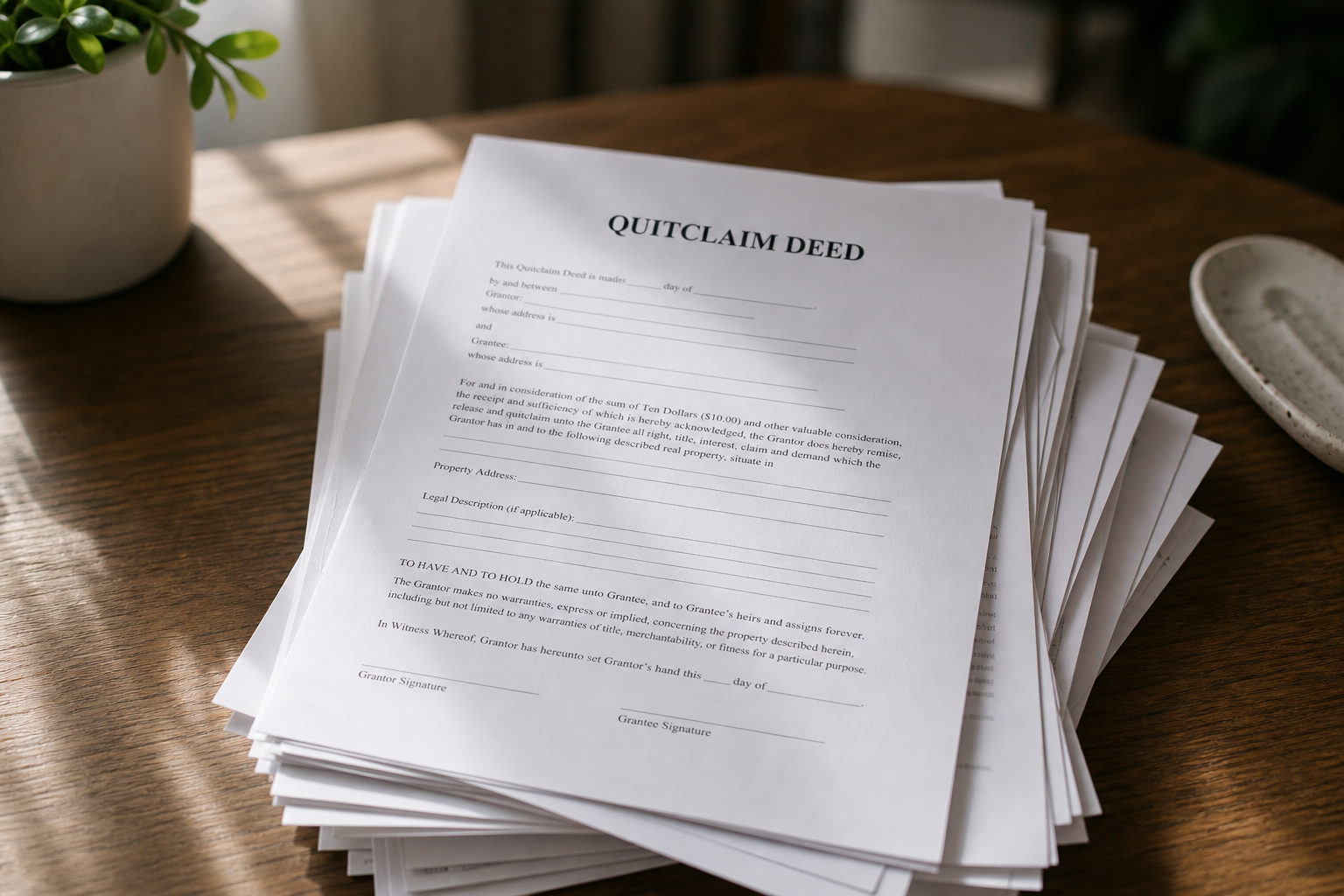
A transfer-on-death deed is a legal document that allows a property owner to name one or more beneficiaries to receive real estate automatically upon death. No court involvement, no waiting, no probate. The property passes directly from the deceased owner to the named beneficiary by operation of law.
During the owner's lifetime, the deed is signed, notarized, and recorded with the county recorder's office where the property sits. Recording is non-negotiable; an unrecorded deed is worthless. Once recorded, the owner keeps full control: they can sell, refinance, rent, or revoke the deed entirely. The beneficiary has no legal interest while the owner is alive.
When the owner dies, the beneficiary files an affidavit and a death certificate at the recorder's office. Title transfers. What would otherwise trigger months of probate gets resolved with minimal paperwork.
One thing worth understanding upfront: this only covers the real estate itself. A transfer on death deed says nothing about the furniture inside the house, the mortgage attached to it, or any debts the estate may carry. It transfers the title — the full picture of what comes after someone dies goes well beyond that.
What Homeowners in Non-TOD States Can Do
If you own property in a state that does not allow transfer-on-death deeds, a few other tools may accomplish a similar result.
- Florida uses something called a Lady Bird deed, also known as an enhanced life estate deed, which lets the owner retain full control during their lifetime while automatically passing the property to a named beneficiary at death without probate.
- New York does not currently have a transfer-on-death deed statute, though legislation has been introduced in recent years to change that.
- Pennsylvania requires property to pass either through probate or through a trust, making trust planning a more common strategy for avoiding probate entirely.
The legal tools available depend entirely on where the property is located, not where the owner lives. Anyone with property in multiple states should check each state's specific rules before assuming a single deed or estate plan covers everything.
How Transfer on Death Deeds Work
Creating and Recording the Deed
Getting a transfer-on-death deed right requires attention to a few details that vary slightly by state but follow a common framework.
- The deed must identify the property by its legal description, not just its street address.
- The grantor and each beneficiary must be identified by full legal name. Vague language like "my children" typically will not hold up.
- Most states require notarization. Some, including Texas and Missouri, also require witness signatures.
- Once signed and notarized, the deed must be recorded with the county recorder. Recording fees typically run $10 to $50.
- The deed takes effect upon recording, not upon signing. A signed but unrecorded deed carries no legal force.
What the Beneficiary Must Do After Death
The transfer does not happen on its own. The beneficiary must take action to make it official.
- File an affidavit of survivorship at the same recorder's office where the original deed was recorded.
- Attach a certified copy of the death certificate.
- Some states require a waiting period, typically 120 days in California, to give creditors time to make claims.
Even after title transfers, the beneficiary inherits the property subject to any existing mortgages, liens, or encumbrances.
Transfer on Death Deed vs Living Trust vs Will
| TOD Deed | Living Trust | Will | |
|---|---|---|---|
| Probate required | No | No | Yes |
| Covers all assets | No (real property only) | Yes (assets placed in it) | Yes |
| Cost to create | Low ($20 to $200) | High ($1,000 to $3,000+) | Moderate ($300 to $1,500) |
| Ongoing maintenance | Update as needed | Requires funding and updates | Update as needed |
| Public record | Yes (recorded deed) | No | Yes (through probate) |
| Can be revoked | Yes | Yes, if revocable | Yes |
A transfer-on-death deed makes sense for passing a single piece of real estate simply and inexpensively, especially when other assets are already handled through beneficiary designations.
A living trust is the stronger choice for complex estates: multiple properties, blended families, privacy concerns, or assets in multiple states. The tradeoff is upfront cost and the discipline to fund the trust properly.
A will guarantees probate but catches what TOD deeds and trusts miss: personal property, digital accounts, and guardianship of minor children.
These tools are not mutually exclusive. Many estate plans layer all three.
Pros and Cons of Transfer on Death Deeds
What Works in Their Favor
- Probate avoidance. Routing real estate through probate can cost several thousand dollars or more in attorney fees, court costs, and administrative expenses, with totals varying widely by state and estate size. A TOD deed sidesteps that entirely.
- The owner keeps complete control. The beneficiary has no rights while the owner is alive. The owner can sell, refinance, or revoke the deed without notification.
- Inexpensive to create. Recording fees run from $10 to $50, far less than a living trust.
- Fully revocable. An owner can record a new deed or revocation at any point before death.
Where They Fall Short
- Not universal. 21 states do not recognize TOD deeds for real property, meaning coverage depends entirely on the propertyis location.
- Creditor exposure. In most states, creditors can make claims against the property after transfer.
- No conditions allowed. A TOD deed cannot include age requirements or other contingencies.
- Beneficiary disputes can arise, particularly in blended families or when the deed conflicts with a will or trust.
- Only covers real property. Financial accounts, vehicles, and personal assets need separate planning.
Common Problems With Transfer on Death Deeds
Common issues that arise:
- The deed was never recorded. An unrecorded deed has no legal effect, and the property is placed into probate.
- The beneficiary dies before the owner. Without a contingent beneficiary, the gift fails.
- The deed conflicts with other estate documents, leading to legal disputes among beneficiaries.
- Outstanding debts or liens transfer with the property, including mortgages and tax liens.
- The deed was executed without meeting state formalities around witnesses or notarization.
- The property was placed in a trust after the deed was signed, potentially making the TOD deed ineffective.
Can a Transfer on Death Deed Be Contested?
Yes. A TOD deed can be challenged in court on several grounds, including lack of mental capacity at the time of signing, undue influence by the beneficiary, fraud, or failure to comply with state execution requirements. Contests are filed in probate court and can delay the transfer of the property for months or longer.
Transfer on Death Deed Requirements by State
State requirements diverge enough that a deed valid in one jurisdiction can fail entirely in another. What follows covers the four states that generate the most questions.
California, Texas, Florida, and Pennsylvania each take a meaningfully different approach, ranging from formal statutory forms to no TOD deed option at all. Knowing which category your state falls into is the first step before doing anything else.
California
California uses a specific statutory form called the Revocable Transfer on Death Deed. The deed must track official language closely and requires notarization plus two adult witnesses who are not beneficiaries. The deed must be recorded with the county recorder before the owner dies.
Texas
Texas requires the grantor to sign in front of two disinterested witnesses and a notary. The deed must include the property's legal description and comply with statutory form requirements. Recording with the county clerk is mandatory before death. Texas also allows community property interests to be transferred via a TOD deed.
Florida
Florida does not have a TOD deed statute. The functional equivalent is the Lady Bird deed (enhanced life estate deed), which requires notarization and two witnesses. The owner retains the right to sell, mortgage, or revoke without the remainder beneficiary's consent.
Pennsylvania
Pennsylvania offers no TOD deed option. Property passes either through probate under a will or outside it through a properly funded revocable living trust. Joint tenancy with right of survivorship is another route, though it carries its own tradeoffs around gift tax and loss of sole control.
Tax Implications of Transfer on Death Deeds

TOD Transfers Are Not Gifts
Recording a transfer-on-death deed does not trigger gift tax. The owner retains full control and can revoke the deed at any time, so the IRS does not treat it as a completed gift.
Compare that to adding a beneficiary as a joint tenant during the owner's lifetime, which can constitute a taxable gift.
Stepped-Up Basis
Beneficiaries inherit property at a stepped-up cost basis equal to fair market value on the date of death, effectively eliminating capital gains taxes on appreciation during the owner's lifetime.
This contrasts with lifetime gifting, where the recipient inherits the original purchase price as their basis.
Estate Tax
The property's fair market value at death is included in the taxable estate for federal estate tax purposes. The federal exemption exceeds $13.9 million per individual as of 2026.
Property Tax Reassessment
Property tax reassessment is determined by state law. California's Proposition 19 limited the parent-to-child exclusion, so inherited properties not used as primary residences are reassessed at current market value.
How to Revoke or Change a Transfer on Death Deed
Owners retain complete control throughout their lifetime, including the right to revoke. The beneficiary has no say.
Three Ways to Revoke a TOD Deed
- Record a new transfer-on-death deed naming a different beneficiary. The most recently recorded deed controls, so signing and recording a new TOD deed with a different beneficiary automatically supersedes the earlier one. No additional paperwork or explanation is required.
- File a standalone revocation form. Most states that allow TOD deeds also have a separate revocation instrument you can record with the county recorder's office. This cancels the deed without naming a new beneficiary, which is useful if you want to remove someone without replacing them.
- Execute a deed that transfers the property outright. If you sell the property, convey it to someone else, or transfer it into a living trust, the TOD deed becomes moot. There is nothing left for it to transfer.
All three methods require recording before death. Wills do not override recorded deeds, and verbal statements carry no legal weight. The Sacramento County Public Law Library provides detailed guidance on the revocation process and timing requirements.
Can a Transfer on Death Deed Be Contested
Yes, TOD deeds can be contested.
Notification and Contestation Windows
California requires beneficiaries to notify all heirs after the owner's death. Heirs have 120 days from the date of notice or 60 days from the date of recording to file a challenge. Other states follow general statutes of limitations that can run for years longer.
TOD Deeds vs. Wills and Trusts in Contestability
TOD deeds are generally harder to contest than wills because recording creates a clear public record, but easier than trusts. A deed signed during a documented cognitive decline is vulnerable.
Reducing Challenge Risk
Reduce challenge risk by signing before health decline, documenting understanding, working with an attorney, and naming contingent beneficiaries.
When Estate Settlement Becomes Overwhelming
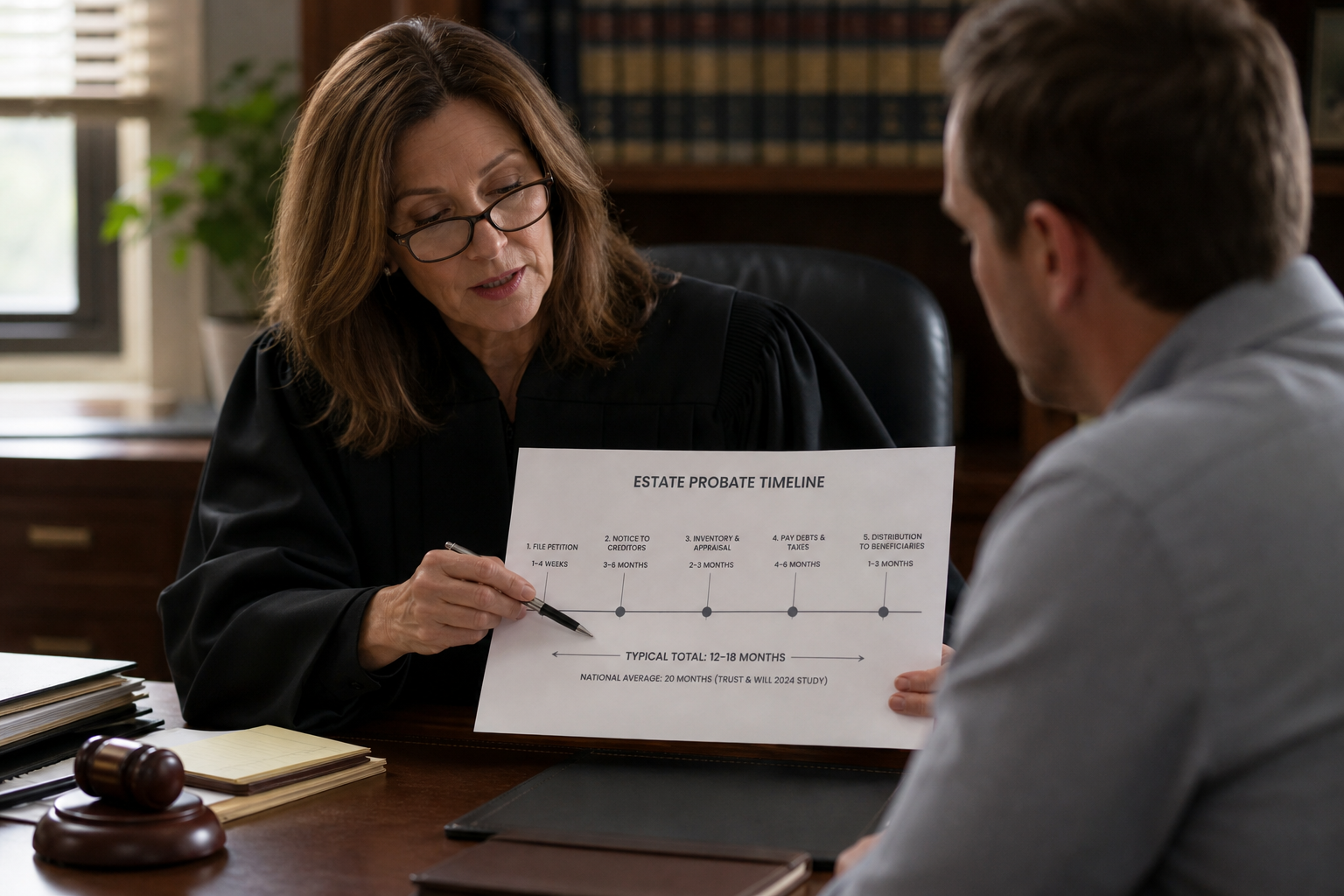
A transfer-on-death deed can successfully avoid probate and still leave the executor with 16 months of work ahead.
Real estate is one asset in a much longer inventory. Estate settlement requires 600+ hours of executor time: tracking down financial accounts, notifying government agencies, managing creditors, filing final tax returns, and documenting every decision. Executors carry personal legal liability for any misstep.
A TOD deed handles one transfer. The rest of the estate still demands the same time, attention, and legal precision.
How Alix Simplifies Estate Settlement Beyond Property Transfer
Transferring property through a transfer-on-death deed is one piece of a much larger puzzle. Executors face probate filings, tax returns, account closures, vehicle transfers, creditor notifications, and beneficiary distributions.
Alix handles the legal, financial, and administrative tasks that pile up after a loss, working alongside attorneys and financial professionals to make sure nothing falls through the cracks.
What Estate Settlement Actually Involves
Executors handle final tax returns, account closures, creditor notifications, debt resolution, vehicle transfers, and beneficiary distributions. Each step carries fiduciary and legal responsibility.
Alix steps in to handle this work, executing every step directly. Having a trusted partner coordinate the full settlement makes a real difference.
A transfer-on-death deed may move one property outside probate, while accounts, debts, and taxes still need attention. Estate settlement services can manage the remaining work from discovery through distribution.
Final Thoughts on Transfer on Death Deeds and Estate Planning
A transfer-on-death deed keeps your house out of probate, which is exactly what it's designed to do. But real estate is just one line item in what is usually a long, legally complex process. We handle the full estate settlement, from probate filings to tax returns to beneficiary distributions, so executors don't have to figure it out alone. Getting the deed filed is a good start, but make sure the rest of your plan is just as solid.
FAQs
Transfer-on-death deed vs. living trust in California?
A California transfer-on-death deed costs less upfront ($20 to $200) and requires minimal maintenance, while a living trust costs $1,000 to $3,000+ but covers all assets and offers stronger privacy protection. A TOD deed works well if you own a single property and have already handled other assets through beneficiary designations, but a living trust is better for multiple properties, blended families, or estates where privacy and full asset control matter more than cost.
Can a transfer-on-death deed be contested?
Yes. A transfer-on-death deed can be challenged in probate court on grounds including lack of mental capacity, undue influence, fraud, or failure to meet state execution requirements. In California, heirs have 120 days from notification or 60 days from when the deed is recorded to file a contest, but other states may allow years under general statutes of limitations.
Where can I get a transfer-on-death deed form?
You can obtain a transfer-on-death deed form from your county recorder's office, many of which offer downloadable forms online. California, Texas, and several other states provide statutory forms that must be used exactly as written. Because execution requirements vary widely by state, many homeowners work with a real estate attorney to draft the deed correctly and avoid an error that could invalidate it years later.
Does a transfer-on-death deed supersede a trust?
No. If you transfer property into a living trust after signing a transfer-on-death deed, the trust typically controls, and the TOD deed becomes ineffective. The reverse is also true: recording a TOD deed on property already held in a trust can create conflicting ownership claims depending on how the trust was structured, which is why sequencing matters when layering estate planning tools.
What are the main problems with transfer-on-death deeds?
The most common issues include failure to record the deed before death (making it worthless), beneficiaries dying before the owner without a contingent named, creditors making claims against the property after transfer, conflicts with wills or trusts creating legal disputes, and inheriting properties with mortgages or liens attached. A deed that fails to meet state-specific witness or notarization requirements can also be declared invalid.
.png)
Related resources