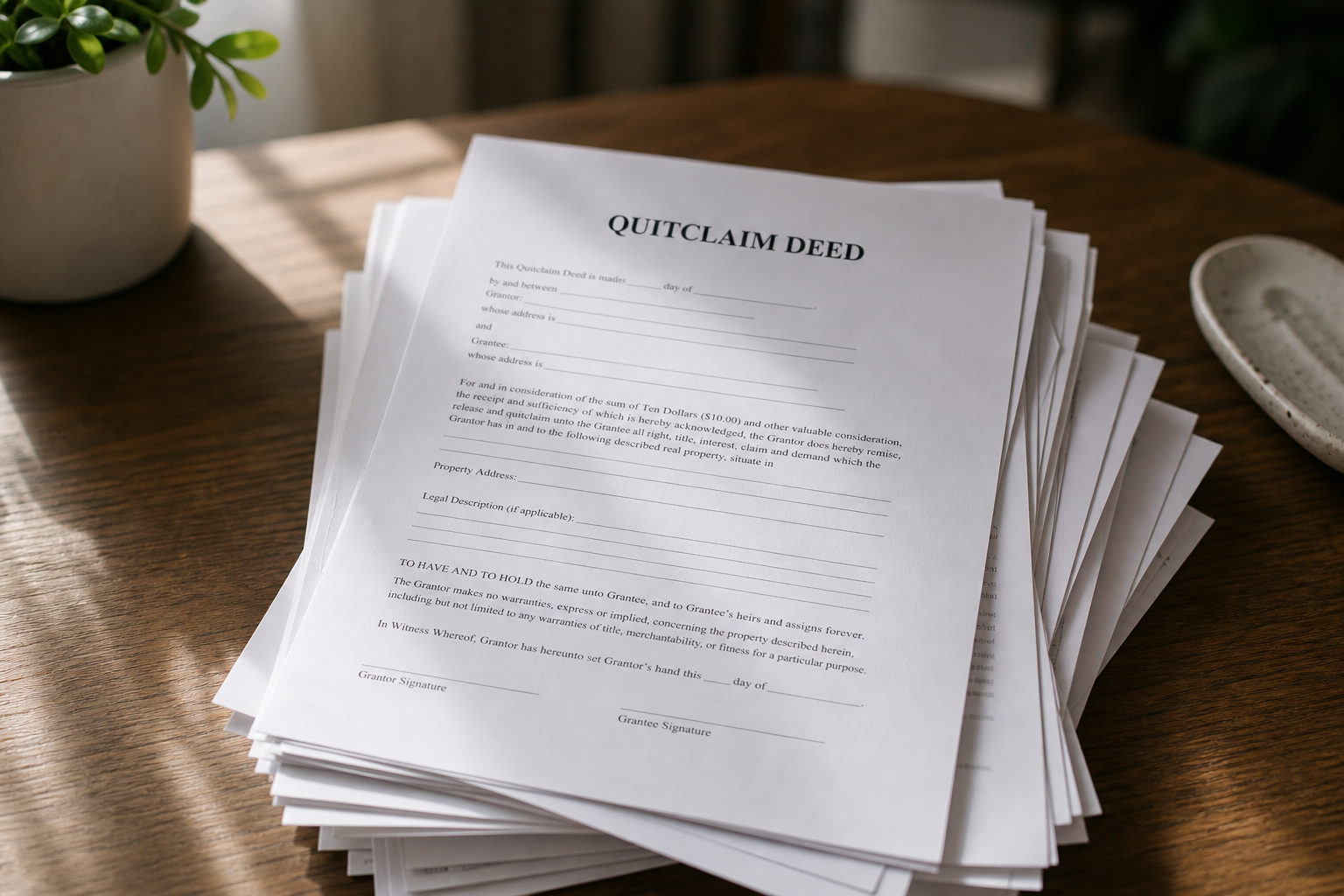
Selling an inherited house involves a set of legal and financial steps that most people encounter for the first time. The process is manageable once you understand the probate requirements, how capital gains apply to inherited property, and what documents you'll need to close the sale.
Key Takeaways:
- Inherited property gets a stepped-up basis to fair market value at death, so you only owe capital gains tax on appreciation after inheritance.
- Probate can delay a sale by months or over a year, depending on your state, with California routinely running well over a year.
- Multiple heirs each own a proportional share as tenants in common, and all must agree to sell, or any heir can file a partition action.
- No federal deadline exists for selling, but carrying costs, such as property taxes and insurance, can accumulate quickly on vacant inherited homes.
- Alix handles estate settlement, including inherited real estate, from probate filings to property sales and tax reporting.
Understanding the Probate Process for Inherited Property
When you inherit a house, your ability to sell it depends heavily on where the property sits in the probate process. Probate is the court-supervised legal process that validates a will, appoints an executor, and oversees the distribution of assets to beneficiaries.
Not every inherited property goes through probate, though. There are a few paths a property can take depending on how the estate was structured.
How Inherited Property Passes to Beneficiaries
- Assets held in a living trust transfer directly to beneficiaries without court involvement, which means the successor trustee can move forward with a sale relatively quickly once the trust terms are satisfied.
- Property titled with right of survivorship, such as joint tenancy or tenancy by the entirety, passes automatically to the surviving co-owner outside of probate.
- In some states, smaller estates qualify for simplified procedures, like an affidavit of heirship, that avoid full probate court oversight.
- If the property was owned solely in the deceased person's name without a trust or designated beneficiary, it almost certainly goes through standard probate before it can be sold.
What Probate Means for the Sale Timeline
Full probate can take anywhere from a few months to well over a year, depending on the state, the complexity of the estate, and whether any disputes arise. Probate timelines vary significantly by state, with simpler estates settling in six months while complex estates can take years. During that time, the executor typically cannot sell the property without court approval or, at a minimum, proper authority granted under the will or state law.
Once the executor has legal authority, they can list and sell the property, though they remain bound by fiduciary duty to act in the best interest of all beneficiaries. If the property is distributed to beneficiaries before a sale, all parties who received an ownership interest generally must agree to sell.
States like California and Texas have their own probate rules and timelines that affect how quickly an inherited home can be transferred and sold. California's process, for instance, includes a mandatory four-month creditor notice period, high court caseloads, and required court hearings that routinely push the full timeline to 12–18 months or longer, directly affecting when beneficiaries can access sale proceeds.
If you are unsure where an inherited property stands in the probate process, the estate attorney handling the matter is the right starting point before taking any steps toward a sale.
Stepped-Up Basis and Capital Gains Tax Explained
When you inherit a property, the IRS applies what's called a "stepped-up basis," which resets your cost basis to the fair market value of the home on the date the original owner died. For most heirs, this rule substantially reduces or eliminates capital gains tax exposure on decades of appreciation. IRS Publication 551 covers the technical details of calculating the basis for inherited assets.
Here's why it matters: if your parent bought a home for $100,000 decades ago and it was worth $500,000 when they passed, your basis is not $100,000. It's $500,000. If you sell the home for $510,000, you only owe capital gains tax on $10,000 of gain, not $410,000.
How Capital Gains Tax Applies to Inherited Property
The IRS automatically treats inherited property as long-term, regardless of how long you actually held it. Long-term capital gains rates are 0%, 15%, or 20%, depending on your taxable income, which is almost always lower than ordinary income tax rates. This treatment applies even if you sell the property the week after inheriting it.
The rate that applies to you depends on your filing status and total income for the year:
| Filing Status | 0% Rate Up To | 15% Rate Up To | 20% Rate Above |
|---|---|---|---|
| Single | $47,025 | $518,900 | $518,900 |
| Married Filing Jointly | $94,050 | $583,750 | $583,750 |
| Head of Household | $63,000 | $551,350 | $551,350 |
(Figures based on 2026 IRS brackets. Confirm current thresholds with a tax professional.)
Other Taxes That May Apply
Federal capital gains are not the only tax exposure. Depending on your situation, you may also owe:
- Some states layer on their own capital gains tax. California, for example, taxes capital gains as ordinary income, which can push your effective rate considerably higher than the federal rate alone.
- If your total income exceeds certain thresholds, you may also owe the Net Investment Income Tax (NIIT), an additional 3.8% on investment income, including real estate gains.
- If the property was held in a trust, the basis rules generally still apply, but the tax obligations may flow differently depending on the trust structure. A qualified tax advisor should review any trust-held real estate before you sell.
The stepped-up basis won't eliminate every tax obligation, but for most heirs selling an inherited home near its inherited value, it dramatically reduces what you actually owe.
Selling Inherited Property With Multiple Heirs
When multiple heirs inherit a property together, the legal and personal complexity grows considerably. Whether you're splitting a home between two siblings or five cousins, each co-heir has ownership rights, which means decisions about what to do with the property typically require agreement from everyone involved.
How Co-Ownership Works After Inheritance
Inherited property is usually held as tenants in common, meaning each heir owns a proportional share of the property rather than a specific portion of it. All owners have the right to use and occupy the full property, but no single owner can sell the entire asset without the others' consent. Each heir's share can also be sold, transferred, or passed down independently, which can complicate matters further if owners have different financial situations or intentions.
When Heirs Disagree
Disagreements among co-owners are one of the most common friction points in estate settlement. One heir may want to sell quickly, another may want to keep the property, and a third may want to move in. A few scenarios that come up frequently:
- One sibling is already living in the property and refuses to leave or agree to a sale, which can put the other heirs in a legally awkward position.
- Heirs living in different states or countries may have difficulty coordinating decisions, especially when time-sensitive maintenance or mortgage payments are involved.
- Disagreements over listing price, improvements before sale, or how to split proceeds can delay a sale by months or even years.
If negotiations break down entirely, any co-owner has the legal right to file a partition action, asking a court to either force a sale of the property or physically divide it. Partition by sale is far more common with residential real estate since physical division is rarely practical.
Tax Implications With Multiple Owners
Each heir's tax situation is calculated based on their individual share. The stepped-up basis applies proportionally, so if a home was worth $400,000 at the time of death and two heirs each own 50%, each has a cost basis of $200,000 in their share. Capital gains tax is calculated separately for each heir based on their share of the net proceeds minus their share of the basis.
If heirs have different income levels, their applicable capital gains tax rates may also differ, which is worth factoring in before agreeing on a sale timeline or structure.
Time Limits and Deadlines for Selling Inherited Property
There is no federal law that sets a hard deadline for selling an inherited property. You can technically hold onto it for years after inheriting it. That said, several practical and legal pressures create real urgency, and ignoring them can cost you.
Creditor Claim Periods
Most states require the estate to give creditors a formal window to submit claims before assets are distributed or sold. This period typically runs three to twelve months from the date notice is published, depending on the state. Selling before this window closes doesn't always block the sale itself, but it can create complications for distributing proceeds. In some states, the executor may be personally liable to creditors if the estate is settled prematurely. Knowing your state's specific deadline matters before you set a closing date.
Carrying Costs Accumulate Fast
Even without a legal clock ticking, an inherited home costs money every month it sits unsold:
- Property taxes, homeowner's insurance, utility bills, and routine maintenance all add up.
- If the home has a mortgage, that payment keeps coming regardless of who now owns it.
- A vacant property carries its own risks: deferred maintenance, potential vandalism, or liability if someone is injured on the premises.
For heirs inheriting a paid-off home, the absence of a mortgage can create a false sense of financial ease. But property taxes alone on a higher-value home can run several thousand dollars per year, and a property left vacant for eighteen months can quietly drain estate funds that were meant for beneficiaries.
Strategic Timing for Tax Purposes
The stepped-up basis covered earlier already does much of the heavy lifting for capital gains. But timing the sale within a particular tax year can still make a difference. If you expect your income to be lower next year, waiting to close may push you into a lower capital gains bracket. Conversely, if you've already had a low-income year, selling before December 31 could work in your favor.
One more consideration: the IRS requires you to report the sale of inherited property in the tax year the sale closes, using Schedule D and Form 8949. Keeping clean records of the date-of-death valuation and any improvements made before the sale will make that filing considerably less stressful.
Documents Required for Selling an Inherited House
Gathering the right paperwork before listing an inherited property can save weeks of delays and prevent deals from falling apart at closing. Most title companies and buyers' attorneys will request the same core set of documents, so assembling them early is worth the effort.

The documents you will generally need fall into a few categories:
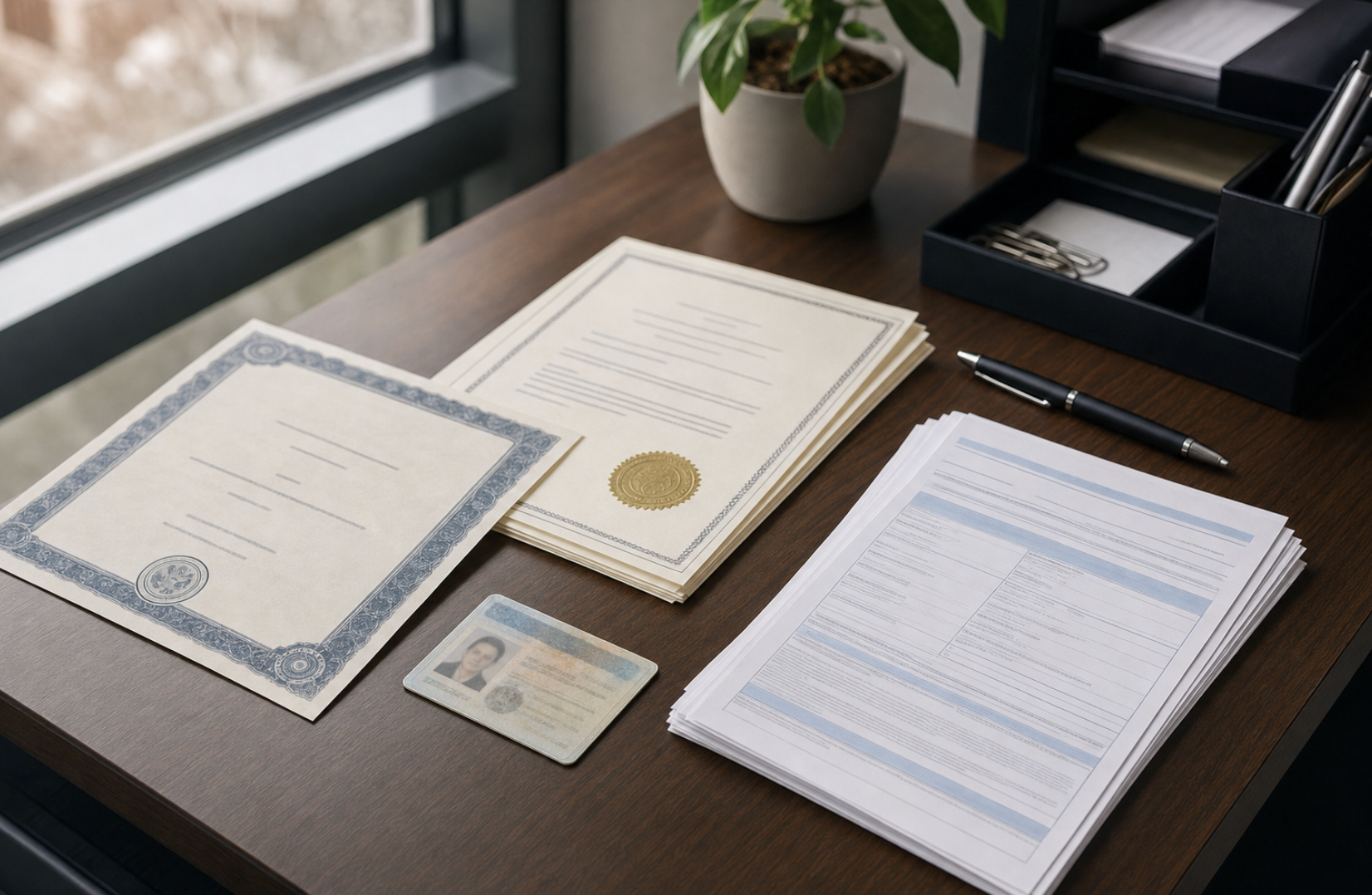
- Proof of ownership and transfer: This includes the original deed to the property, the deceased owner's death certificate, and the Letters Testamentary or Letters of Administration issued by the probate court. These letters legally authorize you to act on behalf of the estate and to sign a sales contract.
- Probate or trust documentation: If the property passed through a will, you will need a copy of the will admitted to probate. If it passed through a living trust, the trust agreement (or a certification of trust) must show the trustee's authority to sell.
- Tax-related records: Gather the most recent property tax statements, the estate's tax identification number, and any appraisal obtained at the time of inheritance. That date-of-death appraisal is especially useful for confirming your stepped-up cost basis and calculating any capital gains exposure when you file.
- Title and lien history: A preliminary title report ordered through a title company will surface any existing liens, easements, or encumbrances on the property. If there is an outstanding mortgage, you will also need the lender's payoff statement.
- Consent from co-heirs: When a property is inherited by multiple beneficiaries, all co-heirs must typically sign off on the sale. Depending on the state, this may require a formal written consent agreement or a court order if one heir refuses.
- Property disclosures: Most states require sellers to complete a disclosure form covering known defects, hazardous materials, and the condition of major systems. As an heir, you may have limited direct knowledge of the property's history, but you are still legally obligated to disclose what you do know.
The exact requirements vary by state and by whether the estate went through formal probate, a simplified small-estate process, or a trust administration. Working with a real estate attorney familiar with inherited property in your state is the most reliable way to confirm you have everything in order before going to contract.
Reporting the Sale and the Primary Residence Exclusion
Two tax rules that often get overlooked deserve their own attention before you close.
How to Report the Sale
You report the sale on Schedule D and Form 8949. You will need the date-of-death fair market value (your stepped-up basis), the final sale price after closing costs and commissions, any capital improvements made after you inherited the property, and the appraisal documentation from the estate. Keeping clean records from the start makes this filing straightforward.
The Primary Residence Exclusion
If you moved into the inherited home and lived there as your primary residence for at least two of the five years before selling, you may qualify for the Section 121 exclusion, which shelters up to $250,000 of gain ($500,000 if married filing jointly) from capital gains tax entirely.
Preparing the Property for Sale
Inherited homes often arrive with decades of accumulated belongings, deferred maintenance, and the kind of neglect that comes from an owner who couldn't get to everything. Before you can sell, you have to figure out what to do with all of it.
Clearing the Property
Personal belongings need to be sorted before any serious buyer walks through. Family members may want to claim sentimental items first. After that, an estate sale company can handle the sale of furniture, collectibles, and household goods, with commissions that vary by company and market. For items without resale value, a junk removal service is usually the fastest path forward.
Don't assume everything left behind is worthless. Estate liquidators sometimes find valuable items that family members overlooked, from jewelry tucked in drawers to collectibles that have appreciated considerably over the years.
Repairs vs. Selling As-Is
Whether to invest in repairs before listing comes down to a straightforward question: Will the improvement return more than it costs, given your timeline?
Some improvements reliably pay off in higher offers or faster sales:
- Fresh interior paint and cleaned carpets tend to have a strong visual impact for relatively low cost
- Basic landscaping and curb appeal can meaningfully affect a buyer's first impression before they step inside
- Fixing obvious safety issues like broken railings or water damage protects against buyer inspection objections
Other projects, like full kitchen renovations or major system replacements, rarely return their full cost when factored against the time they add to your hold period.
Selling as-is is a legitimate option, especially when heirs want a faster close. Cash buyers and investors actively seek inherited properties in as-is condition, and while they typically offer less than retail market value, the trade-off is speed and certainty. If the property needs significant work and heirs aren't local or are managing the estate alongside full-time jobs, as-is may be the right call.
Vacant Property Insurance and Security
Standard homeowner's insurance policies often exclude or limit coverage once a property has been vacant for 30 to 60 days. Once the original owner passes and no one is living in the home, contact the insurer immediately and ask about vacant property coverage or a vacancy endorsement to avoid gaps.
Security warrants attention as well. Changing the locks, setting timers on interior lights, and arranging periodic walk-throughs reduce the risk of vandalism and unauthorized entry. Some insurers require documented security measures as a condition of coverage on a vacant property.
Selling Methods: Agent, Cash Buyer, or Auction
There are three main paths to selling an inherited property, each with meaningful trade-offs in price, speed, and complexity.
Listing With a Real Estate Agent
Working with an agent typically produces the highest sale price, since you're exposing the property to the widest pool of qualified buyers. The tradeoff is time: a traditional listing can take anywhere from 30 to 90 days to close after going under contract, and that doesn't account for the weeks spent preparing, staging, and marketing the home beforehand. If the property needs repairs, timelines can stretch further. Agent commissions generally run 5% to 6% of the sale price, split between the buyer's and seller's agents.
This route works best when the estate is not under time pressure, and the inherited home is in reasonable condition. If multiple beneficiaries are involved and all parties agree on pricing, a listed sale tends to produce the cleanest outcome.
Selling to a Cash Buyer
Cash buyers, often real estate investors or iBuyers, purchase homes as-is and can close in as little as 7 to 14 days. The speed and simplicity are real advantages, particularly when an estate needs to close quickly, or the home requires extensive work that heirs don't want to manage. The cost is a lower sale price, often meaningfully below fair market value. The exact discount varies by market, property condition, and buyer.
For estates dealing with deferred maintenance, code violations, or contentious co-ownership situations, the certainty of a cash offer can outweigh the discount.
Selling at Auction
Auction sales move fast and create competitive bidding dynamics, but outcomes are unpredictable. A well-attended auction can push prices above comparable sales; a poorly attended one can result in a steep loss. Auction fees also vary widely and can eat into net proceeds.
Auctions are most commonly used for unique or high-value properties that don't fit standard market comparisons, or for estates under court supervision that require a documented arm's-length sale process.
Choosing the Right Method
The right choice depends on the property's condition, how quickly the estate needs to close, whether the heirs are aligned, and how much equity is at stake. A quick-reference comparison:
| Method | Typical Timeline | Price Outcome | Best For |
|---|---|---|---|
| Real estate agent | 60 to 120 days | Highest | Move-in ready homes, no time pressure |
| Cash buyer | 7 to 30 days | Below market | As-is properties, fast closings |
| Auction | 30 to 60 days | Variable | Unique properties, court-supervised sales |
Common Challenges and How to Overcome Them
Selling an inherited home rarely goes exactly as planned. Knowing where deals get stuck and how to get them moving again makes a real difference.
Heirs Can't Agree on a Sale
Deadlock over price, timing, or whether to sell at all is common, and it's rarely a purely financial disagreement. Personal history tends to get folded in. If direct conversations aren't working, a mediator can help parties reach a compromise more quickly and more cheaply than taking the matter to court. Partition actions, covered earlier, are a legal option of last resort, but they're slow and reduce everyone's net proceeds. Starting with a neutral facilitator is almost always worth trying first.
One Heir Is Living in the Property
An occupying heir has legal rights to be there, but they cannot block a sale indefinitely. Practical paths forward include negotiating a buyout of the other heirs' interests, agreeing in writing on a sale timeline, or pursuing partition if no resolution is possible. Whatever direction you take, document every conversation and agreement in writing from the start.
Title Issues and Liens
A property with unresolved title claims cannot transfer cleanly to a buyer. Common problems include unpaid property taxes, contractor liens, old mortgages never formally released, and judgment liens from prior creditors. Most can be paid off from sale proceeds at closing, but some require separate legal steps. Ordering a preliminary title report before listing surfaces these issues early enough to address them without derailing a deal.
Out-of-State Executors
Managing an inherited property from another state is genuinely difficult. Tasks like arranging contractor walk-throughs, paying local utility bills, meeting inspectors, or appearing at probate court hearings become logistical puzzles when you're hundreds of miles away. A local property manager, real estate attorney, or estate settlement service can handle that on-the-ground work in your place.
Emotional Attachment Stalling Decisions
Grief makes everything slower. Separating emotional conversations from financial ones, setting a clear internal deadline, and bringing in a neutral third party when discussions stall are the most practical ways to keep things moving. A professional with no stake in the outcome can help reframe the conversation around what the decedent would have wanted for the people they left behind.
How Estate Settlement Services Simplify the Process

For most executors, the inherited house is the estate's largest and most complex asset. Estate settlement services handle the full scope of this work — title transfers, probate court coordination, date-of-death appraisals, and tax filings so you are not left piecing together a process you have never done before.
What a Full-Service Estate Settlement Provider Handles
The range of tasks involved in selling an inherited house goes well beyond listing it with an agent. A capable estate settlement service takes responsibility for the following:
- Obtaining the estate's Letters Testamentary or Letters of Administration so the executor has legal authority to act on behalf of the estate.
- Ordering a date-of-death appraisal to determine the stepped-up cost basis, which is the foundation for any capital gains calculation at sale.
- Clearing title issues, including liens, unpaid property taxes, or clouded ownership records that are common in estates with older real property.
- Coordinating with co-heirs when the property is inherited by siblings or multiple beneficiaries, so that disagreements about timing or sale price do not stall the process.
- Managing the property during the sale period, including any required maintenance, insurance continuation, or utility accounts.
- Preparing and filing estate and income tax returns that correctly account for sale proceeds.
Why This Matters More Than It Appears
Executors carry personal fiduciary responsibility for decisions made during estate settlement. An error in how the sale is reported, how proceeds are distributed, or how the stepped-up basis is documented can create liability that follows the executor long after the estate is closed.
Working with a service that has done this before, across many estate types and jurisdictions, reduces that risk. It also shortens the timeline considerably. Estates that attempt to self-manage an inherited property sale often stall in probate, lose value due to deferred maintenance, or face tax penalties for incorrect reporting.
Alix handles estate settlement end-to-end, including inherited real estate, so executors are not left managing this alone.
Final Thoughts on Selling an Inherited Property
Selling an inherited house requires you to manage probate court filings, establish a proper stepped-up basis, coordinate with co-heirs, clear title issues, and report the sale correctly on your taxes. The financial stakes are real, and so is the personal liability executors carry for mistakes made during estate settlement. Most people managing an inherited property sale are doing it for the first time, and that learning curve costs time and money. Start a conversation with Alix to hand off the entire process, from probate filings to closing documents. The decisions you make now about timing, sale method, and documentation will affect your tax liability and how quickly beneficiaries receive their inheritance. Having someone who has managed hundreds of these sales makes those decisions easier and more accurate.
FAQs
Can I sell an inherited house without going through probate?
It depends on how the property was titled. If the home was held in a living trust, titled with right of survivorship, or qualifies for your state's small estate procedures, you can likely sell without full probate. Property owned solely in the deceased's name without a trust or co-owner almost always requires probate before you can sell.
How to avoid paying capital gains tax on inherited property?
The stepped-up basis rule already eliminates most capital gains exposure by resetting your cost basis to the home's fair market value on the date of death. If you sell near that inherited value, you owe little to no tax. You can further reduce or eliminate the tax by living in the home as your primary residence for at least two of the five years before selling, which qualifies you for the Section 121 exclusion.
What happens when one sibling is living in an inherited property and refuses to sell?
The occupying sibling has a right to be there, but cannot block a sale indefinitely. You can negotiate a timeline in writing, offer to buy out the other heirs' shares, or pursue a partition action through the court if no agreement is reached. Document every conversation and agreement from the start to protect all parties.
How is inherited property taxed when sold?
Inherited property receives a stepped-up basis to the fair market value on the date of death, and the IRS automatically treats the sale as long-term capital gains regardless of how long you held it. You only owe capital gains tax on appreciation above that inherited value, taxed at 0%, 15%, or 20% depending on your income. Some states add their own capital gains tax on top of the federal rate.
Is there a time limit on selling inherited property?
No federal law sets a hard deadline, but practical pressures do. Most states give creditors three to twelve months to submit claims before the estate can close, and selling before that window expires can expose the executor to liability. Carrying costs like property taxes, insurance, and maintenance also accumulate quickly, making a faster sale financially smarter even when no legal deadline exists.
.png)
Related resources