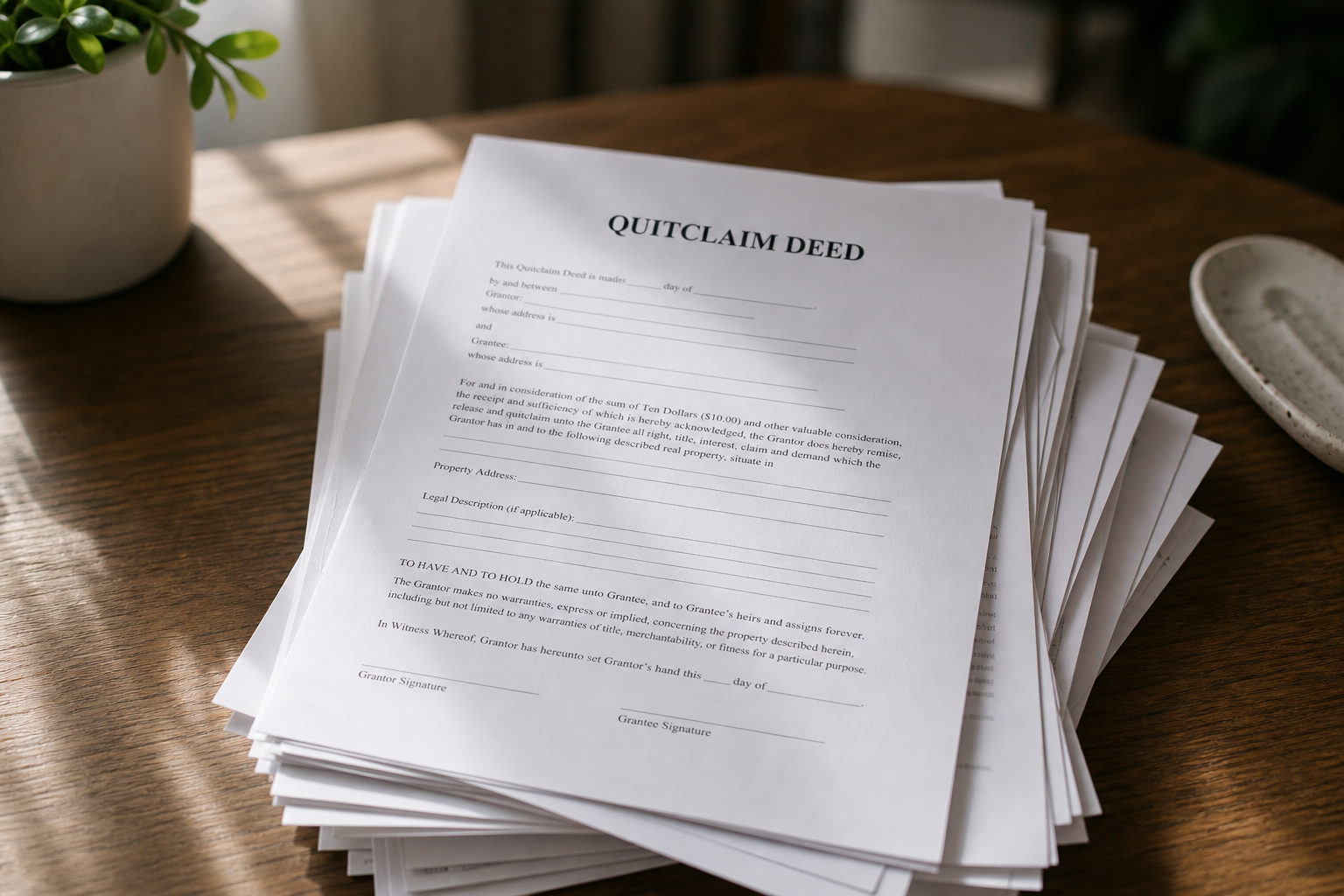
You're managing an estate in California, and everyone keeps telling you to hire a probate lawyer. But the fees are set by statute, the process takes months, and you're not entirely sure what the attorney is responsible for versus what you're expected to handle yourself. California probate has specific thresholds, timelines, and procedural requirements that make professional guidance valuable in most cases. This guide explains when you actually need an attorney, how the fee structure works, and what free or low-cost options are available if you're trying to keep expenses down.
Key Takeaways:
- Probate attorneys in California charge statutory fees based on gross estate value, not complexity.
- Estates valued at $208,850 or more generally require formal probate; smaller estates may qualify for simplified transfer procedures.
- You can access free legal help through county bar referrals, legal aid societies, and courthouse self-help centers.
- Alix manages the non-legal estate work: asset discovery, account closures, and coordination, while attorneys handle court filings.
What Is a Probate Lawyer and When Do You Need One in California

Probate is the court-supervised process of validating a deceased person's will, settling their debts, and distributing assets to heirs. In California, this process runs through the Superior Court and applies to estates with assets above a certain threshold, regardless of whether a will exists.
A probate lawyer guides executors and administrators through that process. They handle the legal filings, court appearances, creditor notices, and asset distributions that make up a probate case. In California, that workload can be substantial given the state's high property values and detailed procedural rules.
Here are the most common situations where working with a probate attorney makes sense:
- The estate includes real property, especially in California, where home values often push estates into formal probate. Transferring real estate title requires court orders that a probate lawyer prepares and files.
- There is no valid will. When someone dies intestate, California's succession laws determine who inherits, and an attorney helps the court appoint an administrator and move the estate through the correct legal process.
- Beneficiaries or heirs are in dispute. Contested estates, challenges to a will's validity, or disagreements over asset distribution almost always require legal representation.
- The estate has complex assets, such as business interests, retirement accounts with unclear beneficiaries, or substantial debts that must be resolved before distribution.
- The executor lives out of state or is unfamiliar with California court procedures, making professional guidance particularly valuable.
Probate Attorney vs. Estate Attorney
People often use these terms interchangeably, but they refer to different scopes of work. An estate attorney typically works with living clients to draft wills, set up trusts, and structure an estate plan before death. A probate attorney works after death, handling the court process that follows. Some attorneys do both, but when you're searching for help settling an estate, you want someone whose practice focuses on probate administration.
Does California Always Require Probate?
Not every estate goes through formal probate. California offers simplified procedures for smaller estates, and assets held in living trusts, jointly owned property, and accounts with named beneficiaries typically transfer entirely outside probate. The threshold for formal probate in California is $239,700 for deaths April 1, 2026, and after. For deaths prior to this, the threshold was $208,850. Estates below that threshold may qualify for a simplified affidavit process. Above it, formal probate is generally required, and the complexity of the process makes professional legal help worth serious consideration.
Understanding California Probate Lawyer Costs and Fee Structures
California follows a statutory fee schedule for probate attorney compensation, meaning fees aren't negotiated; they're set by law based on the estate's gross value.
How California's Statutory Fee Schedule Works
Under California Probate Code §10810, both the attorney and the executor receive the same percentage-based compensation calculated as follows:
| Estate Gross Value | Attorney Fee Percentage |
|---|---|
| First $100,000 | 4% |
| Next $100,000 | 3% |
| Next $800,000 | 2% |
| Next $9,000,000 | 1% |
| Next $15,000,000 | 0.5% |
A few things worth noting about this table: the fee is calculated on gross value, not net equity. So if an estate includes a home worth $800,000 with a $600,000 mortgage, the fee is based on $800,000. On that estate alone, statutory attorney fees would reach approximately $19,000.
What Falls Outside Statutory Fees
Statutory fees cover routine probate work. Attorneys can petition the court for additional "extraordinary fees" when the work goes beyond standard administration, including:
- Handling litigation or contested claims against the estate
- Selling real property with title complications
- Resolving tax disputes or preparing estate tax returns
- Resolving creditor disputes or business interests
These extraordinary fees require court approval and must be documented in writing, but they can add thousands to the total cost.
Who Pays and When
Probate attorney fees in California are paid out of estate assets, not out of pocket by the executor personally. Payment typically occurs at the close of probate, once the court approves the final accounting. Some attorneys may request advances or charge separately for out-of-pocket costs like filing fees, publication costs, and title reports, so it's worth asking about those specifics upfront.
Getting a Free Consultation First
Before committing to any attorney, many California probate lawyers offer a free initial consultation. This gives you a chance to confirm whether full probate is even required, understand what extraordinary fees might apply to your specific situation, and compare how different attorneys handle billing. Some attorneys also offer flat-fee arrangements for smaller or simpler estates, so it's reasonable to ask whether statutory fees are the only option available.
Probate Lawyer vs Estate Planning Attorney: Key Differences
The confusion between these two roles is understandable. Many attorneys practice both, law firm websites aren't always specific, and the terms get used interchangeably in everyday conversation. But when you're in the middle of settling an estate, knowing which professional you actually need saves time and money.
There are a few ways to think about the distinction. The simplest: one works with the living, the other works with what's left behind.
What Each Attorney Handles
An estate planning attorney's work is forward-looking. They draft wills, create trusts, designate beneficiaries, set up powers of attorney, and structure assets to minimize taxes or avoid probate altogether. You hire them to create a plan.
A probate attorney's work begins after death. They handle the legal process of settling that plan, or sorting out what happens when no plan exists. Their primary responsibilities include court filings, creditor notices, asset transfers under court supervision, and dispute resolution.
| Estate Planning Attorney | Probate Attorney |
|---|---|
| Drafts wills and trusts | Files the will with the probate court |
| Structures beneficiary designations | Administers the estate through the court |
| Sets up powers of attorney | Handles creditor notifications and claims |
| Advises on tax minimization strategies | Manages contested distributions |
| Works with living clients | Works with executors and heirs after death |
When You Might Need Both
If your loved one had a solid estate plan in place, their estate planning attorney may already be familiar with the documents and structure of the estate. In many cases, that same attorney handles probate as well, so it's worth asking directly before searching for someone new.
Where families most often need both is when a trust was partially funded or improperly set up. If real property was never retitled into the trust, for example, it may still require probate. An estate planning attorney can advise on whether the trust terms are being honored, while a probate attorney handles any court proceedings for assets that fall outside the trust.
If there's no existing estate plan at all, you're working with a probate attorney from the start. They'll guide the estate through intestate succession laws, which determine who inherits when there is no will. Each state applies these rules differently, so local knowledge matters.
A Practical Way to Think About It
Estate planning attorneys help people prepare for what comes after they're gone. Probate attorneys deal with what actually happens. The distinction matters most when you're trying to find the right help quickly. If someone has already passed and you're managing their estate, a probate attorney is the right first call.
The California Probate Process: Timeline and Required Steps
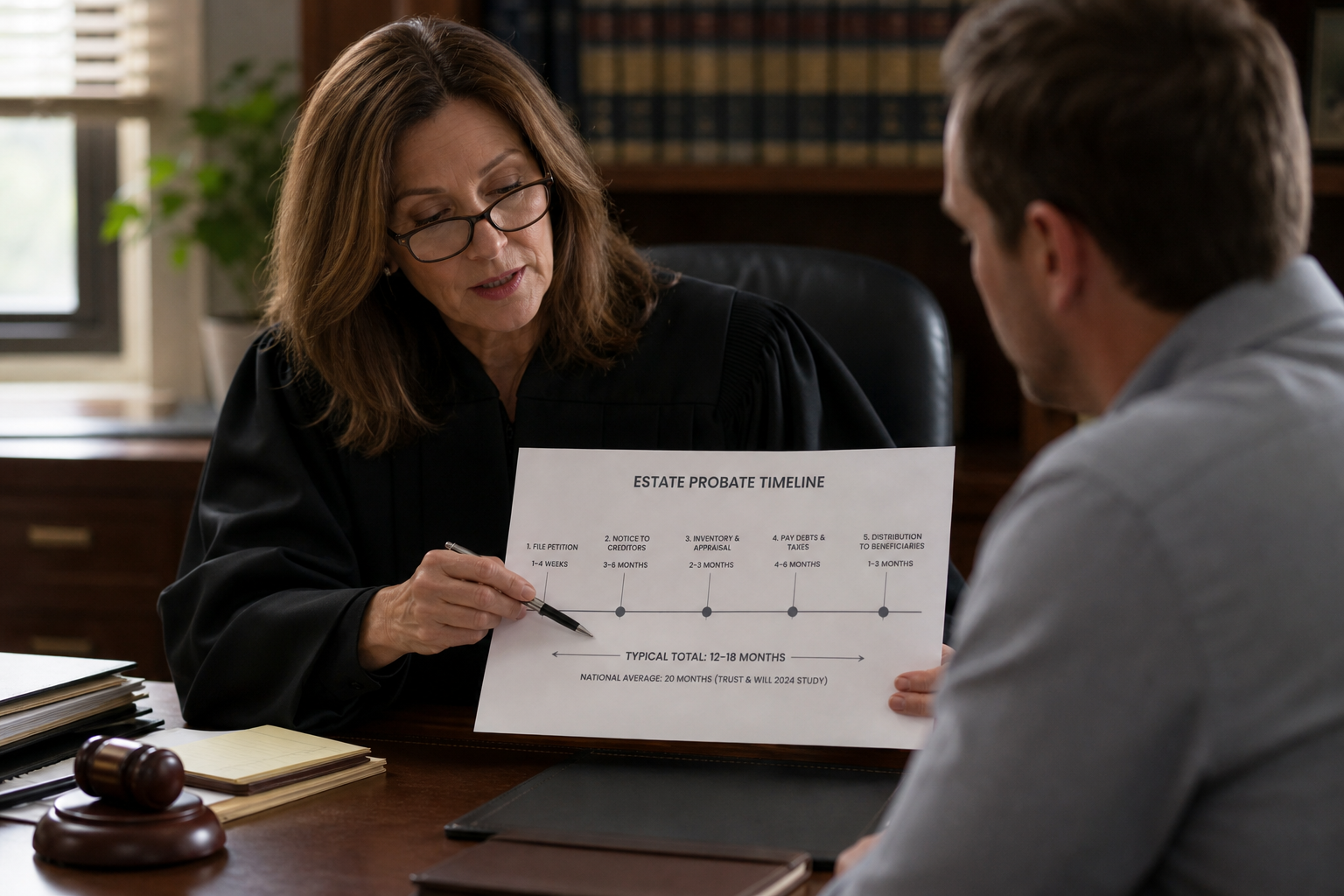
California's probate process follows a court-supervised sequence that can stretch anywhere from nine months to several years, depending on estate complexity and court backlog. Knowing what to expect at each stage helps executors and beneficiaries plan ahead and avoid costly missteps.
Opening the Estate
The process begins when someone files the will and probate petition with the Superior Court in the county where the decedent lived. The court then schedules a hearing, typically four to eight weeks out, to formally appoint the executor or administrator and admit the will to probate.
Inventory and Appraisal
Once appointed, the executor must identify and value all probate assets. California requires the use of a court-appointed referee, a Probate Referee, to appraise most assets at fair market value as of the date of death. This step can take several months if the estate holds real property, business interests, or investments that require detailed valuation.
Notifying Creditors and Paying Debts
After the inventory, the executor must formally notify known creditors and publish a notice to creditors in a local newspaper. California law gives creditors four months from the date of the executor's appointment (or 60 days from the date of notice, whichever is later) to file claims. Valid debts, taxes, and administrative expenses are paid before any distributions go to beneficiaries.
Accounting and Court Approval
The executor files a formal accounting with the court detailing all income received, expenses paid, and proposed distributions. Beneficiaries have the right to review and object. Once the court approves the accounting and the proposed distribution plan, the executor can transfer assets to beneficiaries.
Closing the Estate
After distributions are made, the executor files a final report and petition to close the estate. The court reviews it and, if satisfied, issues an order discharging the executor from their duties.
Do You Need a Probate Lawyer If There Is No Will in California
When someone dies without a will in California, their estate is governed by the state's intestate succession laws. These rules determine who inherits property and in what order, with preference given to spouses, children, and other close relatives. While this legal framework exists to fill the gap left by a missing will, applying it is rarely straightforward.
You are not legally required to hire a probate lawyer in California, but going without one carries real risk. Intestate estates still go through probate court, and the rules around which assets qualify, how heirs are identified, and how distributions are calculated can get complicated fast, especially when blended families, estranged relatives, or jointly held property are involved.
There are a few situations where professional legal guidance tends to be worth it:
- The estate includes real property, business interests, or substantial financial accounts that require formal court approval before transfer.
- There are multiple potential heirs whose shares need to be calculated under California's intestate succession formula.
- A creditor has made a claim against the estate, and you need to determine whether it's valid or how it affects the remaining assets.
- There is a dispute among family members about who qualifies as an heir or how assets should be divided.
- The deceased had assets in multiple states, which can require separate probate proceedings in each jurisdiction.
California's probate process also has a specific threshold to keep in mind. Estates valued at $208,850 or more are generally required to go through formal probate, regardless of whether a will exists. Below that threshold, simplified transfer procedures may apply, such as a small estate affidavit or a spousal property petition, which can sometimes be handled without an attorney.
For those who cannot afford private counsel, California offers several resources. Legal aid organizations throughout the state provide free or reduced-cost services to income-qualifying individuals. Many county courthouses also have self-help centers where staff can answer procedural questions, though they cannot give legal advice. Some probate attorneys offer free initial consultations, which can at least help you understand the scope of what you are facing before committing to representation.
What Happens Without Legal Help
Handling an intestate estate without an attorney in California is possible in simpler cases, but mistakes in probate court filings can cause substantial delays and added costs. Incorrect forms, missed deadlines, or failure to properly notify creditors and heirs can expose the executor or administrator to personal liability. If the estate is modest and the family agrees, self-representation may be manageable. In most other cases, having at least a consultation with a probate attorney before proceeding is a sound decision.
Finding Free or Low-Cost Probate Legal Services in California
California has a reputation for high legal fees, but there are real options for families who can't afford full-rate probate representation. Knowing where to look can make a meaningful difference in how much you spend, or whether you spend anything at all.
State and County Bar Resources
Most counties in California operate a lawyer referral service through the local bar association. Many of these programs offer an initial consultation for $25 to $50, which gives you time with a licensed attorney to assess your situation before committing to anything further. The State Bar of California maintains a directory of certified referral services organized by county, which is a practical first stop.
Legal Aid Organizations
Legal aid societies provide legal representation to low-income individuals across the state at no charge. Eligibility is typically based on household income relative to the federal poverty level. Some organizations focus on elder law and estate matters, which often overlap with probate. Coverage varies by county, so availability depends on where you are located.
A few organizations worth knowing about:
- Bay Area Legal Aid serves residents across the greater Bay Area and takes cases involving estate and probate matters for qualifying individuals.
- Bet Tzedek operates in Los Angeles County and has specific programs for seniors dealing with estate issues.
- Inland Counties Legal Services provides civil legal aid in Riverside and San Bernardino counties, including some probate assistance.
Self-Help Centers at the Courthouse
California's superior courts are required to maintain self-help centers where members of the public can get procedural guidance, help filling out forms, and general information about the probate process. These centers are staffed by trained legal professionals, though they cannot give legal advice or represent you. For straightforward estates with minimal assets and no disputes, the self-help center may be enough to get through the process independently.
Law School Clinics
Several California law schools run free legal clinics where students, under the supervision of licensed attorneys, take on real cases. These clinics often handle estate planning and probate matters. Schools like UC Berkeley School of Law, Loyola Law School in Los Angeles, and UC Irvine School of Law operate clinics that may accept probate cases depending on the semester and current caseload.
When Free Services May Not Be Enough
Free and reduced-cost services are genuinely useful, but they have limits. Legal aid organizations often face high demand and limited capacity, resulting in long waitlists. Self-help centers cannot represent you if a dispute arises. And law school clinics may not be available year-round or may not take your specific type of case.
If the estate involves real property, creditor disputes, or any contention among heirs, it is worth considering whether hiring an attorney, even one billing at a reduced hourly rate, is the more practical option. Some probate attorneys in California offer sliding-scale fees or unbundled services, meaning they handle only specific parts of the case instead of the whole matter, which can substantially reduce costs.
How Alix Complements Traditional Probate Lawyers in California

Alix was built for the reality that probate is rarely just a legal problem. When someone passes away, the legal work is one part of a much larger and more demanding process: locating assets, closing accounts, communicating with financial institutions, filing taxes, coordinating the sale of property, and distributing what remains to beneficiaries. Attorneys handle the courtroom and the legal filings. Alix handles everything else.
For families in California dealing with an estate, that distinction matters.
California probate is among the most time-consuming in the country, with cases routinely taking well over a year to close due to court congestion and increased filings.
During that time, executors carry real fiduciary and legal responsibility, often without any prior experience managing an estate. Legal representation covers the court process, administrative coordination, asset tracking, and day-to-day follow-up, but this is outside its scope, and it is there that the workload on executors tends to build.
That is where Alix steps in, handling the work that falls outside legal scope but still demands expertise and consistent follow-through.
What Alix Takes Off Your Plate
Alix works alongside your legal representation, handling the day-to-day complexities of estate settlement so your attorney can stay focused on what requires their license.
- Alix identifies and documents assets across financial institutions, insurance providers, and retirement accounts, giving you a clear picture of what the estate holds before probate.
- Alix handles outreach to banks, brokerages, and servicers to notify them of the death and begin the account closure or transfer process, which can take weeks of follow-up on its own.
- Alix coordinates property-related tasks, including valuation support and the steps required before a home sale, which is often the largest and most time-sensitive asset in a California estate.
- Alix manages beneficiary communication so executors are not fielding questions alone, and organizes the documentation trail required for a clean final accounting.
Why This Matters for California Executors
California's statutory attorney fee structure means legal fees are set by the estate's gross value, not by the complexity of the work. For a $1 million estate, attorney fees alone can reach $23,000 before any costs are added. That makes it worth understanding exactly what your attorney is and is not responsible for, and where a service like Alix can fill the gaps without duplicating what you are already paying for.
Alix is not a law firm and does not provide legal advice. What it does is take on the substantial non-legal workload that executors otherwise carry alone, reducing errors, shortening timelines, and making the overall process more manageable for families who are already dealing with a great deal.
Final Thoughts on California Probate Legal Services
Whether your loved one left a will or died intestate, California probate requires careful attention to statutory rules, court deadlines, and asset transfers that most people don't deal with regularly. Finding the right probate lawyer means understanding what they handle and what they don't, so you can plan for the gaps that executors typically manage alone. Alix takes on the administrative and execution work that sits outside legal representation but still demands expertise and follow-through. Connect with us to see how we help families move through estate settlement with less stress and fewer delays.
FAQs
What does a probate lawyer cost in California?
California sets probate attorney fees by statute based on the gross value of the estate: 4% on the first $100,000, 3% on the next $100,000, 2% on the next $800,000, 1% on the next $9 million, and 0.5% on amounts above $25 million. For a $1 million estate, expect attorney fees around $23,000, paid from estate assets at the close of probate.
Do I need a probate lawyer if there is no will?
You are not legally required to hire one, but intestate estates still go through probate court in California, and the rules around heir identification and asset distribution can get complicated fast. Estates valued above $208,850 generally require formal probate, and mistakes in court filings can cause substantial delays and expose you to personal liability.
Probate lawyer vs estate attorney: what's the difference?
An estate attorney drafts wills and trusts for living clients to create an estate plan before death. A probate attorney handles the court process after death, managing filings, creditor notices, asset transfers, and dispute resolution. Some attorneys practice both, but when settling an estate, you want someone whose practice focuses on probate administration.
Can I find a probate lawyer in California who offers a free consultation?
Yes. Most counties operate a lawyer referral service through the local bar association that offers initial consultations for $25 to $50, and many probate attorneys offer free first meetings to assess your situation. Legal aid organizations also provide free services to income-qualifying individuals, though availability varies by county.
What does a probate lawyer do that Alix doesn't?
A probate lawyer handles the legal work: court filings, creditor notices, hearings, and formal accountings that require a law license. Alix handles everything else: asset discovery, account closures, property coordination, beneficiary communication, and the day-to-day administrative work that keeps the estate moving forward between legal milestones.
.png)
Related resources