Executor Checklist: The Tasks in Order
You have been named executor, and the work is already arriving from every direction: a bank statement you do not recognize, a bill in your loved one's name, and questions from family about what happens next.
Executor Checklist: The Tasks In Order, First Week to Closing
You have been named executor, and the work is already arriving from every direction: a bank statement you do not recognize, a bill in your loved one's name, and questions from family about what happens next.
This checklist puts the work in order. First protect the estate and gather the records. Then get court authority, find the assets and debts, handle taxes and valid claims, and transfer what remains only when it is safe.
Phase 1: The First Two Weeks
In many states, your authority before the court appoints you is narrow: burial, funeral costs, and keeping the property safe, not paying creditors or beneficiaries.
- Secure the home and property. Lock the house, collect mail, keep homeowners insurance active, and check that the mortgage, utilities, and property taxes do not lapse.
- Order certified death certificates. Banks, insurers, and the court each want one, and many keep the copy, so order ten or more from the funeral home or vital records office.
- Locate the will and key documents. Find the original will, any trust, the deed, account statements, insurance policies, and tax returns. Check a home safe, a safe deposit box, and the drafting lawyer's office.
- Protect against fraud and missing mail. Freeze your loved one's credit with all three credit bureaus, forward mail, and watch for unfamiliar account or benefit activity.
- List urgent household and care needs. Keep essential services running, protect pets and property, and cancel subscriptions only after checking whether the account contains records or benefits the estate still needs.
- Do not pay debts or distribute anything yet. Paying the wrong bill first, or giving assets away early, can leave you covering a higher-priority claim yourself.
Phase 2: Getting Authority
You cannot act for the estate until a court appoints you. File the will and a petition with the probate court in the county where the person lived. This court goes by different names by state: Surrogate's Court in New York, the Register of Wills in Pennsylvania and Maryland.
Once appointed, the court gives you paperwork proving your authority to act, with one version for an executor named in a will and another for an administrator when there is no will. Banks and title companies ask for this before they release anything. Getting there is covered in how to become an executor. With your appointment papers in hand:
- Open an estate bank account. As executor, you deposit estate funds into an account held for the estate, not for yourself, and run every payment through it.
- Get an EIN if needed. The estate is a separate taxpayer, so you'll usually need an Employer Identification Number from the IRS, not your Social Security number, to open the account and file returns.
- Set up one record system. Keep court papers, account statements, bills, receipts, contacts, and a running task list together so every decision can be traced later.
Phase 3: Inventory and Notifications
- List and value the assets. Bank and brokerage accounts, real estate, vehicles, retirement accounts, life insurance, and personal property. Note a date-of-death value and whose name is on each account or deed; a joint account or payable-on-death beneficiary may pass outside probate entirely.
- Notify creditors and agencies, and redirect mail to yourself. Tell the Social Security Administration, banks, card issuers, insurers, and pension providers. Notice to creditors is often required before you can safely pay claims, and redirected mail catches accounts you did not know existed.
- Check overlooked places. Search for unclaimed property, safe deposit boxes, digital accounts, stored-value accounts, automatic payments, and benefits that may be owed to the estate.
- Keep beneficiaries informed. Share what phase the estate is in, what is still missing, and why payment cannot happen yet. Keep a written record of important updates.
Phase 4: Debts, Taxes, and Records
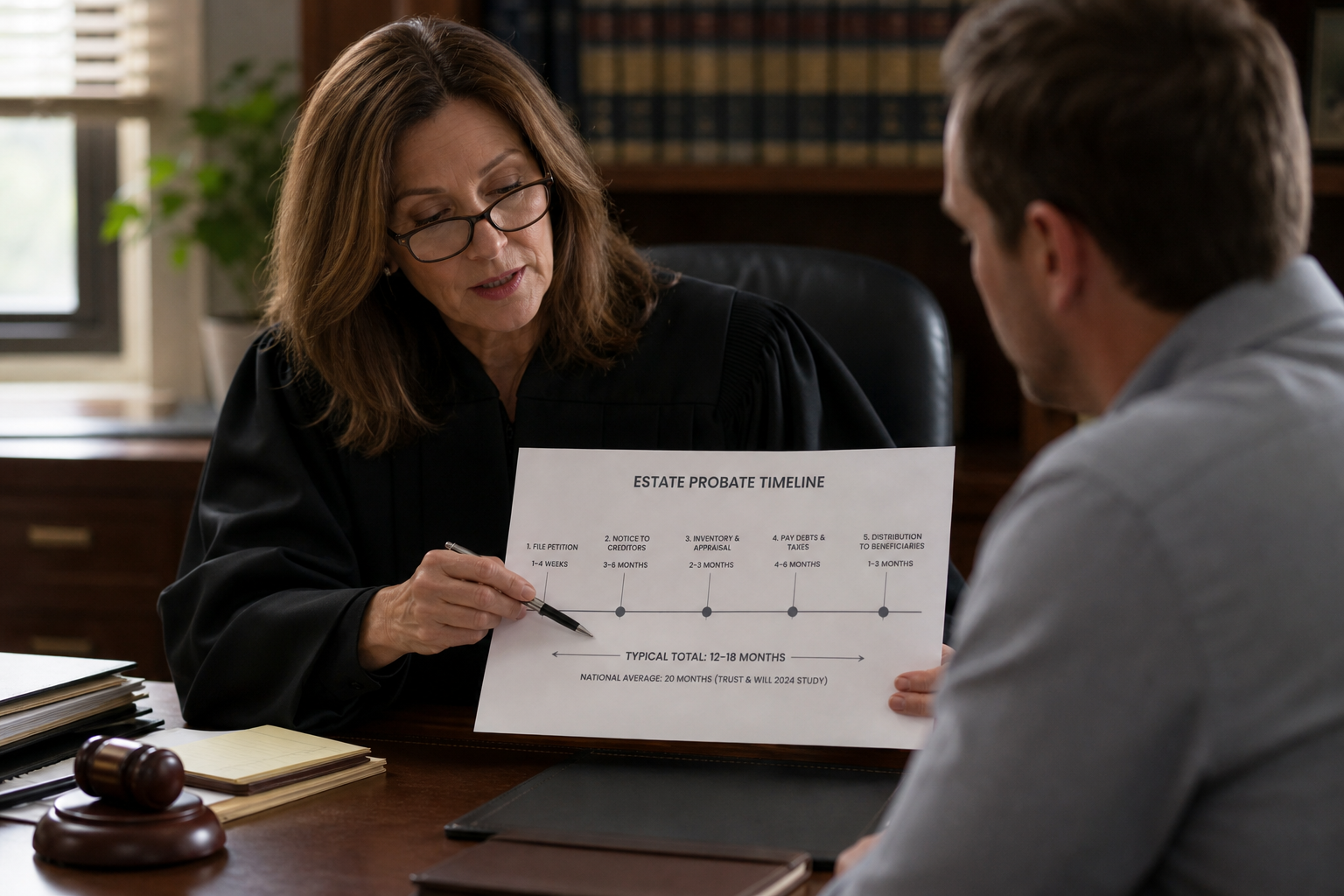
Creditors usually get a defined window to bring claims, varying by state, often around four to six months after notice. You pay valid debts in priority order, only after that window closes, so a higher-priority claim can't surface once the money is gone. If the estate may not cover everything, professional guidance earns its cost before you pay anyone.
On taxes, you typically file your loved one's final income tax return, and the estate may owe its own return if it earned money. Estate tax is different, with a much higher threshold, over $13 million per person in recent years, so it rarely applies. This step calls for a CPA, not a DIY read of the tax code.
Throughout, keep a running ledger of every dollar in and out of the estate account, with receipts. Courts and beneficiaries can ask for it; clean records are your defense if a decision is questioned.
Phase 5: Distribution and Closing
Distribute only after debts, taxes, and expenses are cleared. If you pay beneficiaries too early and a valid claim or tax bill arrives later, a court can order the money returned. You may be on the hook for whatever cannot be recovered.
- Get a signed receipt from each beneficiary for what they receive.
- File a closing report with the court showing what the estate took in, paid out, and distributed.
- Close the estate once the court approves.
The Mistakes That Put You Personally on the Hook
Most problems trace to a few moves. Distributing too early, before the creditor window closes. Mixing funds, paying estate bills from a personal account or the reverse. Missing deadlines for creditor notice, tax filings, or accountings. An executor can be held personally liable for these losses. When the estate is large or looks insolvent, professional review protects you, not a step to skip.
How Alix Helps You Work the List
Alix is a comprehensive estate settlement service that works with legal counsel to do the heavy lifting. One dedicated Estate Settlement Specialist handles the non-legal operational work, including asset discovery, document organization, account closures, creditor management, tax coordination, property needs, beneficiary updates, and the running record.
Licensed attorneys handle court filings, creditor notices, hearings, and formal accountings. You can use your own attorney, or an attorney from Alix's network is included in Alix's one transparent fee.
If you are responsible for an estate and do not want to manage probate, accounts, property, bills, taxes, and family updates alone, Alix can help. It takes on the heavy lifting from start to finish.
Related Guides
- Executor duties
- How to become an executor
- Estate settlement
- Probate
FAQs
Can I be held personally liable as executor?
You can be, in some cases, if you distribute assets too early, pay debts out of order, or mishandle estate funds, leaving a claim or tax bill unpaid. Following the phases in order limits that risk.
How long do I wait before paying my loved one's debts?
Usually until the creditor claim window closes, which varies by state, often around four to six months after notice. Paying too soon risks leaving a higher-priority claim unpaid, which can fall to you. Confirm the window with the local court.
Do I need a separate bank account and an EIN for the estate?
In most cases, yes. The estate is its own taxpayer, so you usually get an EIN (Employer Identification Number) from the IRS and open a dedicated account. Keeping estate money separate from your own protects the accounting and you.
Do I need a lawyer to be an executor?
Not always. Simple estates are sometimes settled without one, depending on the state. Licensed counsel is especially important when the estate may be insolvent, includes a business or property in another state, involves family conflict, or requires legal filings you cannot make yourself. You can use your own attorney, or an attorney from Alix's network is included in Alix's one transparent fee.
.png)
Related resources