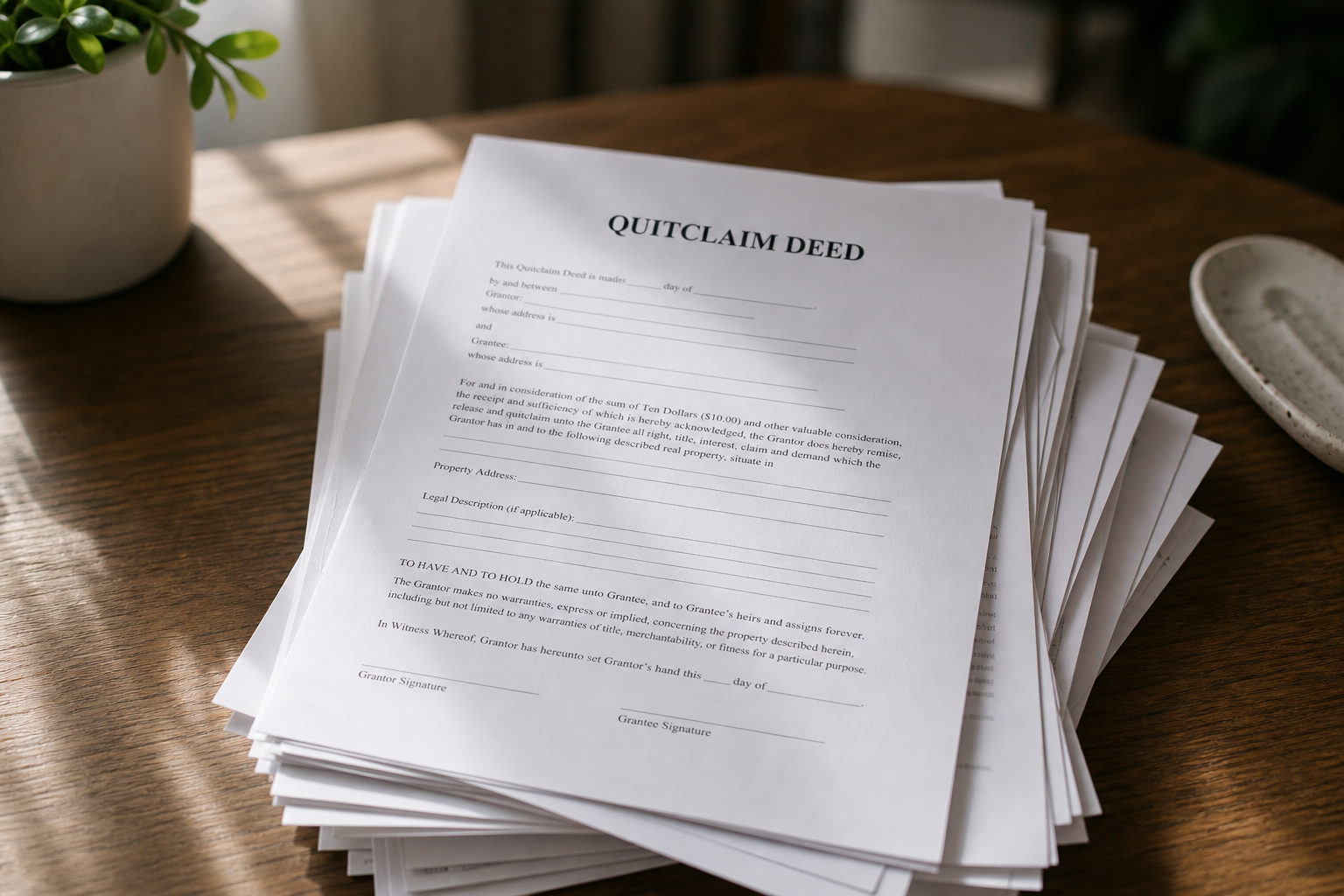
The will tells you who should get what. But it's titling and beneficiary designations that decide whether an asset even goes through probate at all. If you're looking at an estate and trying to figure out what requires court involvement and what doesn't, that's the distinction you need to nail down first. Here's how it actually works.
Key Takeaways:
- Titling and beneficiary designations control whether an asset goes through probate, not the will
- Non-probate assets like IRAs, life insurance, and POD accounts skip court but can still count toward the taxable estate
- Probate typically costs 3% to 7% of gross estate value and averages 20 months, per a Trust & Will 2024 study
- You must file the probate inventory within 60 to 90 days of appointment, using date-of-death fair market values
- Alix coordinates estate settlement across asset discovery, appraisals, creditor correspondence, and court filings under one estate-funded fee
What Are Probate Assets
Most executors assume a will decides everything. It doesn't. What actually controls whether an asset goes through probate court is how that asset was titled at death and whether it had a named beneficiary attached to it.
A probate asset is any property the decedent owned solely in their own name, with no joint owner and no beneficiary designation, at the time of death. Because there is no automatic legal mechanism to transfer that property to someone else, a probate court has to supervise the transfer. The will, if there is one, tells the court who should receive those assets. Without a will, state law fills in the gap. Either way, the court process is what actually moves the asset from the decedent's name to the heir's.
The will itself is not what makes something a probate asset. An asset can be mentioned in a will and still skip probate entirely if it carries a beneficiary designation or a joint owner. Conversely, an asset with no mention in the will at all can be a probate asset if it was held solely in the decedent's name. Titling and beneficiary designations are the determining factors, full stop.
The practical implication: two people can die with identical wills and end up with very different probate estates, simply because of how their accounts and property were set up.
That distinction matters for you as executor because probate assets are the ones that require court supervision, attorney filings, and creditor notice periods before you can distribute anything. The size and composition of the probate estate shapes nearly every timeline and cost decision you'll face in settlement.
Common Examples of Probate Assets
Here is a practical breakdown of what typically lands in the probate estate.
Any home, land, or investment property titled only in the decedent's name goes through probate. Property held as joint tenants with right of survivorship is a different story, but sole ownership always requires court-supervised transfer.
Bank Accounts Without a Payable-on-Death Designation
A checking or savings account held in one person's name, with no POD beneficiary on file, is a probate asset. The bank will not release funds to heirs without a court order or letters testamentary.
Vehicles
Cars, trucks, motorcycles, and boats titled solely to the decedent pass through probate in most states. The DMV will not retitle to an heir without executor documentation.
Investment and Brokerage Accounts Without Transfer-on-Death Designations
A brokerage account without a TOD designation falls into the probate estate the same way a bank account does. Many older accounts were opened before TOD elections were common, so this one catches executors off guard more often than you would expect.
Business Interests
A sole proprietorship, a partnership interest, or shares in a closely held corporation owned outright by the decedent are probate assets. How they transfer depends on any operating agreement or buy-sell provisions in place, but the probate court is typically involved.
Intellectual Property
Royalties, copyrights, and patents held in the decedent's name alone are probate assets. These are easy to miss during inventory, particularly if they generate modest recurring income.
Tenant-in-Common Property Interests
If the decedent owned a share of property as a tenant in common instead of as a joint tenant, only their fractional interest goes through probate. The co-owner's share is unaffected.
One important wrinkle worth flagging: even assets that had a beneficiary designation can revert to the probate estate if the named beneficiary predeceased the decedent and no contingent beneficiary was ever named. The account or policy then has nowhere automatic to go, and the estate steps in as the default recipient.
What Are Non-Probate Assets
Non-probate assets are property that transfers at death through a legal mechanism built into the asset itself, with no court involvement required. The transfer happens automatically, by operation of law, the moment the decedent dies. No probate filing, no creditor notice period, no judge's signature.
Three structures create this outcome:
- Joint ownership with right of survivorship, where the surviving co-owner inherits the decedent's share instantly and the asset never enters the probate estate at all
- Named beneficiary designations on accounts, retirement funds, or insurance policies, where the asset pays directly to whoever is listed on the designation form, regardless of what the will says
- Trust ownership, where the asset is held by the trust and not by the individual, and the trust document controls how and when distribution happens
According to Cornell Law School's Legal Information Institute, non-probate assets pass outside the probate estate entirely and are governed by the terms of the instrument that created the transfer right, whether that's a beneficiary designation form, a joint tenancy deed, or a trust agreement.
The point that surprises most executors: a will has no authority over any of these assets. You can name someone in the will, spell out specific instructions, even write paragraphs about a particular account, and none of it matters if that account has a beneficiary designation pointing somewhere else. The designation wins.
The will is only relevant to assets that have no other transfer mechanism in place. That's why reviewing beneficiary designations during estate planning matters far more than most people realize, and why, as executor, your first job is sorting assets by how they transfer, not by what the will says about them. Getting that sorting wrong early creates real downstream problems: assets you assume you control as executor may already be on their way to a named beneficiary, and assets you assume someone else will handle may actually fall into the probate estate and require court action.
Non-Probate Asset Examples: What Passes Outside Probate
The assets below transfer at death without court involvement. Each one does so because of a structure built into how the asset was held or designated, not because of anything in the will.
- Life insurance policies with a named beneficiary pay directly to that person. The death benefit never enters the probate estate.
- Retirement accounts, including IRAs and 401(k)s, pass to whoever is listed on the beneficiary designation form on file with the plan administrator.
- Annuities with named beneficiaries follow the same logic: the contract governs the transfer, not the will.
- Jointly held property with right of survivorship passes automatically to the surviving co-owner. The decedent's share extinguishes at death and vests in the survivor by operation of law.
- Payable-on-death bank accounts transfer to the named POD beneficiary as soon as the bank receives a death certificate. No letters testamentary required.
- Transfer-on-death brokerage accounts work the same way: the TOD designation controls, and the account bypasses probate entirely.
- Assets held in a revocable living trust pass according to the trust document, administered by the successor trustee, with no court supervision.
One wrinkle worth knowing on that last point: a revocable living trust only controls assets that were actually retitled into it. If the decedent created a trust but later acquired a brokerage account, bought a car, or opened a new savings account without transferring it into the trust, that asset sits in their individual name at death. It becomes a probate asset regardless of what the trust document says about it.
How This Affects You as Executor
Estates with trusts that were never fully funded are surprisingly common, and they may catch you off guard during inventory. You may find a trust document that looks thorough on paper but only captures a fraction of what the decedent actually owned at the time of death. That gap creates extra probate work you were not expecting, for assets the decedent likely assumed were already protected. Checking each asset against both the trust schedule and the title on record is the only way to know for certain which bucket it falls into.
Do Household Items and Personal Property Go Through Probate
Furniture, jewelry, artwork, collectibles, electronics, clothing, tools, and the rest of the contents of a home all count as personal property. When that property was owned solely by the decedent with no joint owner or beneficiary designation, it falls into the probate estate.
That's the general rule across most states. As executor, you're typically responsible for inventorying every item of meaningful value, getting credentialed appraisals for anything above nominal worth, and holding those assets until the court authorizes distribution. Jewelry and art collections in particular can carry values that surprise people, and undervaluing them during inventory creates personal liability exposure for you.
A few practical caveats worth knowing:
- Many states allow heirs to claim physical personal property of modest value through a simplified small estate affidavit process, bypassing formal probate entirely. The threshold varies widely by state, so confirming the applicable figure for the decedent's state of residence is one of the first things to nail down.
- Some states have specific exemptions for certain household goods or a set dollar amount of personal property that passes directly to a surviving spouse or dependent without court involvement.
- Items with titled ownership, like a car or a registered boat, follow the titling rules covered earlier and require formal transfer regardless of their value.
The affidavit threshold question matters in practice. California's threshold for deaths on or after April 1, 2026 is $239,700 in personal property. Illinois allows small-estate affidavits for personal property valued at $150,000 or less. Texas has its own structure. If the decedent's total probate estate, including personal property, falls below the applicable state threshold, you may be able to handle the transfer without full probate, which changes your timeline and cost picture considerably.
One thing executors often get wrong: assuming household contents are too minor to worry about. A home full of furniture, a coin collection, a few pieces of inherited jewelry, and some art can add up quickly. Getting a proper valuation early keeps you on the right side of your fiduciary duty and avoids disputes among beneficiaries later.
When Is Probate Required
Probate is triggered by a specific set of conditions. The most useful way to think about it: if the decedent held assets solely in their own name, above the applicable state threshold, formal probate is almost certainly required.
Three conditions generally bring an estate into probate court:
- The estate holds solely owned assets with no beneficiary designation and no joint owner, meaning there is no automatic mechanism to pass the asset outside of court.
- Real property was titled in the decedent's name alone, with no co-owner or transfer-on-death deed in place.
- The total value of those probate assets exceeds the state's small-estate threshold, which determines whether a simplified affidavit process can substitute for full court proceedings.
That last point is where the dollar question comes in. Each state sets its own threshold below which a simplified affidavit process can substitute for full probate. In California, the threshold is $239,700 for deaths on or after April 1, 2026, and $208,850 for deaths before that date. Other states vary widely, from a few thousand dollars to well over $100,000. If the decedent's solely owned probate assets fall below your state's figure, you may qualify for a shorter, less costly process. If they exceed it, formal probate is required regardless of how straightforward everything else looks.
When There Is No Will
When someone dies without a valid will, probate still happens. The court appoints an administrator instead of approving an executor named in a will, and state intestacy laws govern who inherits what. Those laws follow a fixed hierarchy, typically spouse first, then children, then other relatives, with no room for the decedent's actual preferences. The process runs the same way as probate with a will; the difference is that distribution is set by statute, not by the decedent's instructions.
One clarification worth making: dying without a will does not automatically mean more assets go through probate. A decedent with no will but well-maintained beneficiary designations and jointly held accounts may have a smaller probate estate than someone with a detailed will but poorly structured assets.
The Real Cost of Probate
Probate costs more than most executors expect, and the bill comes due before a single heir receives anything.

The generally cited range is 3% to 7% of the estate's gross value; for a full breakdown of probate costs covering attorney fees, executor compensation, court filing fees, appraisal costs, publication notices, and bond premiums. On a $500,000 estate, that's somewhere between $15,000 and $35,000 consumed by the process itself. In states with statutory fee schedules, like California, total costs can reach 4% to 7% of gross estate value, and that percentage applies to the gross, not net, so a $1 million home with a $600,000 mortgage is still a $1 million asset for fee calculation purposes.
Per a Trust & Will 2024 study, the national average probate timeline is 20 months. That length matters because many of these costs, particularly attorney fees and executor compensation in hourly-rate states, accumulate the entire time. A dispute among beneficiaries, a creditor claim that requires resolution, or a piece of real property that won't sell quickly can push that timeline further and the costs with it.
A few line items worth knowing:
- Court filing fees vary by state and estate size but typically run from a few hundred to several thousand dollars.
- Publication fees for creditor notices are mandatory in most states and non-negotiable.
- Bond premiums, required when the court orders the executor to be bonded, are calculated on estate value and can add up on larger estates.
- Appraisal fees for real property, business interests, and personal property of meaningful value are required to satisfy the executor's inventory obligations.
All of these costs are paid from estate assets before distribution. Heirs receive what's left.
Non-Probate Assets and Estate Taxes: The Distinction That Trips People Up
Skipping probate is not the same as skipping taxes. That distinction catches a lot of executors off guard, and the gap between the two can be a meaningful dollar figure.
The IRS defines the gross estate for federal estate tax purposes broadly. According to the IRS estate tax FAQ, the gross estate includes the value of all property in which the decedent had an interest at the time of death, which covers far more than just probate assets. Life insurance proceeds paid directly to a named beneficiary, retirement accounts passing to a designated heir, and jointly held property that vested automatically in a surviving co-owner all bypass probate court entirely. They can still count toward the taxable estate. The beneficiary gets the money without a court order. The estate may still owe tax on it.
The federal estate tax return, Form 706, is due 9 months after the date of death. That deadline applies regardless of how much of the estate passed through probate vs. outside it.
A few distinctions worth holding on to:
- The federal estate tax exemption is high enough that most estates won't owe federal estate tax at all. Per IRS Rev. Proc. 2024-40, the federal estate tax exemption is $13.99 million per individual as of 2026. For estates below that figure, the inclusion of non-probate assets in the gross estate is a reporting consideration, not necessarily a tax bill.
- State-level estate and inheritance taxes are a separate matter. Several states impose their own estate taxes with lower exemption thresholds than the federal figure, and some states tax inheritances at the recipient level. Those rules vary considerably by state and can apply to assets that passed entirely outside of probate.
- The income tax treatment of inherited retirement accounts is distinct from estate tax. Beneficiaries who inherit an IRA or 401(k) typically owe income tax on withdrawals, under rules that depend on their relationship to the decedent and the account type.
As executor, your job is to account for all of these assets in the gross estate calculation, even the ones that transferred automatically and never touched the probate docket. Understanding what an executor does clarifies the full scope of that obligation.
How to Build a Probate Asset Inventory
The formal probate inventory is one of the first major deliverables you own as executor, and it carries real legal weight. Most states require you to file it with the court within 60 to 90 days of your appointment, and assets should be secured within 30 to 60 days of death. Missing that window creates personal liability exposure, well beyond a paperwork headache.

The inventory must capture every probate asset at its fair market value as of the date of death, not what the decedent paid for it, not what it's worth to the family emotionally, and not what it might fetch at auction six months from now. Date-of-death value is the legal standard, and the court will hold you to it.
What Goes on the Inventory
Every solely owned probate asset gets listed: real property, bank accounts, investment accounts, vehicles, business interests, and all physical personal property of meaningful value. The level of detail the court expects varies by state, but a defensible inventory names each item clearly enough that a third party could identify it. "Miscellaneous household goods" is rarely sufficient for anything above nominal value.
How to Value Different Asset Types
Valuation method depends on the asset type. A blanket estimation across categories is not enough, and the approach you take will either protect you or expose you if a beneficiary later disputes a figure.
- Real property requires a formal appraisal from a licensed appraiser, based on comparable sales at or near the date of death.
- Jewelry, art, antiques, and collectibles require a credentialed appraiser with documented expertise in that specific category.
- Financial accounts, including bank and brokerage accounts, are valued using account statements dated as close to the date of death as possible.
- Vehicles are typically valued using a recognized guide such as Kelley Blue Book, adjusted for actual condition.
- Everyday household goods of modest value can usually be estimated at fair market value, meaning what a willing buyer would pay at an estate sale, not replacement cost.
Anything you estimate instead of formally appraising creates exposure, particularly for items that could carry real value. If a beneficiary disputes a valuation, the burden falls on you to defend it.
Strategies to Minimize Probate Assets
There's no single approach that fits every estate. The right mix depends on your assets, your family structure, and how much upfront planning you're willing to do. A few legal tools let you make that choice deliberately, so court supervision isn't simply assigned to assets by default.
| Strategy | How It Works | Upfront Effort | Key Tradeoff |
|---|---|---|---|
| Revocable Living Trust | Title assets into the trust; successor trustee distributes at death with no court involvement | High: attorney fees to draft and fund; must retitle all assets | Unfunded trust provides zero probate protection; assets never transferred in still go through probate |
| Beneficiary Designations | Name a beneficiary on retirement accounts, life insurance, and annuities; designation controls transfer entirely | Low: no attorney or court filing required | Stale designations (e.g., after divorce or death) can override a carefully drafted will |
| POD / TOD Registrations | Add a payable-on-death or transfer-on-death designation directly to a bank or brokerage account | Low: added directly at the institution; account functions normally during lifetime | Cleaner than joint ownership because no shared access during life, but requires designation to be kept current |
| Joint Ownership With Right of Survivorship | Co-owner inherits decedent's share automatically at death; asset never enters the probate estate | Medium: deed or account retitling required; potential gift tax implications on real property | Co-owner has full access during your lifetime; works well between spouses, creates complications in other situations |
Revocable Living Trust
A revocable living trust removes assets from the probate estate by changing who holds title: the trust owns the assets, not you individually. At death, the successor trustee distributes according to the trust document with no court involvement. The upfront cost is real, typically attorney fees to draft and fund the trust properly, and the ongoing requirement to retitle assets into the trust is where most people fall short. As covered earlier, an unfunded trust provides zero probate protection. Assets sitting in your individual name at death still go through probate regardless of what the trust document says.
Beneficiary Designations on Financial Accounts
Adding or updating a beneficiary designation on retirement accounts, life insurance, and annuities is the simplest action with the most direct effect on the probate estate. No attorney required, no court filing. The designation form on file with the plan administrator or insurer controls the transfer entirely. Review these regularly, particularly after a divorce or a death in the family, because a stale designation can override a carefully drafted will.
Payable-on-Death and Transfer-on-Death Registrations
Most banks and brokerages allow you to add a POD or TOD designation directly to an account. The account continues to function normally during your lifetime. At death, it transfers to the named person outside of probate with no shared access during life, which makes this cleaner than joint ownership for accounts you want to control solo.
Joint Ownership With Right of Survivorship
Adding a co-owner with right of survivorship removes an asset from the probate estate at death. The tradeoff is that the co-owner has full access during your lifetime. For real property, there can also be gift tax implications depending on the value of the interest transferred. It works well in some situations, particularly between spouses, and creates complications in others.
Removing Items Before Probate and When Assets Can Be Distributed
Two realities collide here: the emotional pull to start wrapping things up right away, and the legal reality that the estate's assets belong to the estate until a court says otherwise. Acting before you are formally appointed, or before the estate's debts are settled, puts you personally on the hook for anything that goes missing, gets damaged, or gets paid out too soon.
Removing items from a home before probate opens is not automatically illegal, but it creates real exposure. If you distribute or dispose of property before the court appoints you and before debts are settled, beneficiaries or creditors can hold you personally liable for any shortfall. That liability follows you, not the heirs who already received the assets.
The Creditor Claim Window
Most states require a waiting period, typically three to six months from the date creditor notice is published, before any distribution to beneficiaries. That window gives creditors a fair chance to file claims against the estate. Paying out assets to heirs before it closes, and before all valid claims are satisfied, leaves you exposed if a creditor later comes forward with a legitimate debt the estate can no longer cover.
The order of operations matters here: debts, taxes, and administrative costs get paid first. What remains after those obligations are settled is what actually flows to the heirs.
How to Close Probate
Once creditors are resolved and taxes are filed, closing probate follows three steps:
- You file a final accounting with the court, documenting every asset that came into the estate, every expense paid out, and the proposed distribution to each beneficiary.
- The court reviews and approves that accounting.
- Upon approval, you receive a formal discharge, releasing you from your duties and personal liability as executor.
Until that discharge is signed, your fiduciary obligation to the estate remains active. Distributing assets early, even with good intentions, does not speed up that discharge. It only creates risk with no corresponding benefit.
How Alix Helps Executors Handle Probate Assets
Being named executor means inheriting a defined legal workload, and every task that comes with it. The full estate settlement process: probate asset inventory, creditor claim management, appraisal coordination, court filings, beneficiary communication, and tax document organization all land on your desk at once, across a process that typically runs 12 to 18 months (per a Trust & Will 2024 study, the national average is 20 months). Based on Alix's analysis of client estate files, settling an estate takes 600+ hours over 18 months. That's the actual scope of what you've taken on.
Alix is a human-led estate settlement service built for exactly this situation. Our estate settlement specialists handle 150+ administrative tasks that sit outside licensed legal work: asset discovery (including items executors commonly miss, like safe deposit boxes, uncashed checks, brokerage accounts at smaller institutions, and digital assets), coordinating credentialed appraisals, filing probate inventory documents, managing creditor correspondence, and keeping beneficiaries informed on distribution timelines throughout. An attorney from Alix's network is included in one transparent, estate-funded fee, covering all licensed legal work including court filings, creditor notices, and formal accountings. You don't need to find or separately retain your own attorney, though if you already have one, that works too.
Alix is the right fit for estates with real complexity: multiple accounts, real property to coordinate, creditor claims to resolve, trust structures that need sorting, or beneficiaries who need active communication. For executors facing a probate estate with layered assets and no clear roadmap, we coordinate the entire process as a single integrated engagement instead of a collection of tasks you manage independently across attorneys, appraisers, and financial institutions. If you're ready to hand off the administrative weight of settlement, start your Alix onboarding.
Final Thoughts on Understanding Probate Assets as an Executor
The distinction between probate and non-probate assets shapes nearly every decision you'll make during settlement, from which accounts you can access to when you can distribute anything to heirs. A will tells the court where things should go, but titling and beneficiary designations decide whether the court is involved at all. If the estate has multiple accounts, real property, or creditor claims to sort through, Alix handles the full process so you're not coordinating attorneys, appraisers, and financial institutions on your own.
FAQ
What's the difference between probate assets and non-probate assets?
Probate assets are property the decedent owned solely in their own name with no joint owner and no beneficiary designation; these require court supervision to transfer. Non-probate assets, like life insurance policies with named beneficiaries, jointly held accounts, retirement accounts, and assets held in a funded trust, transfer automatically at death by operation of law, with no court filing required. The determining factor is always how the asset was titled and whether a valid beneficiary designation was in place at the time of death, not what the will says.
Do household items and personal property go through probate?
Yes, personal property (furniture, jewelry, artwork, collectibles, vehicles, and other contents of a home) goes through probate when it was owned solely by the decedent with no joint owner or beneficiary designation attached. Some states allow heirs to claim modest personal property through a simplified small-estate affidavit process, with thresholds that vary widely: California's is $239,700 for deaths on or after April 1, 2026, while Illinois allows affidavits for personal property valued at $150,000 or less. As executor, you're responsible for inventorying every item of meaningful value and securing credentialed appraisals for anything above nominal worth before the court authorizes distribution.
What assets do not pass through a will or go through probate?
Assets with a named beneficiary designation, a joint owner with right of survivorship, or title held inside a funded trust all transfer outside of probate entirely, and the will has no authority over any of them. Common examples include IRAs and 401(k)s, life insurance proceeds, payable-on-death bank accounts, transfer-on-death brokerage accounts, and jointly held real property. One important caveat: a revocable living trust only protects assets that were actually retitled into it, so any account or property the decedent never transferred into the trust remains a probate asset regardless of what the trust document says.
Can you empty a house before probate, and when can estate assets be distributed?
Removing or distributing property before you are formally appointed executor and before the estate's debts are settled creates real personal liability exposure. Most states require a creditor claim window of three to six months from the date notice is published before any distribution to beneficiaries. Paying out assets before that window closes leaves you on the hook if a legitimate creditor later comes forward. The order of operations is debts, taxes, and administrative costs first; what remains after those obligations are satisfied is what flows to heirs.
How detailed does a probate asset inventory need to be, and how do you value items in a house for probate?
Most states require you to file a probate inventory within 60 to 90 days of your appointment, listing every solely owned asset at its fair market value as of the date of death. "Miscellaneous household goods" rarely holds up for anything above nominal value; each item should be described precisely enough that a third party could recognize it. Real property requires a formal appraisal from a licensed appraiser, jewelry and art require a credentialed specialist, financial accounts are valued from statements dated as close to the date of death as possible, and vehicles are typically valued using Kelley Blue Book adjusted for condition.
.png)
Related resources