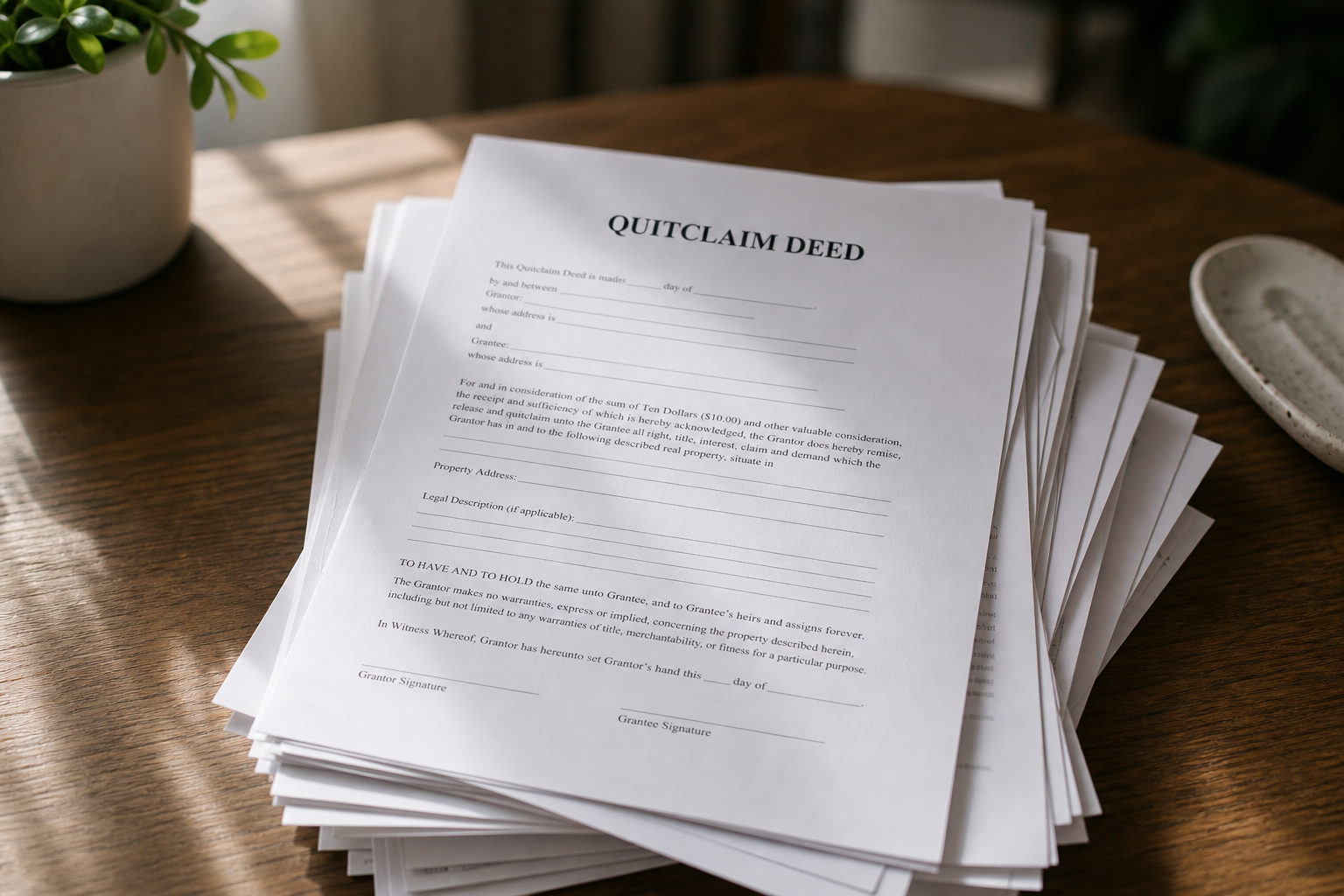
Sorting out whether you need to go through probate is one of the first things you'll face as executor, and the answer isn't always obvious. Some estates sail through a simplified process or skip court altogether. Others require full probate regardless of what the will says. Here's how to tell which situation you're actually dealing with.
Key Takeaways:
- Probate is required when assets are titled solely in the decedent's name with no beneficiary designation, regardless of whether a will exists.
- A will does not bypass probate. Asset titling and beneficiary designations are what actually determine whether court involvement is required.
- Small estate thresholds vary widely by state, from $25,000 in Michigan to $239,700 in California for deaths on or after April 1, 2026.
- Skipping probate when it is required freezes assets, keeps creditor claims open indefinitely, and exposes you to personal fiduciary liability.
- Alix is a technology-powered estate settlement service that coordinates 150+ administrative tasks for executors handling estates with real complexity, with fees charged to the estate.
What Probate Is and Why It Exists
Probate is the court-supervised process of settling a deceased person's estate. When someone dies, their assets don't automatically transfer to heirs. Instead, a probate court steps in to verify the will's validity (if one exists), appoint an executor or administrator to manage the estate, notify creditors, pay outstanding debts, and oversee the distribution of remaining assets to beneficiaries. The American Bar Association's probate overview outlines how this court-supervised transfer works across different estate types.
The process exists for a straightforward reason: without a neutral authority to referee competing claims, asset transfers would be vulnerable to fraud, family disputes, and creditor abuse. Courts provide the legal framework that makes transfers official and binding.
What Probate Actually Covers
Most people think of probate as just "filing the will with a court." In practice, it covers considerably more ground than that. A typical probate proceeding involves:
- Petitioning the court to open the estate and appoint an executor or administrator triggers your legal authority to act on the estate's behalf.
- Publishing a creditor notice so that anyone owed money by the decedent has a formal window to submit claims, typically 30 to 90 days depending on the state.
- Inventorying and appraising estate assets, from real property to brokerage accounts to personal property.
- Paying valid debts, taxes, and administrative expenses in the legally required order of priority before any distributions go out.
- Filing the required court accountings and, once approved, distributing what remains to beneficiaries.
Why It Takes as Long as It Does
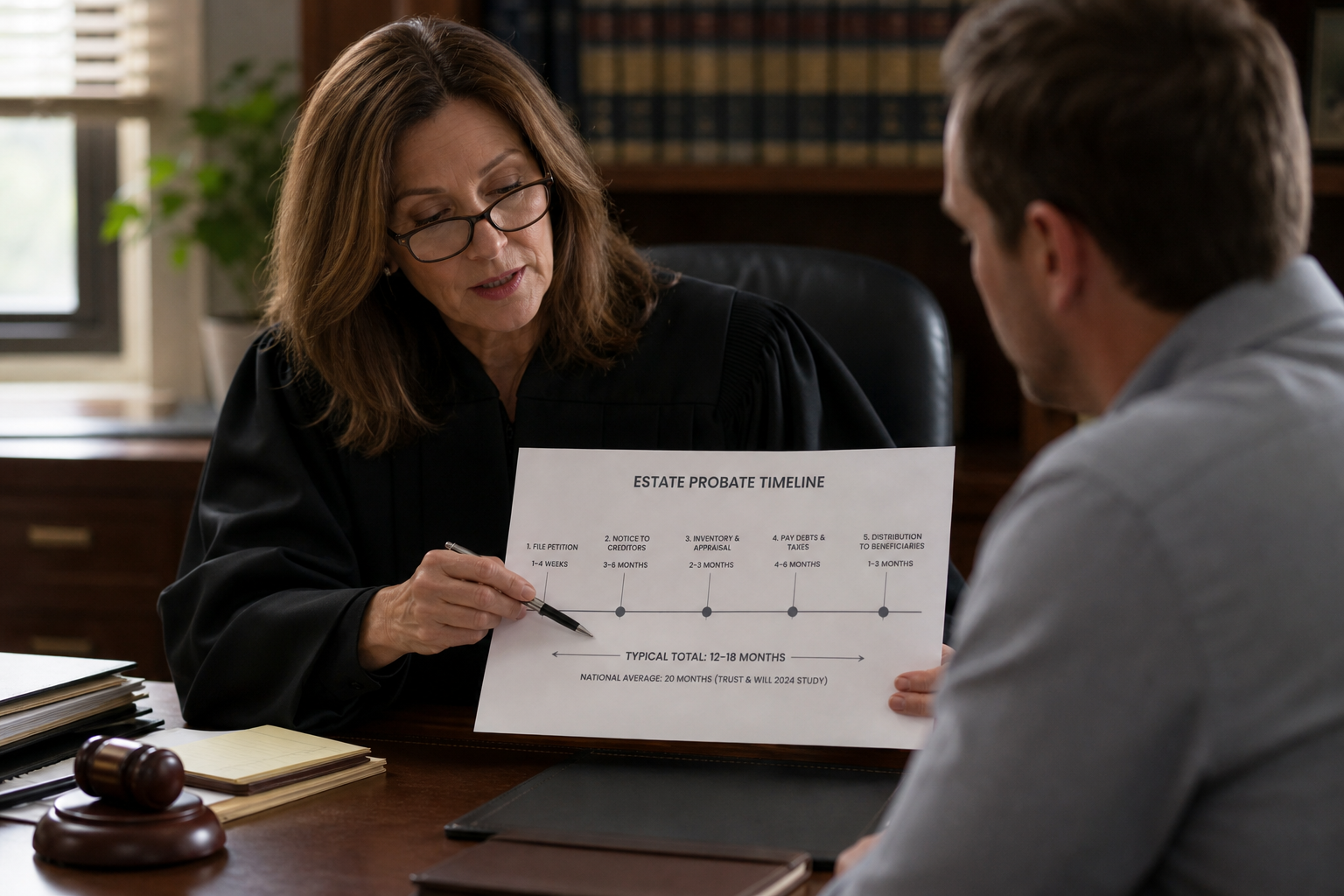
Probate moves slowly by design. Courts require notice periods, waiting windows for creditor claims, and formal hearings before approving distributions. According to the 2024 Trust & Will study, the national average probate timeline is 20 months. Complex estates, contested wills, or real property in multiple states can push that timeline further.
That timeline matters for you as executor because you remain personally liable for the estate throughout. Distributing assets before the creditor claim window closes, or before the court approves the accounting, can expose you to personal liability for unpaid debts.
Understanding this structure is the foundation for everything that follows in this guide: when probate is required, when it doesn't apply, and what your options are depending on where the estate is located.
When Probate Is Required After Death
Probate is required when someone dies owning assets solely in their own name that have no automatic mechanism for passing to another person. The court process gives an executor or administrator the legal authority to collect assets, pay valid debts, and transfer what remains to the rightful heirs or beneficiaries.
Several conditions typically trigger the requirement:
- The deceased owned real estate titled only in their name, with no joint tenant or transfer-on-death deed in place. Real property cannot be transferred simply upon death without a court-issued authority.
- Bank or investment accounts held solely in the decedent's name, with no named beneficiary and no payable-on-death designation, have no automatic transfer path and must pass through probate.
- The estate exceeds your state's small-estate threshold. California, for example, sets that figure at $239,700 for deaths on or after April 1, 2026, and $208,850 for deaths before that date. Other states set their own limits, and many are considerably lower.
- There is a dispute among heirs, creditors, or potential beneficiaries that requires judicial resolution. The probate court provides the formal forum for contested claims that cannot be resolved informally.
- A will exists, but the assets it governs were not structured to pass outside of probate. Having a will does not, on its own, bypass the process; it only directs how the court distributes what goes through it.
When a Will Does Not Automatically Mean Probate
A common assumption is that dying with a will in place eliminates the need for court involvement. It does not. A will is instructions to the probate court, not a bypass of it. What actually determines whether probate is required is how the assets were titled and whether beneficiary designations were kept current. If a person spent decades accumulating accounts in their own name, left beneficiary fields blank, and never set up a trust, probate is almost certainly required regardless of whether a detailed will exists.
The reverse is also worth knowing: an estate can sometimes move through probate quickly and with minimal friction when assets are clearly identified, a valid will names an executor, and no creditors dispute the claims filed against the estate.
What Property Goes Through Probate
Not every asset a person owns at death is subject to probate. The process only covers property titled solely in the decedent's name, with no built-in mechanism to pass it to someone else automatically.
Understanding which assets fall into which category is one of the first things you need to sort out as executor, because it directly shapes whether probate is required at all, and how complex the process will be if it is.
Here is a practical breakdown of how property typically gets categorized:
Assets That Usually Require Probate
These are assets the decedent owned alone, with no co-owner or named beneficiary to receive them automatically:
- Real estate held solely in the decedent's name, with no joint tenancy or transfer-on-death deed in place
- Bank accounts that are solely owned with no payable-on-death designation attached
- Investment and brokerage accounts without a named beneficiary or transfer-on-death registration
- Personal property, like vehicles, jewelry, art, and household items, that have no automatic transfer mechanism
- Business interests owned individually, including sole proprietorships or shares without a succession agreement
Assets That Typically Bypass Probate
These transfers outside of the court process because ownership or beneficiary designations were set up in advance:
- Jointly held property with right of survivorship, which passes directly to the surviving co-owner
- Retirement accounts such as IRAs and 401(k)s with a named beneficiary on file
- Life insurance policies with a designated beneficiary
- Payable-on-death and transfer-on-death accounts, which move to the named recipient without court involvement
- Assets held inside a trust, which the trustee distributes according to the trust document
A Note on Mixed Estates
Many estates contain both types of assets, which is where planning ahead matters. If the decedent had a will but held most property in ways that bypass probate, the estate may need only limited court involvement. If the bulk of assets were held solely in the decedent's name, a fuller probate proceeding is likely required regardless of whether a will exists.
The size thresholds that determine whether a simplified process applies vary by state, which the next section covers in detail.
What Assets Pass Outside Probate
Not every asset a person owns has to pass through probate court before it reaches the people who inherit it. A large portion of what most estates contain is already set up to transfer automatically, by contract or by title, without any court involvement at all.
Understanding which assets fall outside probate matters for two reasons: it tells you which parts of the estate you can move quickly, and it tells you where the real bottleneck is going to be.
Here are the main categories of assets that typically pass outside of probate:
- Assets held in a revocable living trust transfer directly to the named successor trustee without court oversight. The trust document itself governs distribution, so as long as the trust was properly funded during the decedent's lifetime, those assets bypass the process entirely.
- Accounts and policies with designated beneficiaries, including life insurance proceeds, IRAs, 401(k)s, and similar retirement accounts, pay out directly to whoever is named on file with the financial institution or insurer. The will has no authority over these.
- Jointly owned property with right of survivorship passes automatically to the surviving co-owner. This applies to real estate held as joint tenants with right of survivorship and to certain bank or brokerage accounts set up the same way.
- Payable-on-death (POD) and transfer-on-death (TOD) accounts are set up to pass directly to a named individual upon death. Many banks and brokerages offer these designations on checking, savings, and investment accounts.
- In some states, vehicles and real estate can also be titled with a TOD or beneficiary designation, allowing them to skip probate entirely.
How This Affects You as Executor
The assets that remain in the decedent's name alone, with no surviving joint owner and no beneficiary designation, form the probate estate. That is what the court process exists to transfer.
For most estates, this mix of probate and non-probate assets means the work splits into two tracks running in parallel: the non-probate assets you can often start moving right away, and the probate assets that require court authorization before anything can happen.
How Much Does an Estate Have to Be Worth to Go to Probate
Every state sets its own dollar threshold below which an estate can skip formal probate and use a faster, simplified process instead. These thresholds vary widely, and knowing where your estate lands can save months of court time.
In California, the threshold depends on the date of death. For deaths before April 1, 2026, estates valued at $208,850 or less may qualify for the small estate affidavit process. For deaths on or after April 1, 2026, that number rises to $239,700. Estates above those figures typically require full probate.
Other states set their own limits. Here is a snapshot of how thresholds compare across commonly searched states:
| State | Small Estate Threshold (approximate) | Process Available |
|---|---|---|
| California | $239,700 (deaths on/after Apr 1, 2026) | Affidavit or summary petition |
| Texas | $75,000 | Small estate affidavit |
| Florida | $75,000 (no real property) | Summary administration |
| Pennsylvania | $50,000 | Simplified administration |
| Michigan | $25,000 | Summary proceedings |
| New York | $50,000 | Voluntary administration |
These figures shift periodically, so always verify the current threshold with your state's probate court before assuming you qualify. Justia's 50-state small estates survey is a useful starting point for checking your jurisdiction's current rules.
What Counts Toward the Threshold
Not every asset in the estate counts toward the probate threshold. Jointly held property, accounts with named beneficiaries, assets held in a trust, and payable-on-death accounts typically pass outside of probate and outside the calculation entirely.
What does count: solely owned bank accounts with no beneficiary designation, real property held in the decedent's name alone, personal property like vehicles titled only in the decedent's name, and investment accounts without a named beneficiary.
- Assets with a named beneficiary (retirement accounts, life insurance) pass directly to that person and are excluded from the probate estate value.
- Property held in joint tenancy with right of survivorship transfers automatically to the surviving owner.
- A revocable living trust keeps assets out of the probate estate entirely, regardless of total value.
If the gross probate estate falls below your state's threshold, simplified procedures become available, but they still carry legal requirements and deadlines you'll need to meet.
How Long You Have to File Probate After Death
Deadlines for filing probate vary by state, and missing them can create real problems for you as executor. Most states do not set a hard statutory cutoff, but they do expect the process to begin within a reasonable time after death. A few states set firm windows, and those matter.
Here is how the timeline breaks down across the states most commonly searched:
| State | Filing Deadline |
|---|---|
| California | No hard deadline, but prompt filing is expected; delays can complicate asset transfers |
| Texas | Generally, within 4 years of death, after that, independent administration is often lost |
| Florida | No fixed deadline, but the sooner the better, given creditor notice requirements |
| Pennsylvania | No statutory deadline, but unreasonable delay can expose the executor to liability |
| New York | No hard cutoff, but courts expect timely action, and delay can trigger court intervention |
| Michigan | No fixed deadline, though informal probate must be filed within 3 years for some procedures |
| Missouri | No specific deadline, but the statute of limitations on creditor claims starts running at death |
| Tennessee | No hard cutoff, though filing within a few months of death is standard practice |
In most states, you have more flexibility than you might expect, but that flexibility is not an invitation to wait. Creditor claim windows, asset transfer deadlines, and tax obligations all start running from the date of death, regardless of when probate opens.
What Happens If You Wait Too Long
Delays in filing create more than administrative friction. In Texas, waiting beyond four years can cost you the right to use independent administration, which is the simpler, less court-supervised process most executors prefer. In other states, delay can expose you to personal liability if creditors are harmed or assets depreciate while the estate sits unaddressed.
If there is no will, the same general timelines apply. Courts in most states still expect you to initiate administration within a reasonable period, and the absence of a will does not pause any of the underlying legal clocks.
As a practical matter, starting the process within 30 to 60 days of death gives you the most room to manage the steps that follow.
What Happens If No Probate Is Filed
Skipping probate when it is legally required does not make the estate disappear. It freezes it, sometimes indefinitely, and leaves a trail of legal and financial exposure that falls squarely on you as executor.
The most immediate consequence is that assets titled in the decedent's name stay there. Bank accounts remain locked. Real estate cannot be sold or transferred because no court has authorized anyone to act on the estate's behalf. A title company will not close on a property sale without letters testamentary, and those only come from a probate court. If the estate includes a home that heirs want to sell or move into, an unfiled probate can stop that entirely.
On the creditor side, the structure that probate creates actually works in your favor. Formal probate opens a defined claim window, after which creditors are generally barred from pursuing the estate. Without probate, that window never opens. Interest on unpaid debts continues to accumulate, and creditors retain the right to pursue claims indefinitely in many states, subject only to their own statutes of limitations. The structured resolution probate provides is a real protection, and a genuine one at that.
Family conflict also tends to worsen in the absence of a legal framework. When no court is supervising the process, disputes over who gets what have no formal venue for resolution. Arguments that might have been settled through court-supervised accounting instead drag on through informal confrontation, sometimes leading to litigation that costs more than probate ever would have.
Personal liability is where this gets serious. Executors who fail to open probate when required are breaching their fiduciary duty to beneficiaries, and beneficiaries who suffer financial harm as a result can sue you personally. Courts can hold executors responsible for depreciation of assets, lost income from property that sat idle, and interest on debts that compounded during the delay.
- Locked assets block heirs from accessing accounts or selling property, sometimes for years, while carrying costs like property taxes, insurance, and maintenance continue to accrue against an estate that cannot move.
- Creditor claims remain open with no formal deadline, meaning debt and interest continue to accumulate with no structured resolution in sight.
- Fiduciary liability attaches to you personally for any financial harm that results from the delay, including losses that could have been avoided had the estate been opened on time.
- In cases where a will is intentionally concealed (as opposed to simply not filed), criminal exposure is possible in many states, including charges related to fraud or obstruction of the probate process.
If probate is required, filing is not optional. Delay compounds the problem; avoidance creates a different one entirely.
When Probate Is Not Necessary
Not every estate requires a trip through probate court. Several legal structures and asset arrangements let property pass directly to beneficiaries without court involvement, and knowing which ones apply to the estate you are settling can save months of time and thousands of dollars in fees.
Here are the most common situations where probate is not required:
- Assets held in a revocable living trust pass directly to the named beneficiaries under the trust's terms, bypassing probate entirely. The trustee simply follows the trust document and distributes assets without court approval.
- Accounts and policies with valid beneficiary designations, including life insurance, IRAs, 401(k)s, and payable-on-death or transfer-on-death bank and brokerage accounts, transfer automatically to the named individual at death. These never become part of the probate estate.
- Property held in joint tenancy with right of survivorship, or as community property with right of survivorship in states that recognize it, passes to the surviving co-owner by operation of law. No court order is needed.
- Many states offer simplified procedures for small estates that fall below a dollar threshold. These range from small-estate affidavits to summary administration, and the qualifying amount varies widely by state.
State-Specific Thresholds Matter
The dollar cutoff for simplified procedures varies considerably depending on where the decedent lived. California, for example, has a threshold of $208,850 for deaths before April 1, 2026, and $239,700 for deaths on or after that date. Texas and Pennsylvania set their own limits, and some states apply different rules depending on whether the decedent left a will. Because these figures change and vary by jurisdiction, check the current rules for the specific state before assuming a small-estate shortcut applies.
When Only One Beneficiary Is Named
A question that comes up often is whether probate is required if you are the sole beneficiary. The answer depends less on the number of beneficiaries and more on how the assets are titled. If the decedent's assets were held in accounts with a valid beneficiary designation or inside a trust, a single beneficiary can receive them without probate. If assets were titled solely in the decedent's name with no designated beneficiary, probate is typically still required regardless of how many people stand to inherit.
How to Settle an Estate Without Probate
When an estate qualifies to skip the court process entirely, you have several legitimate paths to settle it outside of probate. Each works differently depending on the assets involved, the state you're in, and how the decedent structured their affairs before death.
Here are the most common approaches:
- Trusts transfer assets directly to named beneficiaries without court involvement. If the decedent placed their assets into a revocable living trust, those assets pass outside of probate entirely. The successor trustee steps in, follows the trust's instructions, and distributes assets without filing anything with the court.
- Jointly held property with right of survivorship passes automatically to the surviving co-owner at death. This applies to jointly titled real estate, joint bank accounts, and similar assets. No probate is needed because ownership never passes through the estate.
- Beneficiary designations on accounts like life insurance policies, retirement accounts (IRAs, 401(k)s), and payable-on-death or transfer-on-death accounts bypass probate by contract. The institution transfers funds directly to the named beneficiary, regardless of what the will says.
- Small estate procedures are available in most states for estates that fall below a certain value threshold. These typically involve a simplified affidavit process instead of full probate court proceedings. Thresholds vary widely by state, so you'll need to check the rules in your jurisdiction.
How Alix Helps When Probate Isn't Required
Skipping probate does not mean skipping the administrative work. Even when every asset is titled correctly, and every beneficiary designation is in place, you're still looking at account closures, institution outreach, document gathering, creditor coordination, tax filings, and final distributions that have to be tracked and executed correctly.
That's where Alix comes in. Alix is a technology-driven estate settlement service built for executors and trustees. Whether the estate goes through probate or not, Alix's estate settlement specialists handle the 150+ administrative tasks involved in estate settlement, including asset discovery, account closures, property coordination, creditor management, and beneficiary distributions. An attorney from Alix's network is included in the one transparent, estate-funded fee for standard probate work. If the estate's legal needs go beyond that, or if you already have your own attorney, those fees are handled separately outside of Alix's fee.
The Probate Timeline: What to Expect
Probate rarely moves fast. Even in straightforward cases, how long probate takes is typically 12 to 18 months from the date you file to the date assets are distributed. A Trust & Will 2024 study found the national average probate timeline is 20 months, and contested estates or those with complex assets can stretch well beyond that.
Understanding where the time goes helps you plan ahead instead of reacting.

The General Phases of Probate
Most estates move through a recognizable sequence, though the order and duration of each phase vary by state.
- Filing and appointment: You file the will and a petition with the probate court, which then formally appoints you as executor. For a detailed look at the full probate timeline, each phase can take a few weeks to several months, depending on court backlogs in your jurisdiction.
- Notice to creditors: Most states require you to notify creditors of the estate and then wait out a mandatory claim window, often three to six months, before you can pay debts or distribute assets.
- Asset inventory and appraisal: You locate, value, and document every asset in the estate. Real property, investment accounts, business interests, and personal property each require their own process.
- Debt resolution: Valid creditor claims are paid from estate assets before any beneficiary receives a distribution. Distributing before this window closes exposes you to personal liability.
- Final accounting and distribution: You submit a formal accounting to the court, receive approval, and then transfer assets to beneficiaries.
How State Rules Affect Your Timeline
No two states run probate on the same clock. Florida requires a minimum notice period before certain distributions can happen. California routinely runs well over a year, and its court system adds scheduling delays that compound in high-volume counties, and California probate fees and costs reflect that complexity. Texas offers a relatively compressed timeline for straightforward estates, particularly when a will is admitted through the muniment of title process. Missouri and Tennessee both impose their own creditor notice windows that set a hard floor on how quickly you can close.
The state where the decedent was domiciled at death controls the primary probate proceeding. If they owned real property in a second state, you may face ancillary probate there as well, which adds a parallel timeline to manage.
How Alix Helps Executors Manage Probate and Complex Estate Settlement
Probate is one of the most administratively demanding phases of estate settlement, and it rarely arrives alone. Alongside court filings and creditor notices, you're typically managing asset discovery, account closures, property coordination, tax filings, and beneficiary communication, all at once, often while working a full-time job and grieving.
Alix is a technology-powered service built for executors and trustees handling estates with real complexity. When you work with Alix, an estate settlement specialist takes on more than 150 administrative tasks across the full settlement process, from organizing documents and tracking down accounts to coordinating property access, managing creditor correspondence, and preparing for final distributions. For the legal work required by probate, a probate attorney from Alix's network is included in a single, transparent, estate-funded fee. You don't need to source your own lawyer for standard probate. If the estate's legal needs go beyond standard probate, or if you already have your own attorney, those fees are handled separately outside of Alix's fee.
The scope of what Alix handles goes well beyond what most executors expect when they first take on the role:
- Asset discovery that identifies items executors commonly miss, including safe deposit boxes, uncashed checks, brokerage accounts at smaller institutions, and digital assets, with institution outreach to request statements, obtain account freeze or closure forms, and follow up on pending transfers that stall
- Creditor management, covering medical bills, credit card balances, mortgage servicer notices, and utility arrears, so nothing slips through the claim window
- Property coordination, including locksmith access, utility transfers, insurance continuation, and routine property maintenance, while the estate is open
- Tax coordination across the final individual return, the estate income return, and any state-level obligations
- Beneficiary communication and distribution preparation once the creditor claim period has closed and court approval is in place
Based on Alix's data across client cases, a full estate settlement typically requires 600+ hours over 18 months. That's the real scope of the work. Alix's fee is charged to the estate itself, not out of your pocket, and can cost as little as 1% of the estate's value. For context on what probate attorney fees typically run separately, those costs vary by state and estate complexity.
Alix is built for estates with real complexity. If the estate is straightforward and resolves cleanly with a single small-estate affidavit, a simpler option may be the better fit.
Final Thoughts on When Probate Is Necessary and How to Handle It
Most of the confusion around probate comes from mixing up what a will does with how assets actually transfer. Knowing your state's threshold, your filing window, and which assets bypass the process entirely puts you in control of the timeline instead of reacting to it. When you are ready to get organized, start your Alix onboarding, and an estate settlement specialist will walk through the full scope of the estate with you.
FAQ
Is probate required if there is a will, or does a will let you skip the court process?
A will does not bypass probate. It is instructions to the probate court, not a way around it. What determines whether probate is required is how the assets were titled: if the decedent held property solely in their own name with no beneficiary designations and no trust in place, probate is typically required regardless of whether a detailed will exists.
How much does an estate have to be worth to go to probate, and do assets like retirement accounts count toward that threshold?
Thresholds vary by state. California sits at $239,700 for deaths on or after April 1, 2026, while Texas sets its small-estate affidavit limit at $75,000 and Michigan at $25,000. Retirement accounts with a named beneficiary, life insurance proceeds, jointly held property, and assets inside a trust generally do not count toward the probate threshold because they pass outside the estate entirely.
What happens if no probate is filed when it is legally required?
Assets titled in the decedent's name stay frozen: bank accounts remain locked, real estate cannot be sold, and no one has legal authority to act on the estate's behalf. Beyond locked assets, creditor claims stay open with no formal deadline, meaning debt and interest keep accumulating, and you, as executor, can face personal liability for any financial harm that results from the delay.
Can you avoid probate with a trust, and does that mean there is no administrative work left?
Yes, assets held inside a properly funded revocable living trust pass directly to named beneficiaries without court involvement. Skipping probate does not skip the administrative work, though: account closures, institution outreach, creditor coordination, tax filings, and final distributions still have to be tracked and executed correctly, which is where a service like Alix picks up the workload.
How long do you have to file probate after death in Texas, and what happens if you miss that window?
Texas sets a general deadline of four years from the date of death to open probate. Missing that window typically means losing the right to use independent administration, the simpler, less court-supervised process most executors prefer, which can substantially increase both the time and cost of settling the estate.
.png)
Related resources