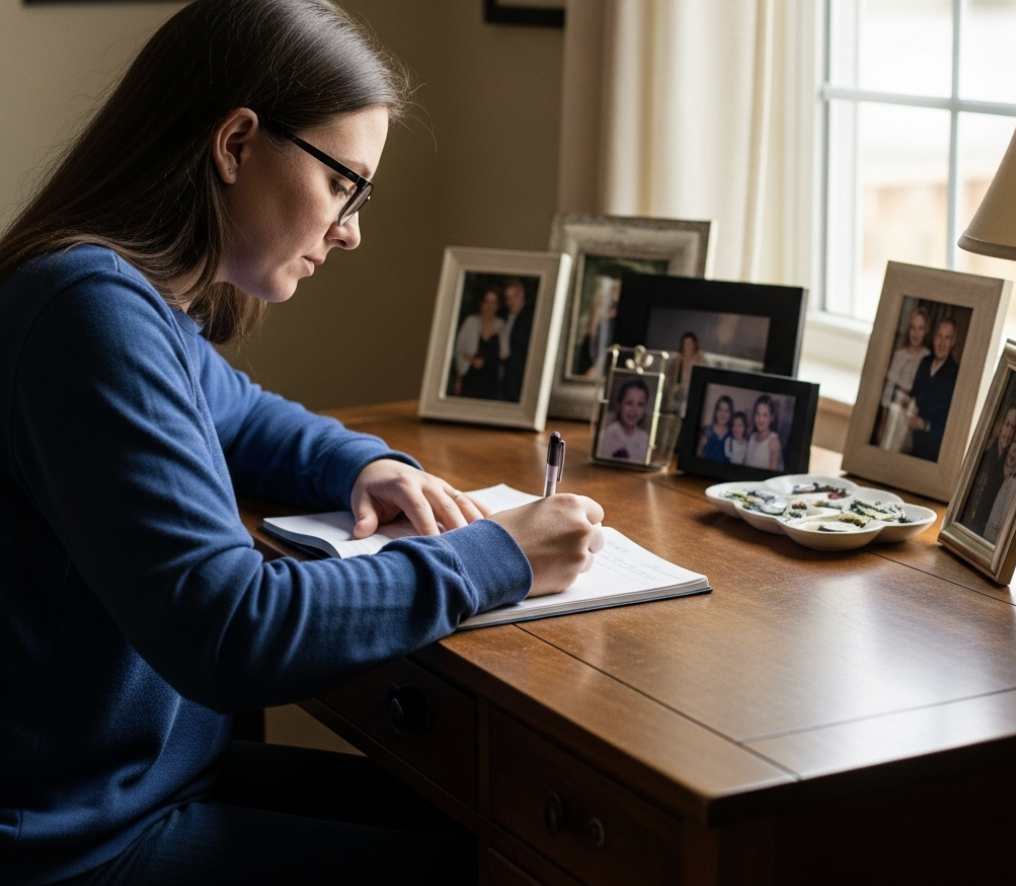
A wake sits in a different space than a funeral. It's more relaxed, more open, and the dress expectations reflect that, but that doesn't mean anything goes. Knowing where the line is, and how it changes by season and setting, makes the whole decision a lot more manageable.
Key Takeaways:
- Wakes are less formal than funerals, but the default dress code is still neat, dark, and subdued for both men and women
- Black is the safe default, but navy, charcoal, and deep burgundy all work; avoid anything bright, festive, or casual
- Dark jeans can work at a casual or at-home wake when paired with a blazer, collared shirt, or modest blouse and closed-toe shoes
- Dress code varies by tradition: white is the mourning color in many South Asian communities, while leather shoes are avoided at Jewish shiva
- Alix is a technology-powered service built for executors and trustees managing estate settlement once the wake concludes, covering 150+ administrative tasks through one estate-funded fee
What a Wake Is and How It Differs from a Funeral
A wake is a gathering held to honor someone who has died, typically in the days before the funeral. People come to pay their respects, offer condolences to the immediate family, and share a memory or two of the person they've lost. Depending on the family's traditions, it might take place at a funeral home, a church hall, or even someone's home.
The format is generally open and unstructured. There is no set program. You arrive, sign the guest book if there is one, speak briefly with the family, and stay as long as feels right. Some wakes run for just a few hours; others stretch across an entire evening, or even multiple days in certain cultural traditions. The Irish wake, for instance, has historically been a multi-day affair, sometimes with food, drink, and storytelling woven in.
Funerals are structured ceremonies with a set start time, a program that often includes a eulogy or religious service, and frequently a procession or burial that follows. The tone is more formal, and dress expectations tend to reflect that structure.
This distinction matters for what you choose to wear because wakes sit in that in-between space, and similar considerations apply when thinking about what to wear to a viewing. Solemn, yes, but often slightly less rigid in dress code than a formal funeral service. Some wakes draw a crowd in dark suits and black dresses; others welcome guests in neat but casual clothes. The right call depends on the family, the setting, the time of year, and whether anyone has made a specific request about attire. The sections below break all of that down by gender.
How Wakes and Funerals Compare at a Glance
| Feature | Wake | Funeral |
|---|---|---|
| Timing | Days before the funeral | Day of burial or cremation |
| Structure | Open, unstructured | Set program with schedule |
| Setting | Funeral home, church hall, or home | Church, funeral home, or graveside |
| Dress code | Respectful, sometimes slightly relaxed | Typically more formal |
| Duration | A few hours to multiple days | Usually 1 to 2 hours |
Color and Formality: The Baseline for Wake Attire
Most people instinctively reach for black when they're getting dressed for a wake, and that instinct serves you well. Black remains the most universally accepted color for wake attire across cultures and regions in the United States. That said, it is far from the only option. Navy, charcoal gray, deep burgundy, and muted jewel tones are all appropriate choices that signal respect without straying into uncomfortable territory.
What you want to avoid are colors that read as celebratory or casual: bright white, neon shades, loud prints, and anything that looks like it belongs at a summer barbecue or a night out. The goal is to blend in with the solemnity of the occasion, not to stand out.
How Formal Should You Dress?
Formality at a wake sits somewhere between business casual and a formal funeral service. A wake is typically a more relaxed gathering than the funeral itself, but that does not mean anything goes. Think of it as dressed-up casual, where you look put-together without being overdressed.
As a general rule: women at a traditional wake are well-served by a dark dress, blouse and slacks, or a modest skirt; men by a dark suit or sport coat with dress pants. Casual wakes open the door to dark jeans paired with a blouse or cardigan for women, or a collared shirt or sweater for men. Religious or more formal wakes call for a conservative dress or suit with covered shoulders for women, and a full suit for men, with a tie optional depending on the faith tradition.
One useful rule: if you are unsure whether your outfit reads as too casual, ask yourself whether you would wear it to a job interview at a conservative office. If yes, you are likely in the right range. If no, it is worth reconsidering.
The family hosting the wake is under no obligation to specify a dress code, so when no guidance is given, defaulting to neat, dark, and understated is the most respectful path forward.
Clothing for a Wake: Women
For women, choosing what to wear to a wake comes down to reading the formality of the service and the time of year. The general expectation is modest, respectful dress that acknowledges the solemnity of the occasion without being so formal that it feels out of place at a casual gathering.
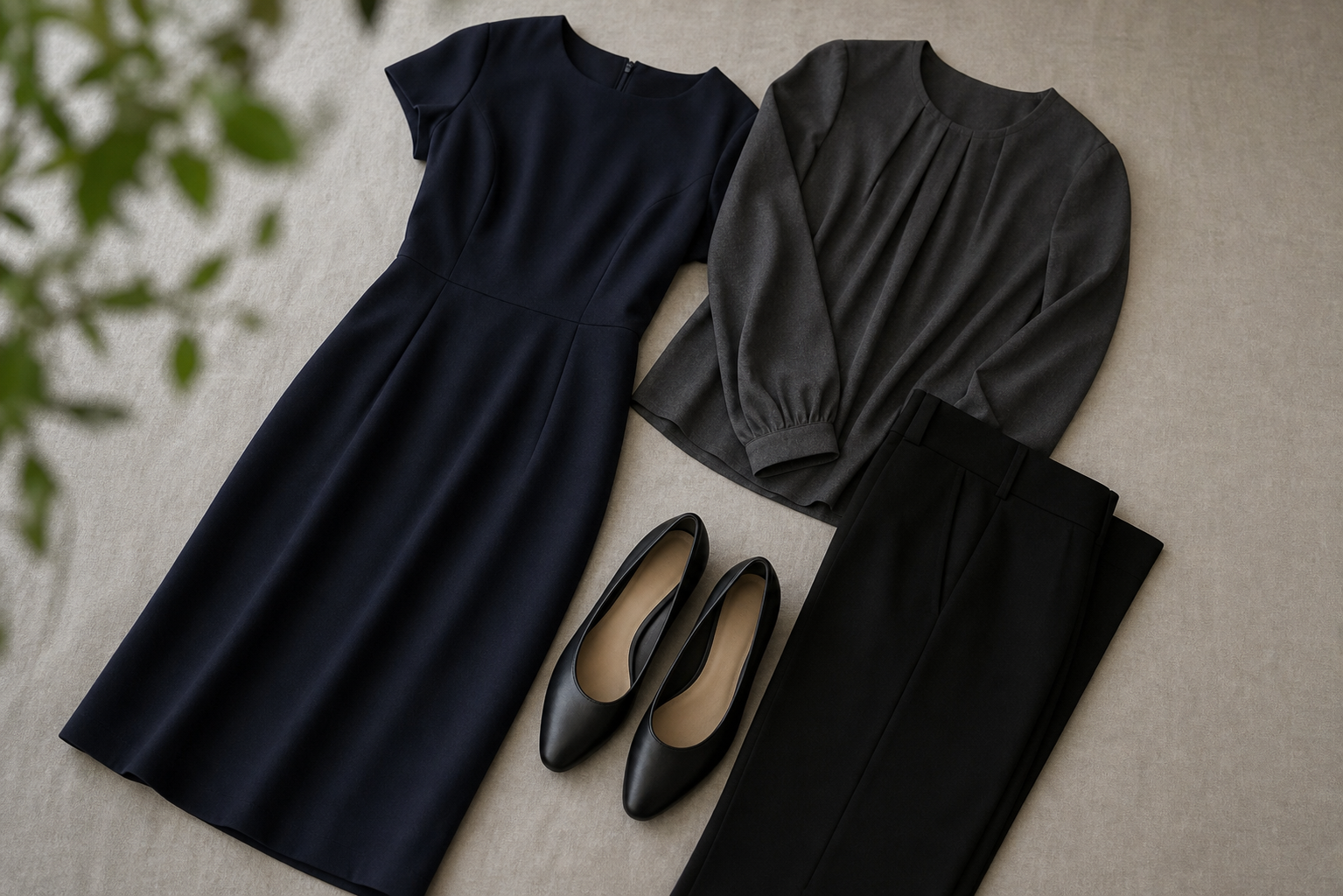
What to Wear: A Quick Reference by Season and Setting
Before getting into specifics, it helps to know that wake attire for women generally falls into two camps: semi-formal services held at funeral homes or churches, and more casual home or community gatherings. Both have their own norms. For a formal wake at any time of year, a sheath dress, tailored pantsuit, or midi skirt with blouse in black, navy, charcoal, or deep burgundy is always appropriate; steer clear of bright prints, spaghetti straps, or hemlines above the knee. At a casual wake, dark slacks with a modest blouse or a wrap dress in muted tones work well; when in doubt about jeans, swap them for trousers. In summer, a linen wrap dress or a sleeveless dress with a cardigan in navy, dusty rose, or soft grey hits the right note, while sundresses and beach-ready pieces do not. In winter, a wool shift dress or a dark blazer with tailored trousers in black, forest green, or deep plum carries the right weight; avoid heavy fur trim, festive patterns, or puffer jackets worn indoors.
Do You Have to Wear Black?
Black is the safe default for a reason, but it is by no means required. Wearing black to a wake signals respect and blends into the somber tone of the room without drawing attention. That said, dark navy, charcoal grey, deep forest green, and muted burgundy are all equally appropriate. What to avoid is anything bright, bold, or festive. The guiding principle is whether your outfit would feel out of place in a quiet, grief-filled room.
Can Women Wear Jeans to a Wake?
This comes up often, and the real answer depends on context. At a casual at-home wake where the family has clearly indicated informal dress, dark, well-fitted jeans paired with a tasteful blouse and closed-toe shoes can be acceptable. Avoid distressed, faded, or light-wash jeans in any setting. If you are unsure about the tone of the service, swap the jeans for dark trousers or a simple midi skirt. Erring toward slightly more formal is always the safer call when you are uncertain.
Clothing for a Wake: Men
Men's wake attire follows a similar logic to women's: the setting, season, and your relationship to the deceased all shape what's appropriate. That said, there are a few male-specific questions that come up repeatedly, especially around suits, ties, and whether dark jeans are ever acceptable.
The Standard: Business or Business Casual
For most wakes, business or business casual is the right register for men. A dark suit in navy, charcoal, or black paired with a collared dress shirt works well and is rarely wrong. A tie is a thoughtful addition but not strictly required at every wake, particularly for more informal gatherings. If you choose not to wear one, make sure your shirt is properly pressed and your look is otherwise polished. For a broader overview, this external wake vs. funeral guide confirms that wakes allow slightly more flexibility than formal funeral services.
Business casual options that read as respectful include:
- Dark dress trousers with a button-down shirt, tucked in and wrinkle-free
- A blazer over a collared shirt, even without a matching trouser suit
- Loafers or dress shoes in dark leather, cleaned and in good condition
Can You Wear Jeans to a Wake?
This is one of the most common questions men ask, and the straightforward answer depends on context. Standard blue jeans are generally too casual and should be avoided. Black jeans in a slim or straight cut can work in certain situations, such as a casual or informal wake where the family has signaled relaxed expectations, but pair them with a neat blazer and dress shoes so the overall look still feels considered and respectful. Never show up in distressed, ripped, or faded denim regardless of the circumstances.
Seasonal Adjustments for Men
- In summer, lightweight dress trousers in grey or navy with a short-sleeve button-down or a breathable dress shirt without a jacket can work, provided the fit is clean
- In winter, a dark wool suit or layered look with a tie and overcoat is appropriate, with darker tones generally reading as more formal
- Footwear should stay closed-toe year-round; sandals and sneakers are not appropriate at a wake
Can You Wear Jeans or Casual Clothes to a Wake
The short answer is yes, jeans can work at a wake, but context matters a great deal. A wake is generally less formal than a funeral service, which gives you a bit more flexibility with what you wear. That said, "less formal" does not mean anything goes. The goal is to look put-together and respectful, not like you stopped by on your way to run errands.
When Jeans Are Acceptable
Not every wake calls for dress pants or a skirt. If the family has indicated the gathering is casual, if it's being held at a private home, or if the deceased was someone who would have appreciated a relaxed atmosphere, well-fitting dark or black jeans are a reasonable choice. Pair them with a neat blouse, a collared shirt, or a simple sweater in a muted tone, and you'll read as respectful without being overdressed for the setting.
What you want to avoid is anything that signals you didn't put thought into the occasion:
- Ripped, distressed, or light-wash jeans tend to read too casual regardless of what you pair them with
- Graphic tees, athletic wear, or anything with loud branding or slogans
- Overly fitted or low-rise cuts that draw attention
Reading the Room
If you're unsure whether jeans are appropriate, a quick check is to ask yourself how the family would likely perceive the outfit. When in doubt, it's worth stepping up slightly. A pair of dark chinos or simple dress trousers is an easy middle ground that works in almost any wake setting, casual or not.
For women, a clean dark jean paired with a modest blouse and a cardigan or blazer can strike the right note. For men, dark jeans with a button-down shirt and leather shoes tend to land well in casual settings.
The underlying principle is the same regardless of gender: choose clothes that are clean, well-fitted, and subdued in color, and you're unlikely to go wrong.
What to Wear to a Wake in Summer
Summer wakes present a real wardrobe challenge. The heat makes heavy fabrics uncomfortable, but the setting still calls for restraint and respect. The good news is that dressing appropriately for warm weather and dressing respectfully are not at odds with each other.
The general rule is to choose lightweight, breathable fabrics like linen, cotton, or moisture-wicking blends in muted, subdued tones. Light colors are more acceptable in summer than at other times of year, but you still want to avoid anything too bright, tropical, or festive. Think dusty rose, pale grey, ivory, or soft navy, not neon, white linen resort wear, or floral prints with a vacation feel.
For Women in Summer
Lighter fabrics and slightly more relaxed silhouettes are fine, but the fit and vibe still matter. A few options that work well:
- A midi or knee-length dress in a solid muted color reads as polished without being heavy. Avoid spaghetti straps or anything with a plunging neckline, even in warm weather.
- A linen blouse paired with tailored trousers or a simple skirt offers breathability while still looking intentional and composed.
- Flowy palazzo pants with a tucked-in top can work if the palette is subdued and the overall look is put-together, not beachy.
- Closed-toe flats or low block heels are a safe choice. Strappy sandals are generally fine in summer as long as they look dressy and not casual.
For Men in Summer
A light dress shirt in white, pale blue, or grey paired with chinos or dress trousers covers most situations. Some specific guidance:
- A linen dress shirt is one of the better summer choices, as it stays cool while still looking intentional.
- Ties are optional at many wakes, especially casual or informal ones, but wearing one never hurts.
- Shorts are not appropriate, regardless of how hot it is outside. Stick to full-length pants.
- Loafers or clean leather shoes work well. Avoid sandals, sneakers, or anything that reads as outdoor footwear.
If the wake is held outdoors, bring a light jacket or cardigan in case the temperature drops or the venue has air conditioning set to an aggressive setting.
What to Wear to a Wake in Winter
Cold weather adds a real logistical layer to dressing for a wake. The challenge is staying warm without letting your outerwear overshadow what you're wearing underneath. A few targeted adjustments make the transition from cold outside to a heated funeral home or church hall much smoother.
For Women in Winter
Cold weather opens up some useful layering options that can actually make dressing for a wake easier.
- Dark tights or sheer black stockings worn under a dress or midi skirt extend the life of lighter-weight pieces and keep the look pulled together without requiring a full winter-weight outfit.
- A fitted wool blazer or structured cardigan works well over a blouse, adding warmth without shifting the formality down.
- Dressy ankle boots or knee-high boots in dark leather or suede are appropriate for winter wakes and handle the weather better than heeled pumps on slick sidewalks.
- Avoid casual knee-high riding boots or anything with heavy hardware or a western feel; keep the silhouette clean.
A structured overcoat in dark wool or a classic wrap coat is the right outer layer. Wear it in, then remove it when you arrive and greet the family.
For Men in Winter
A heavier wool suit in charcoal, navy, or black is well-suited to winter wakes and looks intentional in a way that lighter fabrics do not. If a full suit feels like too much for a casual gathering, a turtleneck sweater in charcoal or black paired with a dark blazer and dress trousers is a clean and respectful alternative to the standard dress shirt and tie combination.
Outerwear should be a proper overcoat, not a puffer jacket or casual parka. Remove it promptly upon arrival.
On footwear: winter conditions call for soles with some grip. Dress shoes in dark leather are fine, but make sure they can handle a wet walkway. For women, a block heel or flat boot is more practical than a stiletto when there is ice or snow involved.
Shoes and Accessories for a Wake
Shoes and accessories can feel like an afterthought when you're pulling together a wake outfit, but they carry more weight than most people expect. The wrong pair of shoes or an overly casual bag can undercut an otherwise appropriate look, and vice versa.
Footwear
The goal is polished and quiet. Loud, attention-grabbing shoes send the wrong signal at a gathering meant to honor someone's life.
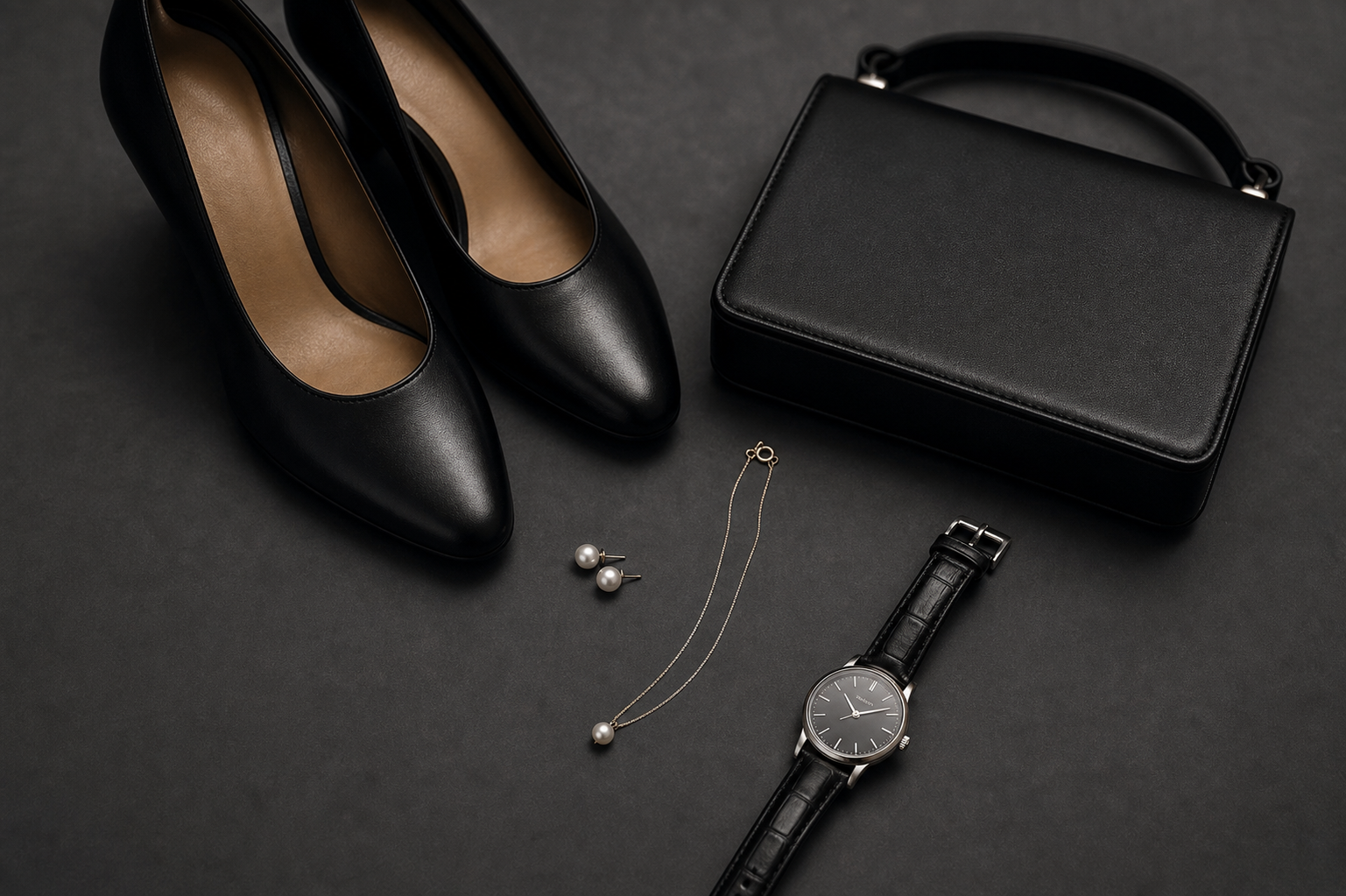
- Closed-toe flats, low heels, or block heels are the most reliable choices for women. They read as respectful and keep you comfortable during extended standing or greeting.
- Men should lean toward dress shoes or clean leather loafers in black, dark brown, or oxblood. Avoid athletic sneakers, even clean ones, as they tend to look too casual for the setting.
- In summer, women can wear strappy sandals if they are simple and in a neutral or muted color. Flip flops, platform sandals, or anything with embellishment are best left out.
- In winter, ankle boots or low-heeled boots in dark leather work well for both men and women when the weather calls for it.
Accessories and Bags
Keep accessories understated. A wake is not the place for statement jewelry, oversized handbags, or anything that catches a lot of light.
- For women, simple stud earrings, a thin necklace, or a small bracelet are appropriate. Skip chunky chains, dangling earrings, or anything bright.
- For men, a watch is always appropriate. If wearing a tie, a simple tie bar is a tasteful touch.
- Handbags should be small to medium in size and in a neutral tone: black, navy, tan, or gray. Avoid logo-heavy bags or anything metallic.
- Scarves in dark or muted tones can work well in winter months, both practically and stylistically.
A simple rule of thumb: if an accessory would stand out in a quiet room, leave it home.
Children's Attire for a Wake
Darker, conservative pieces are the right call for children at a wake, following the same general principles that govern adult attire. Brighter colors, graphic prints, and anything with cartoon characters or playful logos should stay home for the day.
For boys, dark dress trousers or khakis paired with a collared button-down shirt in white, pale blue, or grey covers most situations. A blazer or sport coat adds formality when the setting calls for it, though it's optional for younger kids. For girls, a simple dress or skirt in dark or muted tones works well, as do dress pants with a modest blouse. Avoid anything with ruffles, sequins, or a festive cut that reads as party wear and not appropriate for a solemn gathering.
Footwear should be closed-toe and clean. For boys, dark leather dress shoes or clean dark sneakers work fine. For girls, simple flats or Mary Janes are a reliable choice. Avoid light-up shoes, sandals with bright accents, or anything that makes noise when the child walks.
Comfort Without Sacrificing Respect
One consideration adults don't have to contend with: comfort matters a lot for kids at a wake. Children may not fully understand what's happening around them, and they will need to sit, stand, shift in their seat, and move through what can be a longer-than-usual gathering. Stiff, overly formal clothing that restricts movement or becomes uncomfortable after an hour will make the experience harder for everyone, the child included.
Look for pieces that are appropriately formal in appearance but have enough give for a child to manage without fussing. A well-dressed child at a wake doesn't need to look like a miniature adult in a full formal suit. They need to look respectful and feel comfortable enough to get through the evening without incident.
When in doubt, lean darker and simpler. A plain navy or charcoal outfit with clean shoes is always appropriate, and it signals care without requiring an outfit the child will resist wearing.
Cultural and Religious Variations in Wake Dress
Wake dress expectations shift considerably depending on the cultural or religious community hosting the service. What reads as respectful in one tradition can feel out of place in another, so it helps to understand the range before you arrive.
Christian and Non-Denominational Wakes
Most Christian and non-denominational wakes follow the subdued, dark-neutral palette that most people picture when they imagine funeral attire. Black, navy, charcoal, and deep grey are all safe. Conservative cuts and covered shoulders are standard in more traditional parishes, while contemporary evangelical services tend to be somewhat more relaxed about color, particularly if the family has signaled that the event is a celebration of life.
Jewish Shiva
Shiva is observed at the family's home, not a funeral home, and the atmosphere is intimate and conversational. Dress is modest and respectful but does not need to be black. Comfortable, neat clothing in muted tones works well. Leather shoes are traditionally avoided out of respect, since mourners themselves refrain from wearing them during the shiva period.
Irish and Catholic Wakes
These often run long, sometimes through the night, and can carry a warmer, more social tone than other traditions. Dark, conservative dress is appropriate, but you may find the environment more relaxed as the evening progresses. Layers are worth considering if the wake is held in a home or a hall without climate control.
South Asian and Hindu Traditions
White, not black, is the traditional color of mourning in many South Asian communities. Wearing black to a Hindu wake can inadvertently signal something other than grief. When in doubt, opt for white or very light, unadorned clothing and follow the cues of the immediate family.
African American Church Wakes
These services tend to be more formal than average, with church-appropriate attire expected. Suits, dresses, and polished shoes are common. Color is sometimes welcomed, particularly white or muted jewel tones, especially when the service has celebratory undertones.
When you are uncertain about a specific tradition, asking a family member directly is always appropriate and is usually received warmly.
When the Family Requests a Different Dress Code
Not every wake calls for dark neutrals. Families increasingly host celebrations of life or themed wakes that ask guests to dress in ways that reflect the person who died, setting aside the usual formality of the occasion. A request to wear the deceased's favorite color, a specific sports team's jersey, or even Hawaiian shirts is more common than it used to be. Honoring it is the right call, and knowing where to look makes it straightforward.
How to Spot the Request
The most common places families communicate a different dress code:
- The obituary, often in the final paragraph or alongside service details, is the first place to check since families typically include any special requests there.
- A printed invitation or event card shared with the funeral arrangements may carry specific wording about attire, so read it fully instead of scanning for the time and location.
- A note posted to the family's social media or circulated through a group message is increasingly common, particularly for younger families or those coordinating across a wide guest list.
If you received a notification through a funeral home's website or a direct message from a family member, check there first before assuming no guidance exists.
When You're Not Sure
If no formal notice arrived but someone casually mentioned a dress theme in conversation, confirm it before you show up. A quick call to the funeral home or a short message to a close friend of the family resolves the question without putting you in an awkward spot at the door.
When no specific guidance has been given, the default attire guidance covered earlier in this guide applies.
After the Wake: What Executors Face Next
The wake is one of the first gatherings after a loss, but for the executor in the family, the days that follow bring an entirely different set of responsibilities. Once the service ends, the work of settling the estate begins.
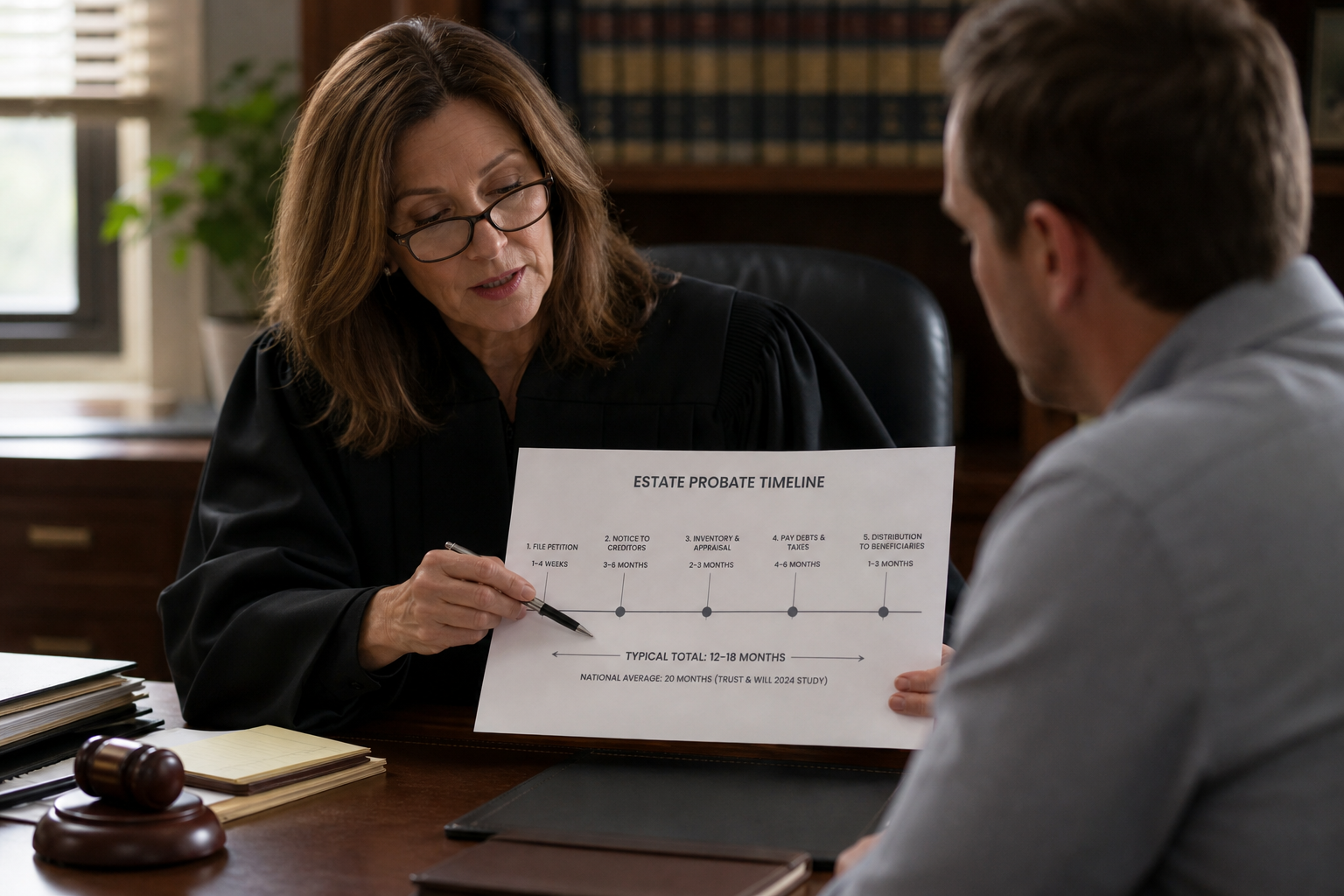
Most people have no clear picture of what that looks like in practice. Estate settlement involves probate filings, asset discovery, account closures, creditor management, property coordination, tax filing, and beneficiary distributions, among much else. Based on Alix's data across client cases, settling an estate typically requires 600+ hours of work over 18 months. A Trust & Will 2024 study found the national average probate timeline is 20 months.
That scope catches most executors off guard. You may be the person who organized the clothing for the wake, coordinated with the funeral home, and made sure everyone had directions. Understanding what an executor does can help you grasp the administrative weight waiting on the other side of that day.
Where Alix Comes In
Alix is a technology-powered service built for executors and trustees managing estate settlement. An estate settlement specialist handles the non-legal administrative work: asset discovery, document organization, account closures, property coordination, creditor management, fraud protection, transfers, tax coordination, and 150+ administrative tasks, all tracked against an executor checklist. An attorney from Alix's network is included in one transparent, estate-funded fee to handle the licensed legal work, including estate administration court filings, creditor notices, and formal accountings.
If you already have your own attorney, that works too. Those attorney fees are handled separately, outside of Alix's fee.
Alix is built for estates with real complexity. If the estate is straightforward and small, a simpler option may be the better fit. But if there are accounts to close, property to coordinate, creditors to manage, and tax filings to complete, having one coordinated process covering all of it makes a real difference.
When you're ready to look at the complete estate settlement process from start to finish, you can start your Alix onboarding to get a clearer picture of the road ahead.
Final Thoughts on Dressing Respectfully for a Wake
Getting wake attire right doesn't require a wardrobe overhaul. Stick to dark, clean, and understated, and you'll fit the tone of nearly any gathering. If a family makes a specific request, honor it. And if the wake marks the start of your executor responsibilities, start your Alix onboarding to get a clearer sense of the road ahead.
FAQ
Can you wear black jeans to a wake instead of dress pants?
Black jeans in a slim or straight cut can work at a casual or informal wake, but pair them with a blazer and dress shoes so the overall look still reads as considered and respectful. Avoid distressed, faded, or ripped denim in any setting. When you are uncertain about the tone of the gathering, dark chinos or dress trousers are an easy middle ground that works in almost every wake context.
What is the difference between what to wear to a wake vs a funeral?
A wake is generally less formal than the funeral service itself, which gives you slightly more flexibility in your clothing choices. Funerals follow a set program with structured ceremony, and dress expectations tend to reflect that formality, while wakes are open and unstructured gatherings where business casual to semi-formal attire is often appropriate. In both cases, dark, subdued colors and modest, well-fitted clothing are the right call.
Women's casual wake attire in summer: what actually works without looking underdressed?
A midi or knee-length dress in a solid muted color, or a linen blouse with tailored trousers, covers most summer wake settings without reading as too casual or too heavy for the heat. Stick to dusty rose, pale grey, soft navy, or ivory and avoid bright prints or resort whites. Closed-toe flats or simple strappy sandals in a neutral tone finish the look without drawing attention.
What should men wear to a wake when the setting is casual or informal?
Dark jeans with a button-down shirt and leather shoes tend to land well at casual wakes, provided the jeans are clean, well-fitted, and free of distressing. A blazer over a collared shirt, even without a tie, is a reliable fallback that works in almost any informal setting. The guiding check is whether the overall look signals you dressed with intention for the occasion.
Do you wear black to a wake if the family has requested a specific dress code or color?
Not always. Families increasingly ask guests to wear a favorite color of the deceased, a sports team's colors, or even something like Hawaiian shirts as a way to celebrate the person's life. The family's request takes precedence over default wake attire guidance, and honoring it is the right call. Check the obituary, any printed invitation, or the family's social media first to see whether a specific dress code was communicated.
.png)
Related resources