How to Settle an Estate: Step-by-Step Executor Guide
Settling an estate means identifying and protecting the person's property, establishing who has authority to act, paying valid expenses, debts, and taxes, and transferring what remains to the correct beneficiaries or...
Settling an estate means identifying and protecting the person's property, establishing who has authority to act, paying valid expenses, debts, and taxes, and transferring what remains to the correct beneficiaries or heirs. Some estates require a court-supervised probate. Others can be handled partly or entirely through beneficiary designations, trusts, joint ownership, or a state's simplified procedures.
The process is manageable when you work in the right order. Do not begin by dividing property or paying every bill that arrives. Begin by protecting assets, finding the governing documents, and determining which assets are controlled by the estate.
What does the estate settlement process include?
The estate settlement process includes 11 connected stages, from preserving property to documenting the final transfer and closure.
- Handle urgent personal and property matters.
- Locate the will, trust, and important records.
- Identify who has legal authority to act.
- Classify every asset by how it transfers.
- Open probate or use an available alternative when required.
- Secure, inventory, and value estate property.
- Manage income, bills, creditor claims, and estate records.
- Address final and estate tax responsibilities.
- Prepare an accounting and distribution plan.
- Transfer property, obtain receipts, and close the estate.
A straightforward estate may move through these steps with limited professional help. Real estate, business interests, conflict, insolvency, missing beneficiaries, multiple states, or unclear documents can make professional guidance important.
What should you do during the first 72 hours?
The first few days are about preservation, not paperwork perfection.
- Arrange care for dependents and pets.
- Secure the residence, vehicles, valuables, mail, and digital devices.
- Keep utilities and necessary insurance active.
- Photograph valuable property and the condition of real estate.
- Notify the property insurer if a home will be vacant.
- Locate funeral, burial, or prepaid arrangement instructions.
- Order several certified death certificates; institutions often require a certified copy.
- Begin a dated activity log and save every receipt.
Do not use your loved one's debit card, sign their name, sell property, change ownership, or promise distributions merely because you are named in a will. A nominated executor generally receives legal authority only after the court appoints them and issues the applicable letters.
How do you settle an estate step by step?
You settle an estate by completing the following 11 steps in order, while checking the rules and forms required by the state and county handling the estate.
Step 1: Find the documents that control the estate
Search for the original will, amendments, trust documents, deeds, beneficiary designations, marital agreements, business agreements, insurance policies, recent tax returns, and funeral instructions. Also identify the person's attorney, accountant, financial adviser, and insurance agent.
Likely places include a fireproof box, home office, safe-deposit box, attorney's office, or digital document vault. Ask the probate court or local bar about jurisdiction-specific will registries and safe-deposit access procedures.
If you cannot find a will, do not assume none exists. Document your search. If no valid will is located, state intestacy law generally determines who inherits estate property and who may be appointed administrator.
Step 2: Determine who can legally act
The person named as executor in a will is a nominee, not automatically the person authorized to act. The court may need to appoint the executor and issue papers proving that authority. If there is no will, the court may appoint an administrator and issue equivalent authority papers.
A successor trustee may be able to manage trust property without probate, but only under the trust's terms and applicable law. An agent's authority under a power of attorney normally ends at death. That person does not become executor unless separately appointed.
Before receiving authority, focus on preservation. After appointment, use the letters and death certificate when communicating with banks, brokerages, insurers, taxing authorities, and other institutions.
Step 3: Build an asset-routing inventory
A list of assets is not enough. For each asset, record whose name appears on the title or account and what contract or law controls its transfer.
| Asset | Information to collect | Likely transfer path |
|---|---|---|
| Bank account | Owner, co-owner, POD beneficiary, balance | Probate, surviving owner, or POD beneficiary |
| Brokerage account | Registration, TOD beneficiary, date-of-death value | Probate or TOD beneficiary |
| Retirement account | Custodian and current beneficiary designation | Named beneficiary or estate |
| Life insurance | Carrier, policy, beneficiary status | Named beneficiary or estate |
| Real estate | Deed, mortgage, joint owner, TOD deed, trust ownership | Probate, survivorship, TOD deed, or trust |
| Vehicle | Title, lien, joint owner, state procedure | Probate or motor-vehicle process |
| Business interest | Operating agreement, buy-sell agreement, ownership records | Contract, trust, or probate |
| Digital asset | Provider, access method, value, terms | Executor or administrator-access process or contract |
| Personal property | Location, ownership, estimated value, instructions | Probate, trust, or agreement |
Keep proof for every classification. A beneficiary designation usually controls the transfer even when the will says something different. However, a missing, invalid, or estate-designated beneficiary may send an asset into probate.
For related transfer rules, see Alix's guides to payable-on-death bank accounts, transfer-on-death deeds, and car title transfers after death.
Step 4: Decide whether probate is required
Probate is commonly required when your loved one owned property individually without an effective beneficiary designation or another non-probate transfer mechanism. Whether a court case is necessary can depend on the asset type, value, title, state threshold, and disputes.
Ask these questions asset by asset:
- Is the asset owned by a trust?
- Is there a valid named beneficiary?
- Does a surviving co-owner receive it automatically?
- Is a transfer-on-death instrument valid?
- Does a small-estate affidavit or simplified process apply?
- Is court authority needed to sell, retitle, or collect it?
An estate can involve several paths at once. A retirement account may pass directly to a beneficiary, a home may be administered through probate, and other property may be held in a trust.
Read What Is Probate? for the court process and What Is Estate Administration? for the broader responsibilities.
Step 5: Start the court or simplified procedure
If probate is required, the opening documents generally identify your loved one, proposed executor or administrator, will if one exists, and interested parties. Filing requirements, notices, hearings, bonds, and waivers vary.
Before filing, confirm:
- The correct county and court.
- Whether the original will must be lodged separately.
- Who must receive notice.
- Whether the executor can serve without bond.
- Whether informal, independent, summary, or small-estate administration is available.
- Whether local forms or electronic filing are required.
Do not use a small-estate shortcut based only on the total value you can see. States calculate eligibility differently and may exclude or specially treat certain property.
Step 6: Secure, inventory, and value the property
Once authorized, notify relevant institutions, redirect estate correspondence, safeguard property, and obtain date-of-death values. The court may require an inventory or appraisal by a deadline.
Use professional appraisals when the value is material, disputed, difficult to establish, or relevant to tax basis. Real estate, closely held businesses, collectibles, jewelry, and specialized equipment often need more than an online estimate.
Maintain insurance and reasonable property care. If a residence is sold, document why the sale is appropriate, how the price was established, what expenses were paid, and how proceeds were handled.
Step 7: Separate estate money and create an audit trail
Open an estate checking account when appropriate. Do not mix estate money with personal funds. Deposit refunds, sale proceeds, rent, dividends payable to the estate, and other estate receipts into that account. Pay authorized estate expenses from it.
The estate may need an Employer Identification Number. See how to obtain an EIN for an estate account.
Your ledger should show:
- Date and amount of every receipt.
- Date, amount, payee, and purpose of every payment.
- Asset sales and supporting closing statements.
- Executor or administrator and professional fees.
- Reimbursements with receipts.
- Distributions with signed acknowledgments.
Good records make tax preparation, beneficiary reporting, court accounting, and dispute resolution much easier.
Step 8: Handle expenses, debts, and creditor claims
Do not pay debts simply in the order they arrive. State law may establish notice procedures, claim deadlines, exempt property, family protections, and a priority order. If the estate may be insolvent, paying a lower-priority claim too early can create risk for the executor or administrator.
Create a creditor register with the claimant, account, amount, supporting documents, notice date, response deadline, status, and final disposition. Distinguish valid estate obligations from debts owed by another person or covered by insurance.
Contact card issuers and lenders through their bereavement or estate departments. Preserve statements and request written confirmation. Related Alix guidance covers negotiating credit-card debt after death and canceling credit cards after death.
Step 9: Complete tax work before final distribution
The person's final individual income-tax return is separate from any income-tax return required for the estate. An estate that earns income after death may have federal and state filing obligations. Estate or inheritance taxes can also apply depending on the estate, jurisdiction, beneficiaries, and current law.
Gather prior returns, wage and investment forms, property values, sale records, deductible expenses, and beneficiary information. Ask a qualified tax professional whether estimated payments, executor or administrator returns, elections, beneficiary tax forms, or tax clearances apply.
Keep an appropriate reserve until tax liabilities and professional fees are reasonably resolved. A distribution should not leave the estate unable to pay obligations that have priority.
Step 10: Prepare the accounting and distribution plan
Before distributing, reconcile the opening inventory, additions, income, gains or losses, expenses, debts, taxes, reserves, and property remaining. Apply the will or intestacy rules only after determining what the estate legally owns and what must be paid first.
A distribution plan should answer:
- What is available for distribution?
- Which gifts are specific and which beneficiaries share the residue?
- Must property be sold, divided in kind, or equalized?
- Are minors, trusts, disclaimers, liens, or beneficiary debts involved?
- What reserve is still needed?
- What approvals, waivers, receipts, or court orders are required?
Step 11: Transfer property and close the estate
Complete deeds, assignments, title applications, beneficiary receipts, and institution-specific transfers. Provide required reports or accountings. Resolve objections before requesting discharge.
An estate is generally ready to close when:
- The executor or administrator has collected and accounted for estate property.
- Required notices and claim periods are complete.
- Valid expenses, debts, and taxes are paid or adequately reserved.
- Beneficiaries received the correct property and documentation.
- Required court filings, approvals, and receipts are complete.
- Remaining accounts can be closed and the executor or administrator formally released from the role.
Retain the complete record of assets, money, tax filings, orders, receipts, correspondence, and transfers for the period recommended by counsel and tax advisers.
When can you settle an estate without a lawyer?
A self-managed process may be realistic when the estate is modest, solvent, well documented, located in one jurisdiction, uncontested, and eligible for a simple procedure. The executor must still be comfortable with deadlines, notices, records, taxes, and the executor's legal duties.
Seek legal advice promptly when there is a will contest, family conflict, ambiguous language, insolvency, a business, property in multiple states, a disabled or minor beneficiary, suspected misconduct, a surviving-spouse dispute, complex taxes, litigation, or uncertainty about authority.
Use Do I Need a Lawyer for Probate? to choose between DIY administration, limited legal advice, full representation, and operational support.
What are the most common executor mistakes?
- Distributing property before claims and taxes are resolved.
- Treating every asset as if the will controls it.
- Using a power of attorney after death.
- Mixing estate and personal funds.
- Letting insurance lapse on a vacant home.
- Paying creditors without checking priority rules.
- Failing to communicate consistently with beneficiaries.
- Relying on estimates instead of defensible valuations.
- Making undocumented reimbursements or cash distributions.
- Missing court, tax, or creditor deadlines.
What should be on an executor's working checklist?
- Protect people, pets, property, records, and insurance.
- Obtain certified death certificates.
- Locate the will, trust, deeds, contracts, and beneficiary records.
- Identify the nominated executor, trustee, and professional contacts.
- Create an asset-routing inventory.
- Confirm the correct court and procedure.
- Obtain authority before transacting for the estate.
- Secure, value, and inventory estate assets.
- Obtain an EIN and estate account when required.
- Create receipt, expense, creditor, communication, and deadline logs.
- Complete required notices and creditor procedures.
- Address final and estate or trust tax filings.
- Reconcile the accounting and determine an appropriate reserve.
- Prepare and document the distribution plan.
- Transfer assets and obtain receipts.
- Complete closing filings and retain the final record.
Frequently asked questions
How long does it take to settle an estate?
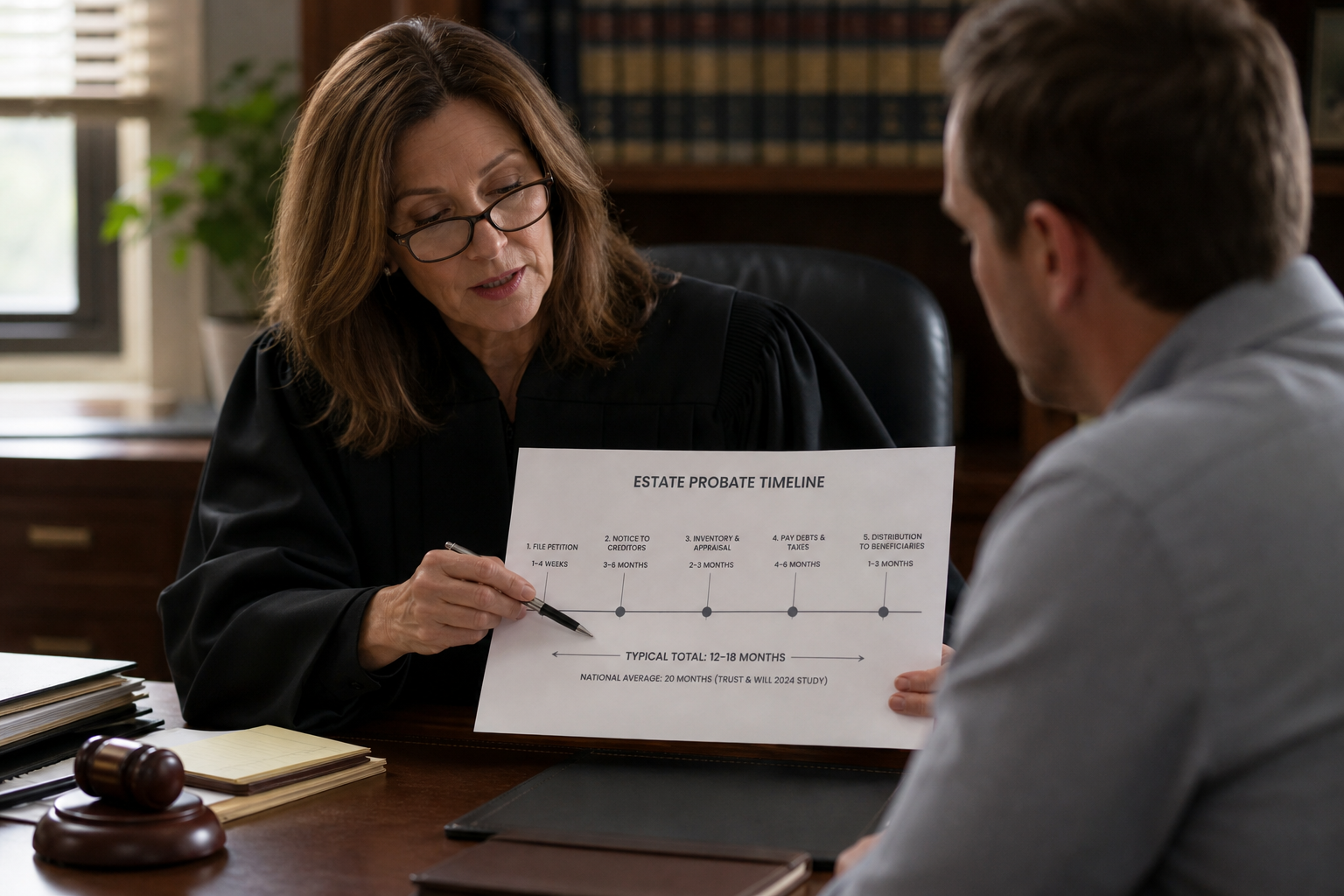
The schedule is controlled by the work the estate requires, including court appointments, creditor periods, asset sales, tax filings, and disputes. A direct beneficiary claim may finish before the probate case. Build one deadline calendar and track each workstream separately instead of treating the estate as one closing date.
Can an executor distribute money before probate ends?
Sometimes, but only after confirming authority, creditor priorities, taxes, expenses, and a sufficient reserve. A premature payment can leave the executor responsible if the estate later comes up short. Document the calculation and obtain legal or court approval when local rules or estate risk make that necessary.
Does every asset follow the will?
No. A valid beneficiary designation, trust, survivorship right, or transfer-on-death document may control an asset outside the will. Review the ownership and beneficiary records for every account and property item. The will generally controls only the property that enters the probate estate.
What can wait during the first week?
Non-urgent distributions, property sales, account closures, and most creditor payments can wait until you understand the documents and your authority. Focus first on people, pets, property, insurance, the original will, certified death certificates, and a reliable record of every action and expense.
Can you settle an estate without going through probate?
Sometimes. Assets held in a trust, owned with survivorship rights, or connected to a valid beneficiary may transfer outside probate. A state may also offer a simplified procedure. Classify each asset separately, because one estate can use probate for a house while other accounts transfer directly.
How can Alix help you settle an estate?
An attorney can advise on legal rights, court strategy, disputes, and document interpretation. An accountant can address taxes. Appraisers, brokers, and other specialists handle particular assets. Someone still has to coordinate the entire project.
Alix is a Done-for-You estate settlement service that manages the process from start to finish. A dedicated Estate Settlement Specialist handles more than 150 operational tasks. Licensed attorneys handle court filings, legal advice, hearings, and other work requiring a lawyer. You can use an attorney from Alix's network, included in one transparent fee, or your own attorney.
Related Alix guides for specific estate tasks
- Understand the probate timeline before setting expectations with beneficiaries.
- Open an estate account and obtain an EIN before receiving or paying estate money.
- Handle credit-card accounts after death as part of the creditor workflow.
- Transfer a vehicle after death using the title and state-specific route.
- Review payable-on-death bank accounts before treating an account as probate property.
- Review a transfer-on-death deed before placing real estate in the probate inventory.
References
.png)
Related resources