Disagreements over an estate can get complicated quickly, especially when grief has already strained family relationships. Before anyone files anything with a court, it's worth understanding how mediation works, what kinds of disputes it can handle, and what it takes to leave a session with a binding agreement.
Key Takeaways:
- Estate mediation resolves disputes through a neutral third party, keeping you in control of the outcome instead of leaving it to a judge.
- Mediation settles cases in about 85% of cases and typically saves 40-60% compared to litigation costs, per GCAAM data.
- Sessions stay confidential, so nothing discussed enters the public record the way probate court filings do.
- Skip mediation if there is credible fraud, forgery, or active asset dissipation; those situations require a judge.
What Estate Mediation Is
Estate mediation is a structured process where a neutral third party, called a mediator, sits down with disputing heirs, beneficiaries, executors, or trustees and helps them work toward a resolution on their own terms. No judge decides anything. No courtroom. The mediator's job is to guide the conversation, surface the underlying concerns, and keep negotiations productive enough that the parties can actually agree.
That distinction matters. A mediator has no authority to impose an outcome. A judge does. In mediation, you and the other parties control what you settle on. Once you reach an agreement, you can submit it to the court to make it legally binding, so it carries real weight without requiring litigation. Understanding how the probate process works can help you see where mediation fits in.
Estate mediation typically covers disputes between people who all have a stake in the same estate. Common situations include:
- Siblings disagreeing over how assets should be distributed, including who gets specific property or sentimental items that the will doesn't address clearly.
- A beneficiary challenging how the executor is managing the estate, whether that's a concern about delays, asset decisions, or whether the executor is acting in the estate's best interest.
- Co-trustees who are deadlocked on a decision and need a structured way to get to common ground without pulling the courts into the process.
The process is confidential by design. What gets said in mediation generally stays there, which gives everyone room to negotiate freely without worrying that their words will surface later in a courtroom. That protection matters more than it might seem: it creates the conditions for people to say what they want, making real agreement possible.
Types of Estate Disputes That Go to Mediation
Most folks who search "estate mediation" are really asking one thing: does my situation qualify? The answer, more often than not, is yes. Mediation works for a wide range of estate disputes, including ones that feel too messy or emotionally charged to resolve in a room without a neutral party.
The most common dispute types that end up in mediation include:
- Will contests, where a beneficiary believes the will was executed under undue influence, that the decedent lacked capacity when signing, or that the document itself is fraudulent or improperly witnessed.
- Vague or ambiguous will language, where the will says something like "divide my personal property equally" without specifying who gets what, leaving heirs to interpret language the decedent never clarified.
- Executor or trustee conduct disputes, where a beneficiary believes the person managing the estate is acting improperly, moving too slowly, mismanaging assets, or favoring one heir over others.
- Beneficiary disagreements over asset distribution, particularly when the estate holds illiquid assets like real estate, a business, or collectibles that can't easily be split.
- Family business succession conflicts, where multiple heirs inherit ownership stakes but disagree on whether to sell, who should run operations, or how to value each person's share.
- Division of sentimental or personal property, where items like jewelry, furniture, art, or a family home carry emotional weight that far exceeds their appraised dollar value.
- Disputes between co-trustees or between a trustee and trust beneficiaries over interpretation of trust terms, distribution timing, or investment decisions.
One pattern worth noting: many estate disputes don't start with outright fraud or bad faith. They start with a will that assumed everyone would just figure it out. According to Vanderlaan Law, mediation is well-suited to probate disputes precisely because it gives parties a structured forum to resolve disagreements that the original estate documents left open. Whether probate is required will shape which disputes end up in a formal court process versus mediation.
If you're an executor trying to figure out whether what you're dealing with fits, the short version is: if two or more parties disagree about something in the estate and a judge hasn't already been asked to rule on it, mediation is almost certainly worth considering.
How the Estate Mediation Process Works
Estate mediation follows a predictable structure, and knowing that structure before you walk in makes a real difference. Here is the sequence, from first contact to signed agreement.
Pre-Session Preparation
Before anyone sits down together, each party typically submits a mediation brief: a short written summary of their position, what they're asking for, and the key facts they want the mediator to understand going in. Some mediators also request relevant documents upfront, such as the will, trust agreement, account statements, or appraisals. This gives the mediator enough context to run the session without spending the first hour getting up to speed.
The Joint Opening Session
The mediation opens with all parties in the same room, whether that's in person or over video. Each side gets uninterrupted time to explain their position and what matters to them. The mediator sets ground rules, manages the conversation, and listens carefully for the concerns underneath each person's stated demands. In many estate disputes, this opening session is the first time all parties have spoken directly to each other, which can be productive or tense depending on how long the dispute has been running.
Private Caucuses
This is where most of the real work happens. The mediator meets separately with each party in private sessions called caucuses. What gets said in a caucus stays confidential unless a party explicitly agrees otherwise. That protection lets people say what they actually want, weigh trade-offs, and hear proposals they might reject outright if they came directly from the other side. The mediator carries information and ideas between parties, tests what each side can live with, and narrows the gap over time.
A typical estate mediation runs anywhere from a single full day to several sessions spread over weeks, depending on how many parties are involved and how far apart they are.
The Closing Agreement
When the parties reach a resolution, the mediator helps them document the terms in a written settlement agreement. The parties can then submit that document to the probate court for approval, at which point it becomes legally binding on everyone who signed. No agreement, no obligation to settle. The process remains voluntary until both sides choose otherwise.
Mediating Disputes Over Personal Property and Family Heirlooms
Disputes over a grandmother's ring or a set of dining room chairs can outlast disagreements about property worth ten times as much. The dollar value is irrelevant. What makes these conflicts stick is that the item carries a relationship inside it, and two people can't split that.
Courts handle this badly. A judge can order an item sold and proceeds divided, but that outcome often satisfies nobody and destroys something irreplaceable in the process. Estate mediation works differently because a mediator can surface what each person actually wants. Often, the underlying need isn't the object itself but the connection it represents: a parent's recognition, a memory, a sense of fairness that predates the estate by decades.
Once a mediator gets there, creative solutions open up that no court would ever order.
What Heirloom Agreements Can Actually Look Like
When parties move past their stated positions and into their real interests, mediators can propose arrangements built around the people in the room, free from the limits of legal precedent. Some of the most workable outcomes include:
- Alternating possession schedules for items both parties want to use or display, so neither heir gives up their connection to the object entirely.
- Structured selection rounds, where each heir takes turns choosing from an agreed list of personal property, giving everyone a fair shot without requiring a judge to assign value to things that resist valuation.
- Digitize photos of albums or documents so multiple heirs can share the memory, even if only one keeps the physical item.
- A charitable donation made in the decedent's name, when an item holds sentimental weight but no heir wants it badly enough to resolve the dispute cleanly on their own.
- Detailed written descriptions attached to the final agreement, so there is no ambiguity later about which piece of furniture or which set of jewelry the terms actually cover.
One thing mediators learn quickly in heirloom disputes is that the stated position and the real interest are almost never the same thing. Someone demanding a specific chair may really be asking whether they mattered to the person who died. A mediator who reaches that layer can sometimes resolve a months-long standoff in a single afternoon.
The Case for Mediation Over Litigation
Litigation is slow, expensive, and public. Those three facts alone explain why most estate attorneys, when asked privately, will tell you to try mediation first.

Start with cost. Estate litigation can run anywhere from $10,000 to well over $100,000 in probate attorney fees, expert witnesses, and court costs, depending on how long it drags out. Mediation typically costs a fraction of that. A mediator's daily rate commonly falls between $1,500 and $5,000 split among the parties, and most estate mediations resolve in one to three sessions. Those savings line up with the GCAAM figures cited above.
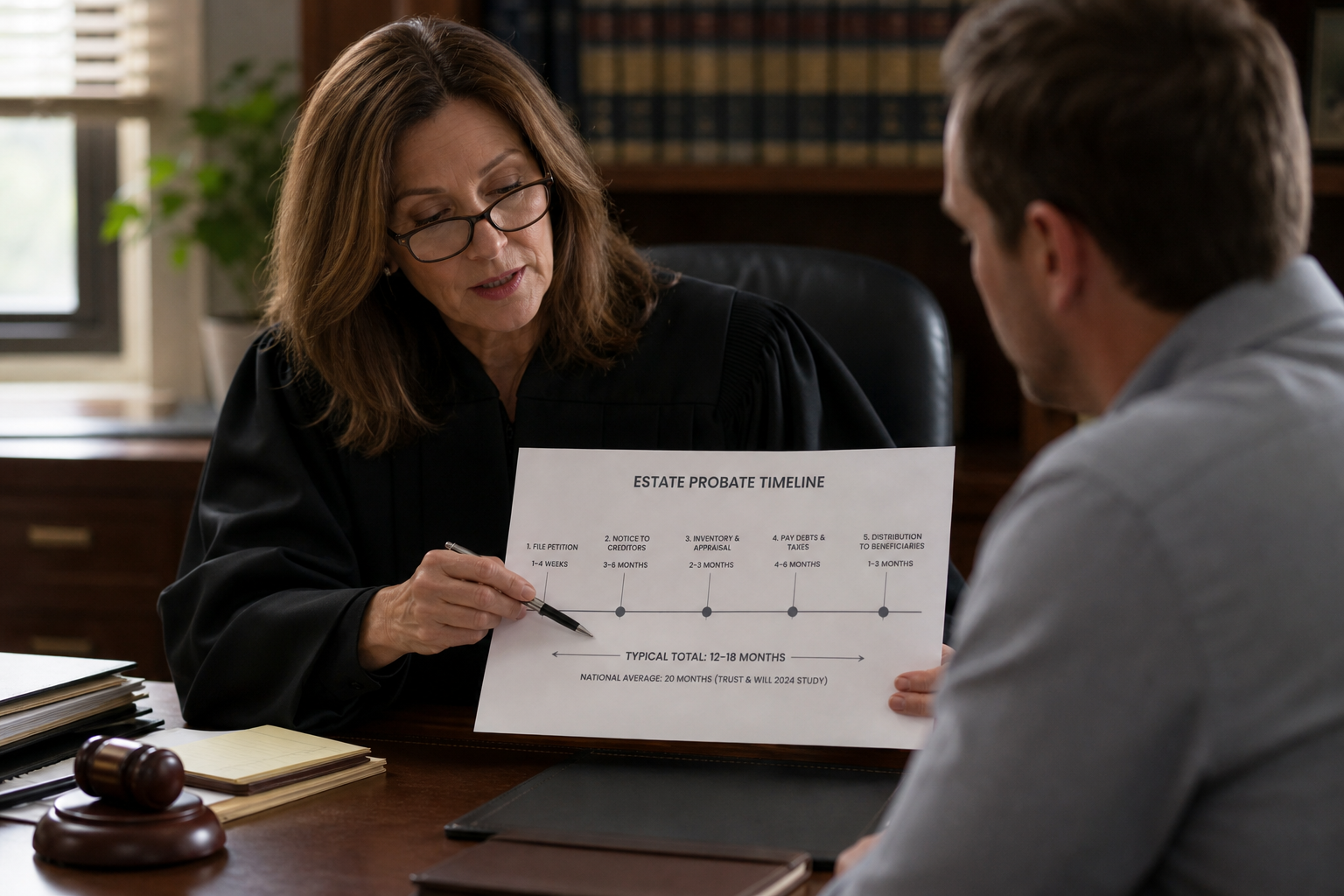
Then there's time. Estate lawsuits can take years to work through the court system, piling up attorney fees and delaying any distribution to beneficiaries while the estate sits in limbo. Per a Trust & Will 2024 study, the national average probate timeline is 20 months. Mediation can conclude in days or weeks. For an executor already managing creditor deadlines, property maintenance, and beneficiary communication (all responsibilities that are part of what an executor does), that difference in timeline is not abstract.
Privacy is the third factor, and it is underestimated. Probate court proceedings are part of the public record. Anyone can view filings, financial disclosures, and the details of any settlement. Mediation sessions, by contrast, are confidential. For families dealing with contested wills or sensitive financial circumstances, that distinction matters considerably.
Compliance is another concern. A court-imposed ruling leaves someone on the losing side of a judge's decision. That party may comply, but resentment often lingers, and appeals are common. Agreements reached through mediation reflect what the parties themselves chose to accept. According to Placer County Superior Court, voluntary agreements tend to result in higher compliance rates because the parties helped craft the outcome.
How the Two Paths Compare
Here is a side-by-side look at how mediation and litigation typically stack up across the factors that matter most to an executor managing a disputed estate.
| Factor | Mediation | Litigation |
|---|---|---|
| Cost | Commonly $1,500 to $5,000 per day, split among parties | Often $10,000 to $100,000+ in attorney and court fees |
| Timeline | Days to weeks, typically one to three sessions | Months to years through the court system |
| Privacy | Confidential; nothing enters the public record | Court filings and financial disclosures are public |
| Outcome control | Parties craft the agreement together | A judge decides; one side loses |
| Compliance | Higher, because parties agreed voluntarily | Lower; resentment and appeals are common |
| Settlement rate | High (see cost discussion above) | No guarantee; outcome depends on litigation outcome |
Mediation is not guaranteed to work. But when you weigh cost, speed, privacy, and the durability of outcomes, the calculus moves decisively in its favor. The real question is not whether to try mediation, but why you would skip it.
How Mediation Preserves Family Relationships
Estate disputes don't end when the court does. Whoever loses a probate lawsuit still shows up at Thanksgiving. They still share grandchildren with the person who just beat them in court. A judge can rule on who gets the house, but no ruling repairs the relationship that broke down along the way.
That's the part that pure cost-and-timeline arguments miss. Litigation forces everyone into adversarial roles. Your attorney argues your position as hard as possible; the other side's attorney does the same. The process is designed around winners and losers, and it tends to harden whatever divisions already existed. By the time a probate lawsuit concludes, both parties have typically spent months building the case for why the other side is wrong, selfish, or acting in bad faith. That's hard to walk back at a birthday party.

Mediation works from a different premise. The structure assumes the parties will have to live with each other after this is over, and it organizes the conversation accordingly. A mediator's job is to get past stated positions and into the interests underneath them. Someone demanding the estate be sold immediately may actually be worried about being excluded from decisions. Someone refusing to sell may be grieving in a way they haven't said out loud yet. Legal arguments never reach those layers. Mediation often does.
Mediation aims to resolve the dispute while preserving the relationships that will outlast it.
That distinction carries real weight in estate disputes, because the parties are almost always people who already knew each other before any of this started. The conflict didn't create the relationship. It threatened one that already existed. When mediation works, it produces an agreement both sides helped build, which means neither party has to spend the next decade explaining to their kids why they sued their sibling over their parents' estate.
None of this is guaranteed. Mediation requires enough good faith from everyone at the table to have the conversation. But for families where the relationship still matters, even a little, mediation gives that relationship a better chance than a courtroom ever will.
Choosing the Right Estate Mediator
Most people treat mediator selection as an administrative step. It isn't. The mediator's style, background, and approach to estate disputes can meaningfully affect whether the session produces an agreement or just a long day of going in circles.
Mediator Styles
The three main approaches you'll encounter are facilitative, evaluative, and relational. Facilitative mediators focus on managing the conversation and helping parties reach their own conclusions without offering opinions on who's right. Evaluative mediators share their read on how a court would likely view each position, which can help when parties are anchored to unrealistic expectations. Relational mediators work at the relationship level, trying to improve how the parties communicate, beyond just what they agree on.
For most estate disputes, a facilitative or evaluative mediator is usually the better fit. Relational mediation works best when communication breakdown is the core problem, which is true of some family disputes but not all.
Background to Look For
Estate disputes sit at the intersection of law, family dynamics, and sometimes grief. A mediator with experience in probate, trust administration, or elder law will understand the legal framework well enough to keep the conversation grounded. That said, legal credentials alone aren't enough. Estate disputes often involve unspoken family history, and a mediator who has worked with family systems, even informally, will read those undercurrents better than someone with purely transactional experience.
Private vs. Court-Appointed Mediators
Some courts assign a mediator when a case enters the court system. Private mediators are chosen by the parties, often by mutual agreement or through a recommendation from an estate attorney. Private mediation gives you more control over who is in the room, which matters. If one party has concerns about the court-assigned mediator's neutrality or depth of experience with estates, requesting a different mediator or opting for private mediation is a reasonable ask.
Questions Worth Asking Before You Agree
- How many estate or probate mediations have you handled, and what types of disputes came up most often?
- What is your approach when one party is significantly more dominant in the room?
- Do you recommend having attorneys present, or do you prefer to meet without them?
- How do you handle impasse if the parties cannot close the gap?
On the question of attorneys: legal counsel is optional in most cases, but for disputes involving contested will language or complex trust terms, it's worth considering. If you're unsure whether you need a lawyer for probate, that guide can help you decide.
How to Prepare for an Estate Mediation Session
Showing up to a mediation session unprepared is one of the most common ways people undermine their own position before the conversation even starts. The sections below walk through what to have ready before you walk in the door.
Get Your Documents in Order
The mediator and the other parties will have a far harder time disputing your position if you walk in with organized, verifiable documentation. At minimum, gather:
- A complete estate inventory with current valuations for real property, financial accounts, and major personal property
- Appraisals for any contested items, particularly real estate, business interests, or collections
- The will and any trust documents, including any prior versions that might be relevant
- Account statements and correspondence that support your account of what happened
- Any written communications between the parties that bear on the dispute
If the other party has access to information you don't, ask for it before the session. Asymmetric information skews negotiations, and requesting relevant records in advance is both reasonable and common.
Know the Difference Between Your Position and Your Interest
Your position is what you're asking for. Your interest is why you want it. These are rarely the same, and the mediator will probe for the second one regardless. Do that work yourself beforehand. If you're asking to keep the family home, think through whether you actually want the house or want to feel like your relationship with the decedent was recognized. That answer shapes what a workable settlement might look like.
Know Your Fallback
Mediators call this your BATNA: best alternative to a negotiated agreement. In plain terms, what happens if this session fails? If litigation is your fallback, get a realistic read from an attorney on what that process looks like, what it costs, and what outcome you'd likely see. That context helps you judge whether a mediation offer is actually worth accepting.
Consult an Attorney First
Even if you don't bring counsel into the room, speaking with an estate attorney before the session is worth the cost. They can help you assess whether your legal position is as strong as you think it is, flag claims the other party might raise, and review any settlement terms before you sign anything.
When Mediation Is Not the Right Path
Estate mediation requires a baseline of good faith from everyone at the table. When that good faith is absent, or when the dispute involves conduct only a court can address, mediation is the wrong tool for the job.
A few specific situations warrant skipping mediation entirely, or pausing it in favor of court action.
When Litigation Is the More Appropriate Path
Some circumstances mean a mediator simply cannot do what the situation requires. Before agreeing to mediate, check whether any of the following apply to your case.
- Credible evidence of fraud, forgery, or undue influence. If you have reason to believe a will was fabricated, a signature was forged, or the decedent was manipulated into changing their estate plan near the end of life, those allegations require judicial fact-finding. A mediator cannot compel testimony, subpoena records, or make findings of fact. A court can.
- An executor or trustee who won't produce records. If the person managing the estate is refusing to share accountings, financial statements, or other documentation you are legally entitled to see, a mediator has no authority to force compliance. A judge does.
- Active asset dissipation. If evidence shows someone is liquidating, transferring, or concealing estate assets while the dispute is ongoing, court intervention may be necessary to freeze those assets before more damage is done. Mediation moves too slowly for situations where delay carries a direct financial cost.
- Bad faith participation. If one party is using the process to delay distribution, gather information about your legal strategy, or run out the clock on a deadline, the session is unlikely to produce a durable agreement and may actively harm your position.
None of that should rule out mediation at the first sign of conflict or mistrust. Even contentious disputes can settle when both parties want to avoid the cost and timeline of litigation. But if any of the conditions above apply to your situation, consult an estate attorney before agreeing to mediate.
Making a Mediation Agreement Enforceable
Reaching an agreement in mediation is the goal. But a handshake in a conference room is not enough to protect you if someone changes their mind a month later.
When parties settle through mediation, the outcome becomes a written settlement agreement signed by all parties. That document functions as a binding contract on its own, but in estate disputes it typically needs one more step: submission to the probate court for approval. Once the court ratifies the agreement, it carries the same legal weight as any court order. Violating it exposes the non-complying party to contempt proceedings and court-ordered enforcement.
The court's role in this process is not to re-litigate what the parties agreed to. Probate courts reviewing mediated settlements generally look at three things:
- Whether the agreement is procedurally sound and was reached without coercion or bad faith
- Whether all parties had legal capacity and were either represented by counsel or knowingly waived representation
- Whether the terms are consistent with applicable state law and do not conflict with the will or existing court orders
If those conditions are met, approval is typically granted without much friction.
Before anyone signs, have an estate attorney review the draft agreement. Mediation produces terms, not legal precision. A mediator is skilled at getting parties to yes, but the resulting document still needs to be drafted in language that will hold up if challenged. Ambiguous phrasing, missing contingencies, or terms that conflict with the will or state law can create the same disputes again later. The review does not need to be extensive or expensive, but skipping it is a false economy.
If Someone Refuses to Comply
The voluntary nature of a mediated agreement does not limit the court's ability to enforce it once the court approves it. If a party refuses to follow through after court ratification, the remedies available mirror standard civil enforcement:
- Motions to compel compliance filed with the probate court
- Contempt orders against the non-complying party
- Equitable remedies in cases where assets have already moved, aimed at making the injured party whole
The agreement carries real legal teeth. Getting it drafted carefully and approved properly is what gives those teeth something to bite with.
What Comes After Mediation: When Alix Can Help
Alix does not work with estates that have an active dispute in progress. If a will contest, executor challenge, or beneficiary disagreement is still unresolved, Alix is not the right fit yet. Those situations require the parties to reach a resolution on their own terms, through mediation or otherwise, before estate settlement can move forward.
Once the dispute is resolved, the administrative work of settling a loved one's estate is waiting. Based on Alix's data across client cases, estate settlement typically involves more than 600 hours of administrative work over 18 months. A mediated settlement doesn't reduce that workload. If anything, it adds tasks: revised distribution instructions to communicate to financial institutions, updated accounting to reflect agreed-upon terms, and coordination with the probate court to ratify the agreement. Our step-by-step executor guide covers how those tasks fit into the broader settlement process.
Alix is a human-led estate settlement service built for the work that follows. Our specialists coordinate the administrative side of settlement as a single process, including asset discovery, creditor claim tracking, institution outreach, beneficiary communication, property coordination, and tax filing. An attorney from our network handles the licensed legal work, including court filings and formal accountings, as part of Alix's one transparent, estate-funded fee. You do not need to separately source legal counsel for standard probate work.
The more than 150 administrative tasks Alix handles don't require a law license, but they do require someone who shows up consistently, follows up on stalled transfers, and keeps the process moving once the estate is clear to proceed. If the dispute is behind you and you're ready to get the estate moving, see how Alix works. Alix serves trust-based estates and other complex settlement situations, along with probate estates.
Final Thoughts on How Estate Mediation Works and When to Use It
If there's a dispute in the estate you're managing, mediation is almost always worth attempting before anyone files anything with a court. It's faster, less expensive, and it leaves the people involved with an agreement they chose instead of one imposed on them. Once that agreement is in place and the dispute is behind you, the estate's administrative workload is ready to be tackled, and that's where Alix comes in.
Start your Alix onboarding to get your estate moving today.
FAQ
Who can I hire to mediate a dispute over who gets the family bible or photo albums?
A private estate mediator with probate or family dispute experience is a great place to start. Look for someone who lists heirloom or personal property disputes as part of their practice, since these sessions require a different skill set than financial disagreements. Estate attorneys can often refer you to mediators they've worked with, which can be a helpful starting point alongside directory searches. Because the real tension in these disputes is rarely about the object itself, a mediator who has worked with family dynamics will reach the underlying issue faster than one with a purely transactional background.
What's the difference between estate mediation and going to probate court?
In estate mediation, you and the other parties control the outcome: a neutral mediator guides the conversation, but no one imposes a decision on anyone. In probate court, a judge decides, one side loses, and the proceedings become part of the public record. Mediation typically concludes in days to weeks and costs a fraction of litigation; court cases can run months to years and carry attorney fees starting around $10,000 and climbing well past $100,000.
Can estate mediation actually resolve a will contest, or does that have to go to court?
Mediation can resolve many will contests, particularly those rooted in disagreements over intent, vague language, or distribution fairness and not provable wrongdoing. If the contest involves credible evidence of fraud, forgery, or undue influence, those allegations require judicial fact-finding that a mediator cannot conduct. For anything short of that threshold, mediation is worth considering before filing with the court.
What should I bring to an estate mediation session as the executor?
Bring a complete estate inventory with current valuations, appraisals for any contested assets, the will and any trust documents, relevant account statements, and any written communications between the parties. Equally important: know your BATNA (what litigation would actually cost and likely produce) and think through the difference between your stated position and what you genuinely need. Going in without that preparation hands an advantage to anyone who has done the work.
What happens if someone refuses to follow a mediated estate agreement after it's signed?
Once a mediated settlement is submitted to the probate court and approved, it carries the same legal weight as any court order. If a party refuses to comply, you can file a motion to compel with the probate court, seek a contempt order, or pursue equitable remedies if assets have already moved. Before signing, have an estate attorney review the draft agreement, because ambiguous language or missing contingencies can reopen the same dispute later.
.png)
Related resources