A house doesn't freeze the moment someone dies, but it doesn't transfer freely either. If it was titled in the decedent's name alone with no trust or survivorship structure in place, the court is now involved, and your authority as executor is real but comes with clear boundaries. Getting those boundaries right from the start is what keeps you out of personal liability territory.
Key Takeaways:
- A house titled solely in the decedent's name goes through probate unless a trust, joint tenancy, or transfer-on-death deed was already in place.
- You can sell a house during probate, but you need letters testamentary first and must follow court rules on supervised vs. independent administration.
- As executor, you have 30 to 60 days to secure the property, obtain insurance, and file inventory or you risk personal liability.
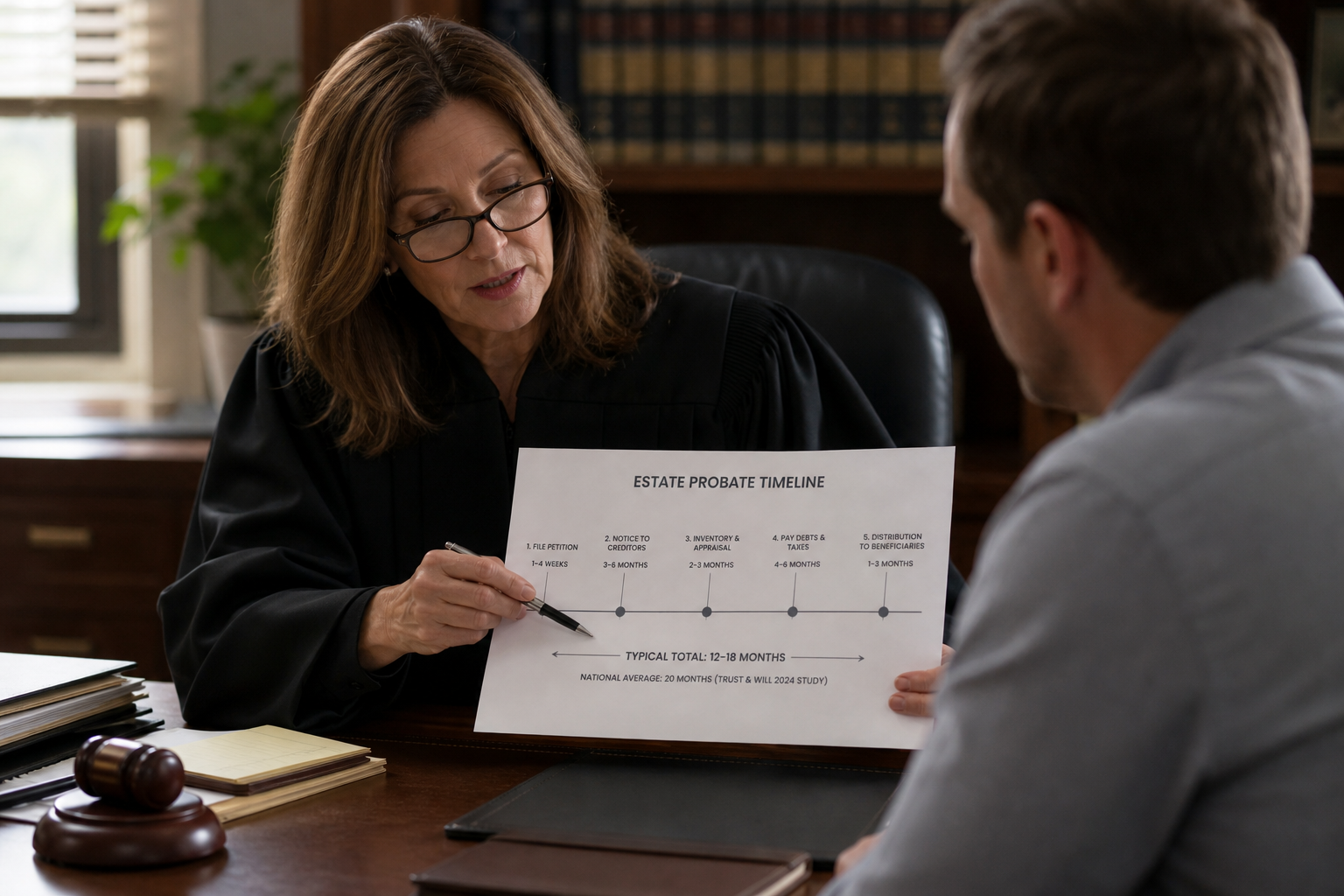
- Probate typically runs 12 to 18 months; per a Trust & Will 2024 study, the national average is 20 months, with intestate estates running longer.
- Alix handles 150+ administrative tasks tied to estate settlement, including property coordination, with an estate-funded fee covering attorney work from its network.
What "House in Probate" Actually Means
When a homeowner dies, their property doesn't automatically transfer to anyone. If the house was titled in the decedent's name alone, with no living trust or joint tenancy in place, it becomes part of the probate estate, and a court now oversees what happens to it.
"In probate" is not a legal status that freezes the property forever. It means the house is subject to court-supervised administration until the estate closes. During that window, no heir can simply move in, sell it, or refinance it on their own authority. The executor holds legal responsibility to manage the property, but even that authority flows from court appointment, not family agreement.
Real estate ends up in probate more often than most other asset types because it can't pass by beneficiary designation the way a retirement account or life insurance policy can. A bank account or brokerage with a named beneficiary can sidestep the court process entirely. A house titled to one person, with no transfer mechanism built in, has no equivalent shortcut.
When Probate Is Required for a House
Probate is required when the deceased owned the house in their sole name with no mechanism to transfer it automatically at death. No beneficiary designation, no co-owner with survivorship rights, no trust holding title. If none of those tools are in place, the court gets involved.
Several ownership structures let a house skip probate entirely:
- Joint tenancy with right of survivorship passes the property directly to the surviving co-owner by operation of law
- A revocable living trust holds title to the home, so the trustee can transfer it without court involvement
- Transfer-on-death deeds, available in most states, let the owner name a beneficiary directly on the deed
California draws a clear line. If the decedent died on or after April 1, 2026 and their gross estate exceeds $239,700, formal probate is likely required per the California courts. For deaths before that date, the threshold is $208,850. In many California markets, a house alone can exceed either threshold.
Texas works differently. The state favors independent administration, which lets an executor manage and sell estate property with far less court supervision than most states require. A house still goes through the probate system in Texas, but the process tends to move with considerably more flexibility once the court appoints an independent executor.
In many California markets, a house alone can exceed either threshold. Sole ownership with no transfer mechanism built in almost always triggers probate, regardless of the home's value.
Your First Responsibilities as Executor
Once the court appoints you executor, a clock starts on the probate timeline. In most states, you typically have roughly 30 to 60 days to secure the estate's assets, and the house is usually the most time-sensitive piece.
Your immediate obligations:

- Change the locks and secure access to the property before anything else moves forward
- Confirm or obtain homeowner's insurance in the estate's name, since the decedent's personal policy may lapse
- Address any maintenance issues that could cause deterioration or liability on your watch
- Get a professional appraisal from a credentialed appraiser to document the estate's cost basis and set a defensible benchmark for any future sale
- File the formal probate inventory, typically due within 60 to 90 days of appointment
These are fiduciary duties, not suggestions. Neglecting them creates personal liability exposure. If the property loses value because you delayed action, heirs can hold you accountable.
Who Owns the House During Probate
Title sits in a kind of legal limbo during probate. The estate holds the property, and you as executor have fiduciary authority over it, but no individual heir or beneficiary owns it yet. The deed has not transferred, which means nobody can unilaterally sell it, rent it out, or take out a loan against it.
Your authority as executor is real, but narrow. You can secure the property, pay carrying costs from estate funds, and prepare it for sale or transfer. What you cannot do is act in your own personal interest or favor one beneficiary over others. Every action you take is on behalf of the estate.
Beneficiaries sometimes assume that being named in a will gives them an ownership claim they can act on right now. It does not. A beneficiary has a future interest in the property, not a current one. Until the court closes the estate and title transfers, the house belongs to no one individually.
Can You Live in a House During Probate
Yes, you can live in a house during probate, but the rules are more involved than most people expect.
If you were already living in the property when the decedent died, you can generally remain through the probate process. Most states will not force a resident family member out while the estate is being administered. But "can stay" and "have an unconditional right to stay" are different things. The executor has fiduciary authority over the property and can make occupancy decisions if staying creates a conflict with the estate's interests.
When an Executor Lives in the Property Rent-Free
If you're both the executor and someone who wants to live in the house during probate, you're wearing two hats at once, and that creates real liability exposure.
An executor who lives rent-free in estate property while other beneficiaries are waiting on their share is potentially disadvantaging those beneficiaries. Courts have found executors liable in these situations, especially when the occupancy delayed a sale or reduced net proceeds. The safest path is to either pay fair market rent to the estate for your time there, or get written consent from all beneficiaries before moving in.
If you're a beneficiary but not the executor, you can ask permission, but the executor has the final call, and their fiduciary duty to all heirs outweighs any individual claim.
Can You Sell a House That Is in Probate
Yes, a house in probate can be sold before the estate fully closes. In most states, you do not have to wait for probate to wrap up to list the property, accept an offer, or move toward closing. What you do have to do is work inside the court's rules.
The key variable is whether the estate is under independent or supervised administration. Independent administration gives the executor broad authority to manage and sell real property without court approval at each step. Supervised administration requires the court to sign off on the sale price before the deal can close.
California is the clearest example of why that distinction matters. Unless the estate qualifies for independent administration under the Independent Administration of Estates Act, the executor must file a Notice of Proposed Action, wait out the objection period, and potentially appear before a judge for court confirmation of the sale price. At that confirmation hearing, other buyers can show up and overbid, which adds time and uncertainty to an otherwise straightforward transaction.
Texas sits at the other end. Independent administration is the default there, and once the court appoints an independent executor, property sales generally proceed without step-by-step court involvement.
Regardless of the state, one rule holds everywhere: the executor must have formal court appointment before signing any deed or transfer document. A will naming you executor gives you no legal authority to act until the court confirms that appointment. Signing transfer documents before that happens creates a title problem that can follow the property for years.
How the Probate Home Sale Process Works
The mechanics follow a specific sequence, and skipping a step creates problems that surface at closing.
First, you need letters testamentary from the probate court. These documents prove you have legal authority to act on behalf of the estate, and no title company will close a probate sale without them.
From there, the sequence generally runs:
- Get a credentialed appraisal to confirm fair market value and satisfy your fiduciary duty to the estate.
- List the property, usually as-is, since the estate typically cannot warrant the property's condition the way a living seller would.
- Review offers knowing buyers receive no traditional seller's disclosure and standard contingencies are often limited or waived.
- In supervised administrations, file the accepted offer with the court and schedule a confirmation hearing.
Confirmation Hearings and Overbidding
In supervised administrations, the judge reviews the sale price against the appraised value, and the courtroom is open to overbidders. Any qualified buyer can show up and outbid your accepted offer, typically by a set minimum increment. Because buyers know this going in, probate sales attract investors more often than primary-home buyers who are unwilling to risk losing the deal at the final step.
In independent administrations, you skip the hearing and proceed closer to a standard closing, though the estate's attorney still handles the deed transfer.
How Long a House Stays in Probate
Per a Trust & Will 2024 study, the national average probate timeline is 20 months. The general range runs 12 to 18 months, and estates without a will tend to run longer, with Catalina Structured Funding noting that intestate estates can add 2 to 4 months on top of a typical timeline.
Several variables push a case toward the longer end:
- Creditor claim windows, which most states require to stay open for several months after published notice
- Court backlogs, which vary widely by county and can add months without any action on your part
- Heir disputes, which pause distributions and sometimes trigger separate litigation
- Out-of-state property, which may require a separate ancillary probate proceeding in that state's court
The house itself is not usually what causes delay in the estate settlement timeline. Title cannot transfer until the estate closes, so a property sitting in probate for 18 months is waiting on the legal process, not the real estate transaction.
What Happens to a House in Probate With No Will
When there is no will, the state decides who inherits the house through intestacy laws, which set a fixed priority order starting with a spouse, then children, then more distant relatives. The court appoints an administrator instead of confirming a named executor, and that appointment process alone adds time.
A common result is multiple heirs holding joint fractional ownership of the same property, which complicates transferring heir property to your name. None of them can sell, refinance, or transfer without the others' agreement, and that agreement rarely comes easily. One heir may want to sell quickly, another may want to keep the property, and a third may want to move in.
The administrator has a fiduciary duty to all heirs equally and cannot simply side with the majority. When heirs cannot agree, a court petition for a partition action may be needed, asking a judge to order the property sold and proceeds divided.
There is also a title complication that surfaces at closing. Every heir with a legal interest must sign the deed or be accounted for through a court order. If any heir is a minor, incapacitated, or unreachable, clearing title requires additional court steps that buyers and title companies treat with caution.
How Probate Affects the Sale Timeline and Price
Probate listings carry a different profile in the market. Buyers know the executor cannot warrant the property's condition, cannot make repairs without court scrutiny, and may face a confirmation hearing that lets other buyers swoop in at the last minute. That combination of condition uncertainty and timeline risk tends to attract investors over primary-home buyers, and investors price accordingly.
As-is sales often come in below comparable non-probate listings on the same street, with no universal discount, but the court's procedural overhead becomes a negotiating factor worth understanding before selling an inherited house. In states with statutory fee schedules, according to Catalina Structured Funding, total probate costs can reach 4% to 7% of the estate's value. On a $600,000 house, that is $24,000 to $42,000 in fees paid from estate proceeds before any beneficiary sees a dollar, covering court filing fees, creditor notice publication, appraisals, and attorney fees.
How to Transfer the House to a Beneficiary Instead of Selling
Not every house in probate ends up listed, and not every property is one heirs are eager to keep. Sometimes you're dealing with an inherited property nobody wants. Sometimes the will names a specific beneficiary who wants to keep the property, or the heirs agree that one person will take title instead of a cash distribution.
The transfer still follows a court-supervised sequence. Before any deed can change hands, the executor must satisfy all outstanding creditor claims and receive court authorization to distribute estate assets. Jumping ahead creates personal liability, since creditors hold a legal claim against estate property that takes priority over any heir's interest.

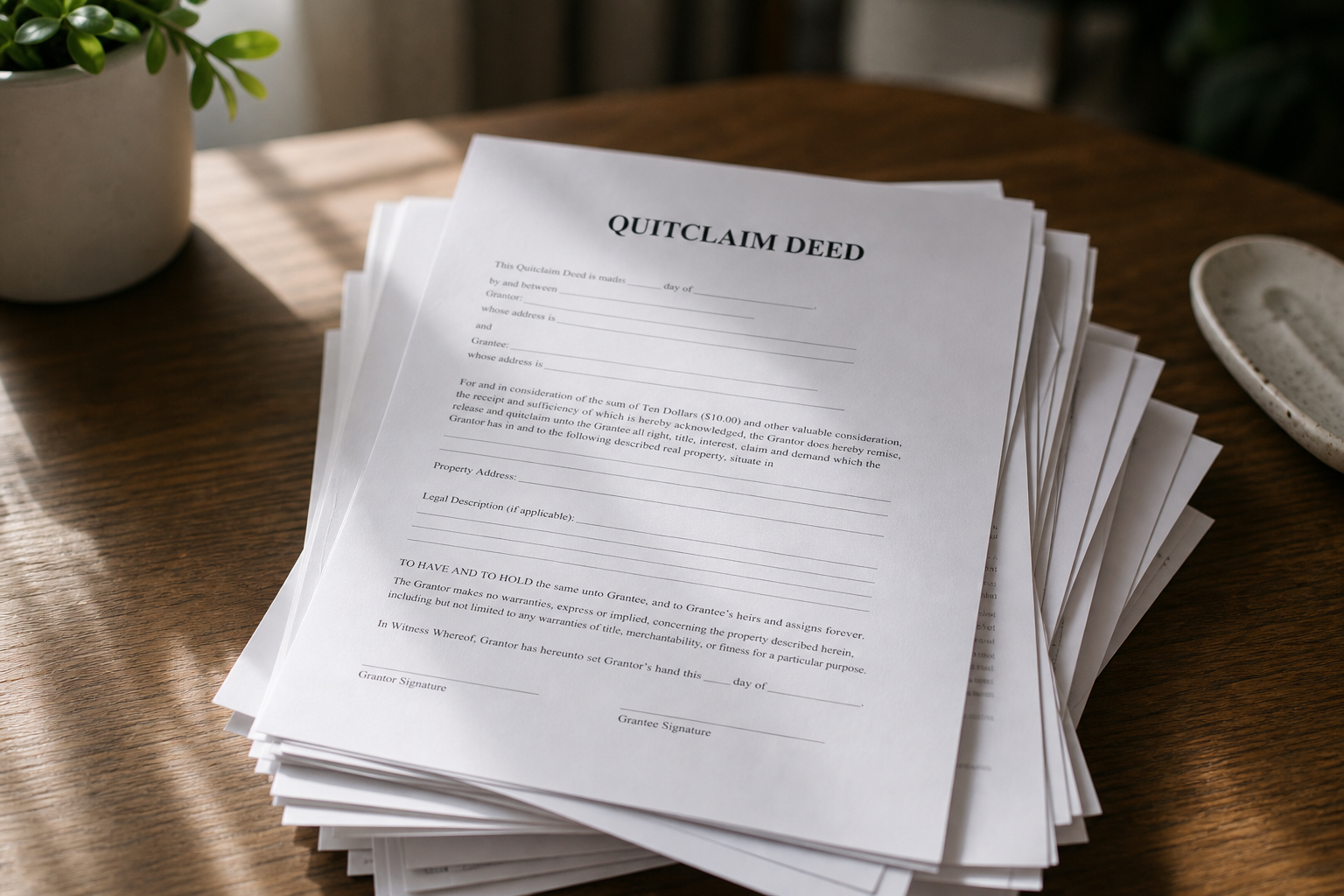
Once creditors are settled and the court signs off, the executor files a deed transferring title directly to the beneficiary, a process similar in mechanics to how you file a quitclaim deed. Depending on the state, this is typically an executor's deed or a fiduciary deed, which conveys the property without the warranties a standard sale would carry.
A few practical issues regularly complicate the transfer:
- Existing liens, including a mortgage, property tax arrears, or mechanic's liens, must be resolved or assumed before title can cleanly transfer.
- If the estate lacks liquid funds to pay debts, the house may need to be sold regardless of anyone's preference to keep it.
- When multiple beneficiaries share an equal interest, all of them must agree on who takes title or how to buy out the others' shares.
Getting a title search done early gives you time to clear any encumbrances before the distribution hearing.
How to Avoid Probate on a House
Planning ahead is the only way to keep a house out of probate, and there are four main tools for doing it. Each has genuine tradeoffs, and the right choice depends on your state and your situation.
Revocable Living Trust
You transfer title into a trust while you're alive and retain full control as trustee. When you die, the successor trustee distributes the property without court involvement. The tradeoff: setting up a trust costs more upfront than most other options and requires you to actually retitle the property, a step many people skip.
Joint Tenancy With Right of Survivorship
Adding a co-owner with survivorship rights means the property passes to them automatically at death by operation of law. Simple and inexpensive, but it gives the co-owner legal rights to the property right away, not merely at death, which creates complications if the relationship changes.
Transfer-on-Death Deed
Available in most but not all states, a transfer-on-death deed lets you name a beneficiary directly on the deed while keeping full ownership during your lifetime. The risk is that the beneficiary could predecease you, leaving the deed without a valid recipient.
Life Estate Deed
You retain the right to live in and use the property until you die, at which point ownership passes to the named remainder beneficiary automatically. This avoids probate but removes your ability to sell or refinance without the remainder beneficiary's consent.
| Option | How It Works | Retains Full Control During Lifetime? | Key Tradeoff | State Availability |
|---|---|---|---|---|
| Revocable Living Trust | Title held in trust; successor trustee distributes at death without court involvement | Yes (you remain trustee) | Higher upfront cost; property must actually be retitled into the trust | All states |
Joint Tenancy With Right of Survivorship | Co-owner receives the property automatically at death by operation of law | No (co-owner has legal rights immediately) | Co-owner gains immediate property rights; complications if the relationship changes | All states |
Transfer-on-Death Deed | Beneficiary named directly on the deed; owner keeps full control during lifetime | Yes | Beneficiary could predecease you, leaving the deed without a valid recipient | Most states (not all) |
Life Estate Deed | Owner retains right to live in property until death; remainder beneficiary takes title automatically | Partial (cannot sell or refinance without remainder beneficiary's consent) | Loses ability to act on the property independently during lifetime | All states |
The common thread across all four options: they require advance planning. None can be put in place after death, and none can substitute for clearing a probate estate that is already open.
How Alix Helps Executors Manage a House in Probate
Managing a house through probate is rarely just a real estate problem. Running alongside the property work are creditor timelines, institution outreach, formal inventory filings, insurance continuation, and a calendar of court deadlines, all happening at once while you're also grieving and working a full-time job.
Alix's estate settlement specialists handle more than 150 administrative tasks that don't require a law license, including the full scope of real estate coordination: locksmith access, utility transfers, insurance continuation, and routine property maintenance. An attorney from Alix's network handles the licensed legal work, including court filings and formal accountings. Based on Alix's data across client cases, full estate settlement can involve 600+ hours of work over 18 months, all under one transparent, estate-funded fee.
Alix is a good fit for estates with real complexity. If the estate is very small and resolvable by a single small estate affidavit with one attorney meeting, a simpler option will serve you better. Alix also requires that any family disputes be fully resolved before the service can begin. For everything in between, reach out to start your Alix onboarding.
Final Thoughts on How a House Moves Through Probate
Probate does not have to mean years of uncertainty, but it does require following a specific sequence without skipping steps that protect every beneficiary. As executor, your authority is real and your liability is real, so getting the property secured, appraised, and properly managed from the start matters more than moving fast. If the full scope of estate work feels like more than one person should carry alone, start your Alix onboarding to see whether a specialist makes sense for your situation.
FAQ
Will a house always have to go through probate when the owner dies?
Not always. A house skips probate when it passes through a joint tenancy with right of survivorship, a revocable living trust, or a transfer-on-death deed. If none of those are in place and the decedent held title in their name alone, the property goes through the court-supervised probate process regardless of its value.
Can you sell a house that is in probate before the estate fully closes?
Yes, a house in probate can be sold before the estate closes in most states, but the process depends on whether the estate is under independent or supervised administration. Independent administration lets the executor move toward a sale without court approval at each step; supervised administration requires court confirmation of the sale price, which opens the door to overbidding from other buyers at a public hearing. Either way, you must have formal letters testamentary in hand before signing any transfer documents.
How long does a house stay in probate, and what actually causes the delays?
Most probate timelines run 12 to 18 months; per a Trust & Will 2024 study, the national average is 20 months (see the How Long a House Stays in Probate section above for the full breakdown). The house itself rarely causes the delay. What adds time are creditor claim windows, court backlogs, heir disputes, and out-of-state property that may require a separate ancillary probate proceeding. Title cannot transfer until the estate closes, so the property waits on the legal process, not the real estate transaction.
What determines whether specific assets go through probate or pass directly to a beneficiary?
The deciding factor is whether the asset has a built-in transfer mechanism at death. Retirement accounts and life insurance policies with named beneficiaries pass outside probate entirely. A house titled solely in the decedent's name, with no trust, no survivorship co-owner, and no transfer-on-death deed, has no equivalent shortcut and goes through the court process. The same logic applies to bank and brokerage accounts: a named beneficiary or payable-on-death designation sidesteps probate; a solely titled account without one does not.
Can you hire an estate settlement service to handle the executor responsibilities for a house in probate, including calls, filings, and property coordination?
Yes. Alix's estate settlement specialists handle more than 150 administrative tasks that don't require a law license, including the full scope of real estate coordination: locksmith access, utility transfers, insurance continuation, and routine property maintenance. An attorney from Alix's network handles the licensed legal work, including court filings and formal accountings, as part of one transparent, estate-funded fee. Alix works across state lines, so the executor's location and the property's location don't need to match.

Related resources