A lot of executors assume they need every heir on board before they can sell the house. In most situations, that's not true. So, can you sell a house while in probate? In nearly every state, yes. When a property is still inside an active probate estate, the executor holds the authority to sell it, not the beneficiaries. What that process looks like in practice depends on your state and what the will grants you, and that's exactly what this covers.
Key Takeaways:
- You can sell a house while probate is open in nearly every state, though procedures and court involvement vary; the executor signs, not the heirs.
- Heirs generally cannot veto a probate sale; the court has final authority, not a dissenting beneficiary.
- Inherited property gets a stepped-up basis to fair market value at death, minimizing capital gains if sold promptly.
- State rules vary enough to matter: California, Florida, and Illinois each handle executor authority and court confirmation differently.
- Alix is an estate settlement service that coordinates the non-legal property work while an attorney from its network handles the legal side, all under one transparent, estate-funded fee.
Yes, a House Can Be Sold During Probate
Selling a house while probate is open is legal in nearly every state and happens routinely. Carrying costs like taxes, insurance, and maintenance add up fast, and the estate often needs liquidity to pay creditors, so a sale is often the only practical option. You can typically list, accept an offer, and close while probate is active. Proceeds go to the estate, not directly to heirs, and whether the court must approve the final sale price depends on your state and your authority.
Who Owns the House While Probate Is Open
What happens to a house during probate starts with a freeze: title stays frozen until the estate moves through probate, the court process for settling debts, validating the will, and transferring property. Who holds legal title during that time depends on the state. In California, for example, title passes to the heirs or devisees at death, subject to administration, per California Probate Code section 7000. Either way, the executor's authority controls the sale, so no individual heir can sign a purchase contract while the estate is open. As court-appointed executor, you take on that role, which is what an executor does in practice. The court's appointment lets you manage, list, and convey the property, but you cannot pocket the proceeds or sell to yourself without court scrutiny. If a buyer's agent or title company asks who signs, the answer is you.
When Probate Is Required to Sell at All
Probate is required when the deceased owned real property solely in their own name, with no mechanism in place to transfer it. If title passes through a living trust, joint tenancy with right of survivorship, or a transfer-on-death deed, the property is one of several non-probate assets that move outside probate. Otherwise, probate is typically required before anyone can sell, with or without a will, since not all wills go through probate the same way. With no will, the estate passes under your state's intestacy laws, a court appoints an administrator as part of estate administration, and any sale runs through that appointment first.
The Executor's Authority to Sell
Your authority to sell comes from the will and the court. A power-of-sale clause in the will lets you sell without petitioning the court for each transaction, and Nosal & Jeter notes you can generally move forward without prior court approval, depending on state law.
If the will is silent on selling, or there is no will, you may need a court order first. You also can't obtain an EIN for the estate until the court formally appoints you.
Either way, you don't need every beneficiary's sign-off to sell. Beneficiaries typically get notice of a proposed sale and a window to object, but an objection is not a veto. The court has final say.
Do All Heirs Have to Agree to Sell the Property
Generally, no. When you hold proper authority as executor, the sale does not require every heir to agree. As Hancock Whitney notes, heirs have rights around inherited real estate, but those rights don't include an individual veto over a sale you're authorized to make. Heirs typically get notice and a window to raise objections, but the court has final say, not the loudest beneficiary.
Unanimous agreement matters only once the estate has already distributed the property to multiple heirs as co-owners. At that point your authority as executor is gone, and co-owners generally must agree to sell voluntarily, or any co-owner can file a partition action to force a sale. Property still inside an active probate estate answers to you and the court; property already distributed answers to the co-owners.
How the Probate Sale Process Typically Works
The steps follow a set order, though the timeline is rarely fast.

- Date-of-death appraisal (requirements vary by state)
- Maintain and secure the property, keep insurance active
- List with a probate-experienced agent
- Negotiate, accept an offer, notify beneficiaries
- Close, and proceeds flow to the estate
In states requiring court confirmation, the accepted offer still goes before a judge, where outside buyers can overbid in open court. Your buyer may not stay your buyer.
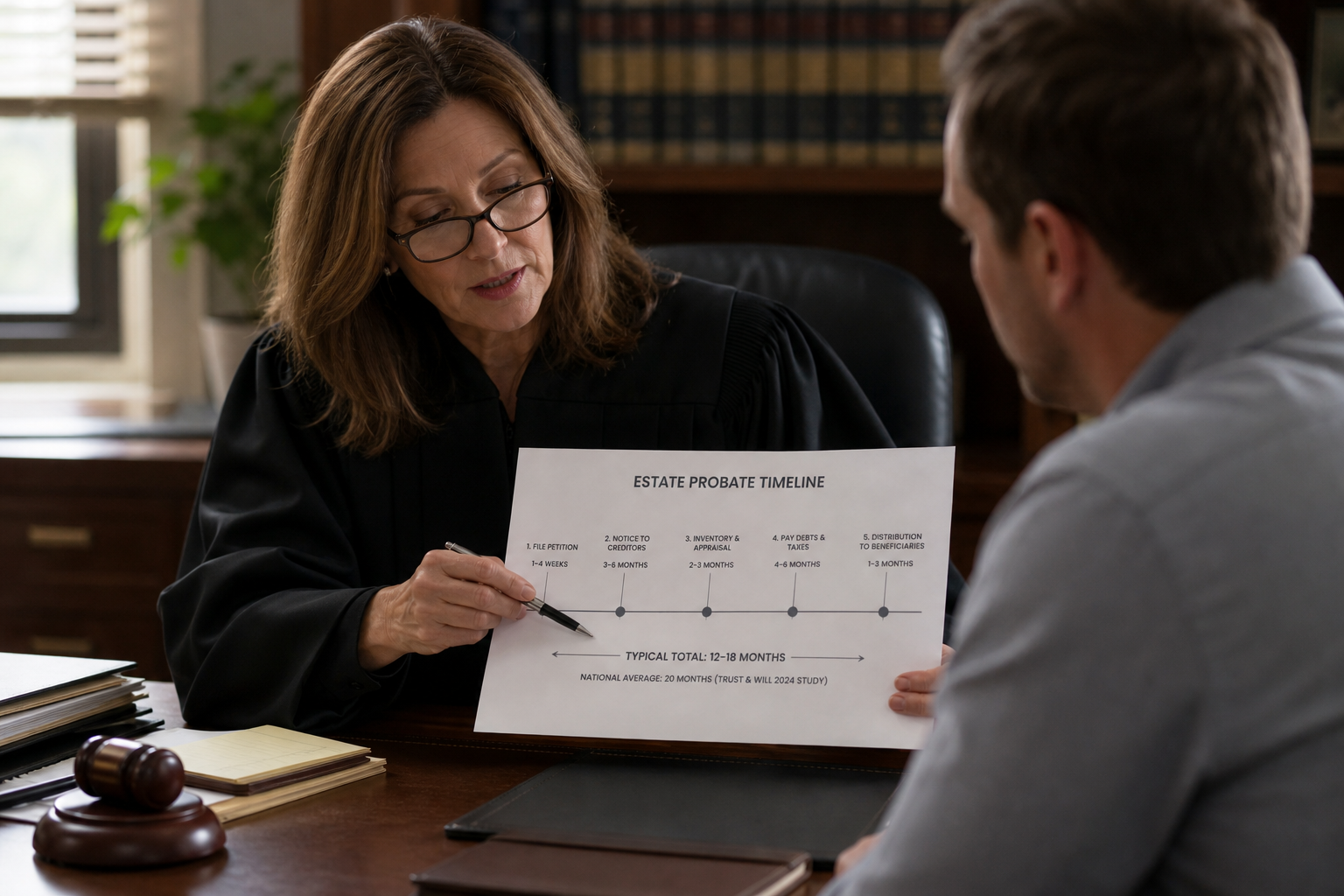
A Trust & Will 2024 study found the national average probate timeline is 20 months, though most estates run 12 to 18 months. The house sale can close in weeks, while the estate runs longer.
State-by-State Differences That Affect the Sale
Probate sale rules vary enough by state that generalizations can get you into real trouble. Here is how the three most commonly searched states handle it.
| State | Authority Type | Court Confirmation Required? | Key Complication |
|---|---|---|---|
| California | Full authority (IAEA) or limited authority | No, full authority. Yes, limited authority | Limited authority means overbidding in open court; your buyer may lose to a stranger |
| Florida | Turns mainly on a will's power of sale and homestead status | Typically yes without a power of sale; homestead typically needs a court order first | Homestead status adds restrictions; spouse and descendants' involvement also matters |
| Illinois | Independent administration by default; supervised if the will or court directs it | Typically no under independent administration; yes under supervised | A small estate affidavit generally cannot transfer real estate, so full probate is usually needed |
California
Under the Independent Administration of Estates Act, full authority typically lets you sell without a confirmation hearing. With limited authority, the sale goes before a judge and outside buyers can overbid in open court. Trust Properties USA notes this process is designed to protect heirs and maximize price, but your accepted buyer may lose to a stranger.
Florida
Florida sale authority typically turns on whether the will grants a power of sale and whether the home is homestead property. Under Florida Statutes section 733.613, a personal representative with a specific power of sale in the will can typically sell real property without court authorization or confirmation, while without one, title typically does not pass until the court authorizes or confirms the sale. Homestead property generally needs a court order determining its status first.
Illinois
Illinois typically grants independent administration, which generally lets you sell real estate without a court order unless the will directs supervision or an interested person asks the court to supervise. Real estate rarely qualifies for a small estate affidavit, so a full probate is usually needed.
How Long an Executor Has to Sell the House
You typically face no hard statutory deadline to sell by a specific date, but holding costs, mortgage payments, property taxes, insurance, HOA dues, and maintenance keep draining estate assets, reducing what beneficiaries eventually receive. Your fiduciary duty to preserve estate assets, one of many duties on an executor checklist, gives you reason to act without delay. A vacant, underinsured, or poorly maintained property can expose you to personal liability if the estate loses value.
Who Can Live in the House During Probate
A surviving spouse or dependent child often has a protected right to stay in the home, though the scope varies by state. Other relatives need your permission as executor to stay.
When Occupancy Becomes a Fiduciary Problem
Rent-free stays without a legal basis can cost the estate rental income it's owed. If you are the occupant, pay fair market rent to the estate or get a court order first.
Taxes on a Probate Property Sale
According to IRS Publication 551, inherited property generally takes a basis equal to its fair market value on the date of death, a step-up when the home has gained value. Selling shortly after death at or near that value typically keeps capital gains exposure minimal, since tax applies only to appreciation above that reset figure. Some states also impose estate or inheritance taxes that can reduce what heirs net, so confirm the rules with a tax professional before closing.
Challenges That Can Delay or Complicate a Probate Sale
Several real-world complications can slow a probate sale well beyond the baseline court timeline.

- Deferred maintenance can make a property hard to list, often requiring estate funds to reach marketable condition first.
- Title issues and outstanding liens, such as unpaid taxes, contractor liens, or old mortgages, must be cleared before title can transfer.
- Out-of-state heirs can cause delays when notarization, signatures, or court appearances are needed from people in different time zones.
- Beneficiary disagreements, even when they can't legally block a sale, can trigger formal objections and court hearings.
- A reverse mortgage generally becomes due and payable after the last borrower dies, and heirs generally have around 30 days after the servicer's notice to respond with their intent. That window can typically extend up to about 6 months to sell or refinance, and up to roughly 12 months total with HUD-approved extensions, subject to servicer approval. If the balance exceeds the home's value, heirs can typically pay 95% of the appraised value instead, per the CFPB. Private reverse mortgages can differ.
- An occupant who refuses to vacate, family member or tenant, can delay listing for weeks or months while you pursue legal remedies.
An active will contest or unresolved heir dispute may delay or halt the sale in most cases, depending on the state and the dispute.
How to Sell a House After Probate Closes
Once probate closes and the court issues a decree of distribution, title moves out of the estate and into the heirs' names, and your authority as executor ends there.
A single heir who inherited the property outright sells it the usual way. If two or more heirs co-own it, all must agree and sign, or any co-owner can file a partition action to force a sale, though that can take months and a court may order a buyout instead.
Before listing, confirm the decree of distribution was recorded with the county recorder. Without that recorded chain of title, a title company can't issue a clean policy, and closing will stall.
How Alix Coordinates Probate Real Estate Sales as Part of Estate Settlement

Based on Alix's data across client cases, settling an estate typically involves 600+ hours of work over 18 months. Real estate coordination is one piece of that work, which Alix folds into one coordinated process alongside account closures, creditor management, tax coordination, and beneficiary distributions.
Alix's estate settlement specialists handle the non-legal work a property sale requires: appraisal coordination, locksmith access, utility transfers, insurance continuation, routine maintenance, creditor coordination tied to sale proceeds, and beneficiary updates. An attorney from Alix's network, included in one transparent, estate-funded fee, handles the court filings and other licensed legal work. If you bring your own attorney, or your needs go beyond standard probate, those fees are handled separately.
Alix handles more than 150 administrative tasks outside an attorney's role, so you can focus on decisions only you can make. Alix cannot begin while a will contest or family dispute is open, and network attorneys don't handle litigation, so those matters need independent counsel first.
FAQs
Can you sell a house while it's in probate before the estate fully closes?
Yes. It's legal in nearly every state and happens routinely. The executor can list the property, accept an offer, and close while the estate is still active. Proceeds go to the estate, and depending on your state, a court may need to confirm the price.
How long does an executor have to sell a house after someone dies?
There is typically no hard statutory deadline, but fiduciary duty creates real pressure. Mortgage payments, taxes, insurance, HOA dues, and maintenance keep draining estate assets and reduce what beneficiaries receive. A vacant or underinsured property can expose the executor to personal liability if the estate loses value.
Can the executor sell property to themselves, and what court oversight applies?
It isn't automatically prohibited, but it draws serious court scrutiny in nearly every state. A self-dealing sale typically requires court approval, full disclosure to all beneficiaries, and proof that the price reflects fair market value. Skipping court authorization is a direct path to personal liability.
Final Thoughts on What Happens to a House During Probate
So, can you sell a house while in probate? In nearly every state, yes. It takes longer than a standard sale, but it's a well-worn path with clear rules once you know your state's requirements. Protecting the estate's value is your duty as executor, but the property work doesn't have to be yours to carry. Start your Alix onboarding, and a specialist coordinates the property, insurance continuation, and beneficiary communication while an attorney from Alix's network handles the legal work.

Related resources