Being named executor is one thing. Knowing what to actually do in the first 24 hours after someone dies is another. From getting a legal pronouncement to securing the home to ordering the right number of death certificates (more than you think), the early steps have a way of shaping how smoothly the rest of the estate settles. Here's the full executor checklist after death, step by step.
Key Takeaways:
- Order 10 to 15 certified death certificates right away; too few delay banks, agencies, and insurers.
- Ask one credit bureau to add a "deceased" notice to the credit file, since that bureau notifies the other two; over 2 million deceased Americans are identity theft targets yearly, per AARP data cited by Milvidskiy Law Group.
- Most states require a probate inventory within 60 to 90 days of appointment; missing it can create personal liability.
- You cannot distribute assets until the creditor claim window closes, typically 3 to 6 months after probate opens.
- Alix is a human-led estate settlement service that pairs a specialist who coordinates asset discovery, creditor tracking, and federal and state tax filings (individual returns, estate returns, and inheritance refunds when required) with a network attorney who handles the licensed legal work. One transparent fee paid from the estate covers most of this, while unpaid taxes from prior years and legal work outside standard probate, such as litigation or contested matters, are typically handled separately.
What to Do Immediately After Someone Dies (Hours 1 to 24)
Get a Legal Pronouncement of Death
A death certificate requires an official pronouncement. A hospice nurse can provide it at home. Call 911 if there is no hospice, and do not move the body. In a hospital, facility staff handle it.
Notify Family and Secure Dependents
Call the people closest to your loved one by phone before word spreads any other way, and arrange same-day coverage for any minor children or pets in your loved one's care.
Arrange Transport to a Funeral Home
Contact a funeral home as soon as you are ready; they will coordinate transport and hold the body while arrangements are made.
What to Do in the First Few Days After a Death
Several tasks need to happen at once in the days after a death.
- Contact the employer to report the death and ask about a final paycheck, life insurance, or pension benefits.
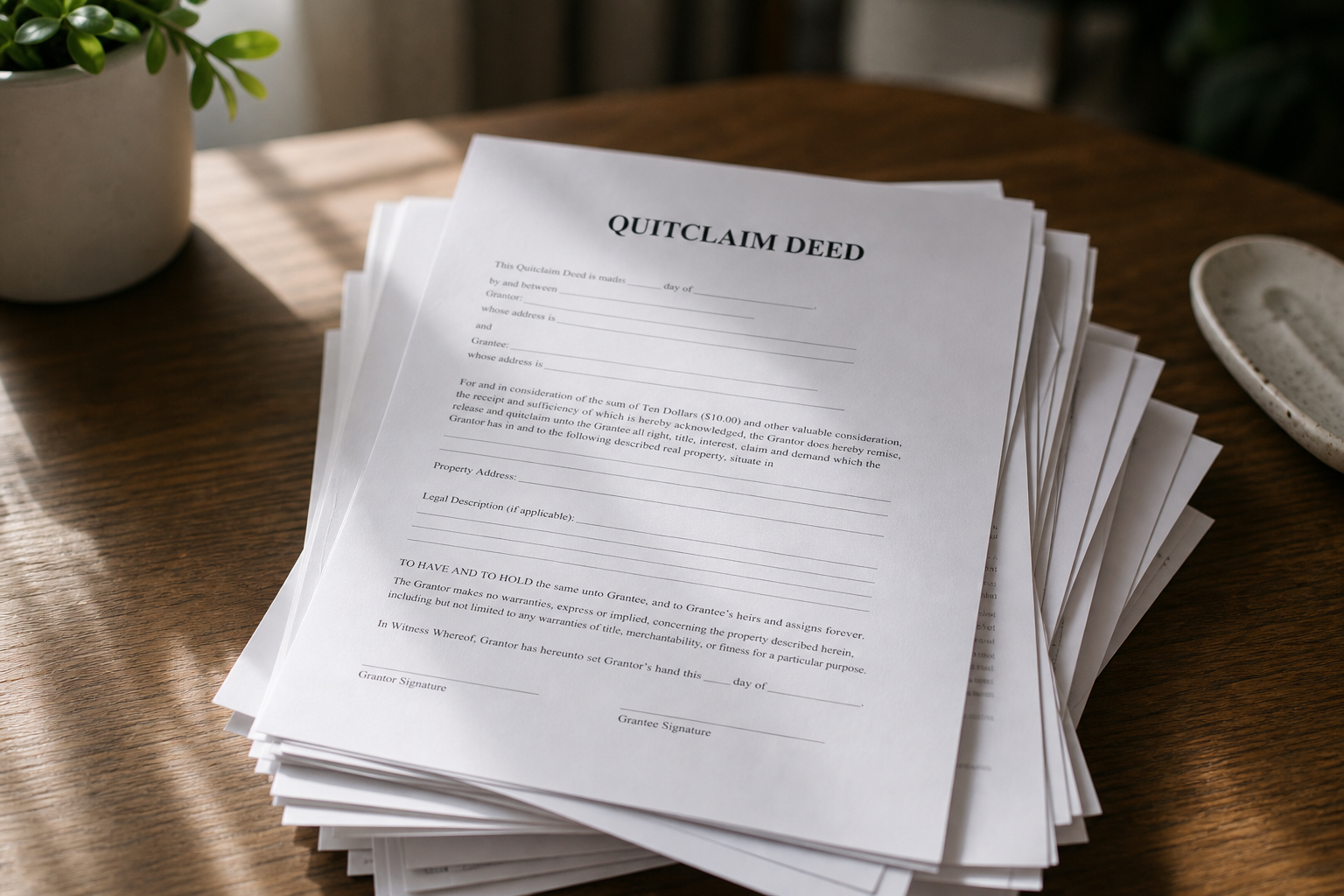
- Locate the will and any prepaid funeral plan in home files, safe deposit boxes, or with your loved one's attorney.
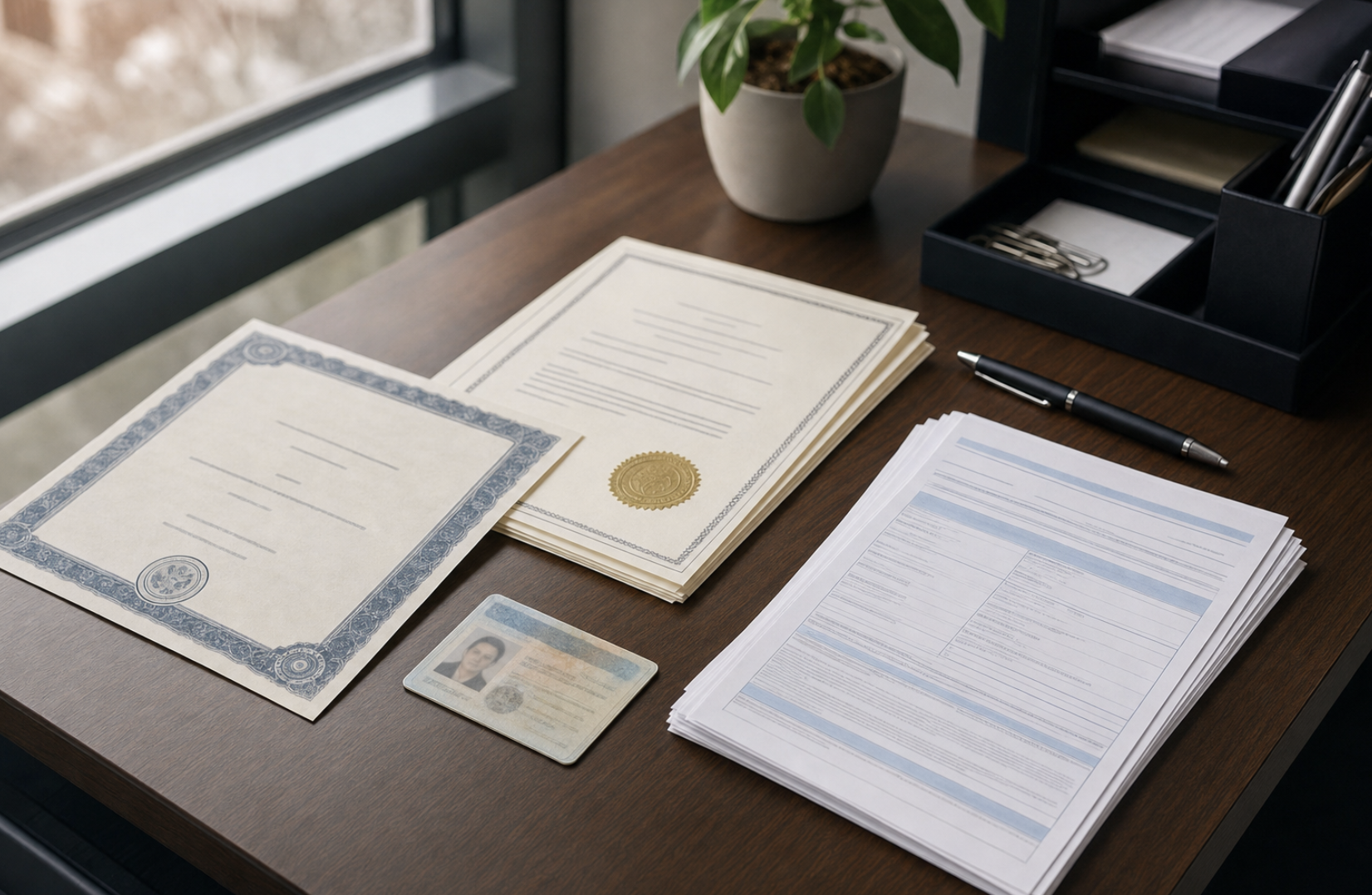
- Order 10 to 15 certified copies of the death certificate, since banks, insurers, agencies, and courts each keep their own original.
- Begin planning the funeral or memorial if no prepaid arrangements exist.
- Notify close friends, a religious community, or a workplace, and consider drafting a rough obituary.
How to Locate and Secure Key Documents
Document recovery is easy to underestimate. A missed policy or account can mean delays later, or assets that go undiscovered. Start with filing cabinets, desk drawers, and fireproof safes, then widen your search.
- The will, any trust documents, and property deeds or vehicle titles
- Life insurance policies, including older ones that may still be active
- Financial account statements and tax returns from the last two to three years
- Safe deposit box keys, outstanding checks, savings bonds, and digital account credentials
- Brokerage accounts at smaller institutions, often overlooked in estate settlement
Safe deposit boxes typically need letters testamentary from the probate court before a bank grants access, so plan for that. Store originals securely and keep digital copies, protecting both the estate and you as executor.
How to Notify Government Agencies and Benefits Programs
Government agencies often need notification sooner than executors expect, and several should hear from you within the first few days.
| Agency / Program | When to Notify | Key Action Required | Potential Benefit |
|---|---|---|---|
| Social Security Administration (SSA) | As soon as possible | Stop benefit payments; return any payment issued for month of death or after | One-time $255 lump-sum death payment; survivor benefits for eligible spouse or dependents |
| Medicare | When you report the death to the SSA | Report the death to the SSA, which notifies Medicare; confirm with any Medicare Advantage, Part D, or Medigap plan | Ends coverage and prevents duplicate billing or overpayment issues |
| Department of Veterans Affairs (VA) | As soon as possible (if deceased served) | Report the death to stop benefit payments; ask about burial and survivor benefits | Burial benefits; possible survivor benefits |
| U.S. Postal Service (USPS) | After you are appointed executor | Submit an in-person change of address request with proof of your executor authority | Captures estate-related mail, account statements, and benefit notices |
According to the SSA lump-sum death payment page, a surviving spouse or eligible child may receive a one-time $255 payment. Per the USPS, forwarding a loved one's mail takes an in-person change of address request with proof you are the appointed executor.
Data cited November 2026. Information subject to change.
How to Protect the Estate From Fraud and Identity Theft
According to AARP data cited by Milvidskiy Law Group, more than two million Americans who have died have their identities hijacked each year. Thieves exploit the gap before bureaus and institutions are notified, and details in a published obituary can supply what they need.

Your first move is to ask Equifax, Experian, or TransUnion to add a "deceased" notice to the file. This makes it harder for anyone to open accounts using your loved one's Social Security number. Per Equifax's deceased notice guidance, the bureau that adds the notice alerts the other two. Expect to send a copy of the death certificate and, if you are not the spouse, court documents showing your authority.
- Cancel or secure unused credit cards
- Alert institutions to watch for suspicious activity
- Avoid publishing the full birth date and Social Security number in any obituary
- Pull a credit report from each bureau, then file an FTC report at IdentityTheft.gov if you find fraud
How to Secure and Manage Your Loved One's Property
Personal liability for damaged or stolen assets can begin once you accept the executor role.
Real Property and Vehicles
Change the locks right away and confirm homeowner's insurance stays active, since coverage can lapse on a vacant property. Keep utilities running, and get legal guidance for any rental or vacation home, since tenants still have rights under existing leases. Keep vehicles insured too, and do not let family members drive them before title transfer is complete.
To start a vehicle title transfer, contact your state's DMV once you have letters testamentary. Offices typically ask for a certified death certificate, the current title, and proof of your authority as executor, though requirements and forms vary by state.
How to Begin the Probate Process
Probate is the court-supervised process of validating the will and giving you legal authority to act for the estate. Whether your state requires full probate depends on the estate's size and how assets are titled, so check local rules first.
If probate is required, here is the general sequence:

- File the original will with your local probate court, along with a petition to open the estate and appoint you as executor
- Pay the court filing fee, which varies by state and sometimes by estate size
- Receive your letters testamentary, authorizing you to act for the estate with banks, agencies, and third parties
- Publish a creditor notice in a local newspaper, which most states require to start the creditor claim window
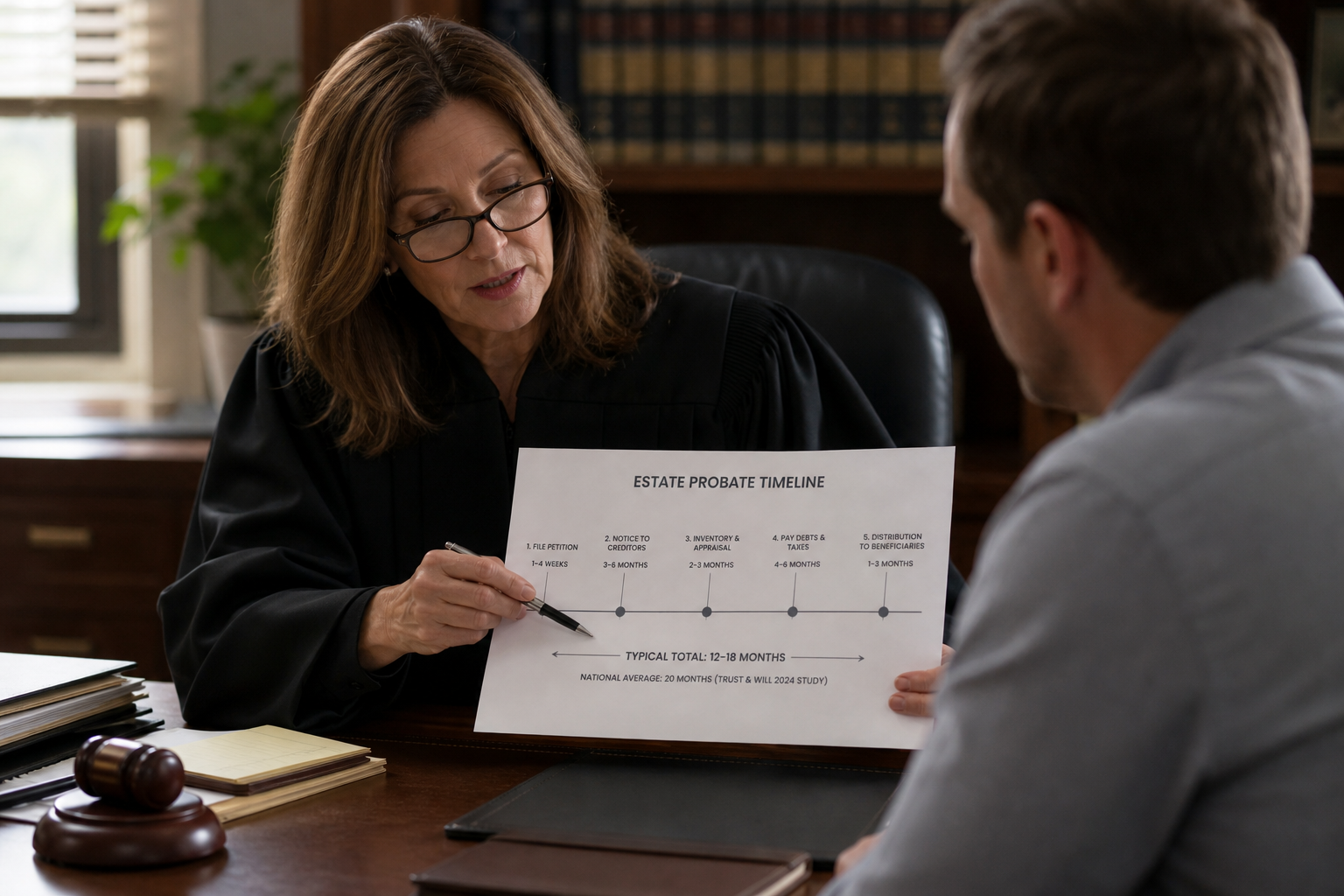
That creditor window, typically three to six months depending on your state, is a main reason probate takes as long as it does. Per a Trust & Will 2024 study, the national average probate timeline is 20 months, though timelines vary by state and estate complexity. Mandatory waiting periods drive much of that time. Small or simple estates may qualify for a small estate affidavit, bypassing formal probate. But estates with real property, multiple accounts, or real complexity more likely need full probate.
How to Inventory and Appraise Estate Assets
Inventory is a legal obligation. Most states require a formal probate inventory filed with the court within 60 to 90 days of your appointment, with asset-securing starting within the first 30 to 60 days. In many states, missing those windows can expose you to personal liability for anything lost, damaged, or that drops in value in the interim.
Every category of asset needs to be on the list:
- Real property: residences, rentals, and vacation homes
- Financial accounts, including smaller brokerage accounts
- Vehicles and personal property like jewelry, art, and collectibles
- Life insurance naming the estate as beneficiary, plus digital assets like cryptocurrency
Typically, get credentialed appraisals for real estate and valuable personal property, and document everything with photos and written descriptions.
How to Handle Creditors and Outstanding Debts
Creditors come first. Every valid claim must be identified and resolved before any beneficiary receives a dollar, or you risk personal responsibility for unpaid debts. Publishing the creditor notice starts a waiting period of three to six months in most states, and distributions wait until it closes.
During that period, track every claim you receive:
- Medical bills, including any from the final hospitalization or hospice care
- Credit card balances and mortgage servicer notices
- Utility arrears and personal loans or lines of credit
You can reject claims that are inaccurate, inflated, or filed late by notifying the creditor in writing, though creditors can contest rejections. Valid debts are paid in the priority order state law sets, typically secured debts and administration costs first, then beneficiaries.
How to Notify and Close Financial Accounts
With letters testamentary in hand, start contacting financial institutions. Banks freeze accounts once notified of a death, so bring certified death certificates and your court appointment documents. Accounts with a named beneficiary, payable-on-death designation, or joint ownership pass outside of probate. Only probate assets titled solely in your loved one's name go through the estate.
Bank, Brokerage, and Retirement Accounts
Contact each institution for statements, closure forms, and written confirmation of pending transfers, and follow up in writing if a transfer stalls. Retirement accounts like IRAs and 401(k)s follow beneficiary designations, with the plan administrator guiding that person through distribution. If the estate is named beneficiary, those funds pass through probate instead.
How to Handle Tax Filing Obligations
As executor, you handle several tax filings.
The Final Income Tax Return
File your loved one's final federal and state income tax return, covering January 1 through the date of death, typically due April 15 of the following year. If a refund is owed, a court-appointed executor attaches a copy of the court certificate, while other representatives file IRS Form 1310, per IRS final return guidance. Use Form 4506-T for prior-year transcripts.
The Estate EIN and Estate Income Return
Once appointed, you can apply for an estate EIN through the IRS. That EIN opens an estate bank account and lets you file Form 1041 for estate income.
Federal Estate Tax Return
If the estate owes federal estate tax, the return is generally due nine months after death, though the estate's representative can request an extension, per the IRS estate tax FAQ.
How to Distribute Assets to Beneficiaries
You cannot distribute before every creditor window closes and every tax obligation is resolved. See the executor checklist of tasks in order. Distributing early leaves you personally exposed to debt that surfaces later.
- Prepare a final accounting of assets, debts, taxes, and expenses.
- Get court approval first, if your state requires it.
- Distribute assets per the will, or intestacy rules if there is none.
- Follow the trust instrument's terms for trust-held assets.
Give each beneficiary a written statement of what they will receive, keep records of every transfer, and know that your fiduciary duties conclude only once distributions are made and the court closes the estate.
How Alix Coordinates Settlement From First Task to Final Distribution

Per Alix's analysis of estate files, settling an estate typically requires 600+ hours of work across 18 months, spanning more than 150 administrative tasks that don't require a law license, plus the licensed legal work only a probate attorney can do.
As a human-led estate settlement service, Alix coordinates one process around you. Your estate settlement specialist handles asset discovery, including safe deposit boxes, uncashed checks, and smaller brokerage accounts; obtains the estate EIN once the court appoints you as executor, so estate taxes stay off your personal Social Security number; coordinates locksmith access, utility transfers, and insurance continuation; follows up with institutions on statements, closure forms, and stalled transfers; tracks medical bills, credit card balances, and mortgage servicer notices; coordinates credentialed appraisals and the probate inventory through vendor partners; coordinates tax prep with accountants or attorneys on federal and state filings, including the nine-month federal estate tax return deadline; and keeps beneficiaries updated on timelines. An attorney from Alix's network handles court filings, creditor notices, and formal accountings, included in Alix's one transparent, estate-funded fee whether or not your state requires full probate. That fee covers the Alix service and the network attorney, while court filing fees, legal notice publication costs, and vendor costs like appraisals and tax prep are typically paid by the estate separately, and back taxes or legal work outside standard probate are typically handled separately as well. If you already have your own attorney, that works too, and those fees are handled separately.
Alix is built for estates with real complexity, including trusts, real property, or multiple accounts. If your estate closes with one attorney meeting and one affidavit, a simpler option may fit better. Legal contention must be fully resolved before Alix can begin, meaning someone has filed anything with the court, hired an attorney over the dispute, or said they plan to sue, contest the will, or challenge who should be in charge. Ordinary family disagreement on its own does not rule an estate out. For everything in between, start your Alix onboarding to get moving.
FAQs
What's the best service for an executor who wants to hand off the entire probate process to professionals?
Alix is a human-led estate settlement service built for that. An estate settlement specialist handles the non-legal work while a network attorney handles the licensed legal work, together under one estate-funded fee. A very small estate that closes with one affidavit may fit a simpler option better.
How do I protect a loved one's identity from fraud after death?
Ask one of Equifax, Experian, or TransUnion to add a "deceased" notice to the credit file, which per Equifax alerts the other two. Keep the full date of birth and Social Security number out of any obituary. According to AARP data cited by Milvidskiy Law Group, more than two million Americans who have died have their identities hijacked each year.
How long does probate typically take after someone dies?
Many estates typically take 12 to 18 months, though timing varies by state and estate complexity. Per a Trust & Will 2024 study, the national average probate timeline is 20 months. Mandatory creditor-claim windows of three to six months, which vary by state, drive much of that timeline.
Final Thoughts on What to Do After Someone Dies
Being an executor means holding many pieces at once, often while grieving. This executor checklist after death shows the full scope of work ahead. Alix's estate settlement specialist and a network attorney coordinate that work as one process, from asset discovery to final distribution. Start your Alix onboarding.

Related resources