A Loved One's Mail After Death: An Executor's Guide (November 2026)
The mail doesn't know your loved one has passed. It just keeps coming. As the executor, figuring out what to do with a loved one's mail is one of those tasks that feels small until you realize a missed notice or ignored statement can actually create real problems for the estate. Here's how to get it under control.
Key Takeaways:
- You need letters testamentary or a court order to open or redirect a loved one's mail, since a death certificate alone is not enough.
- USPS forwarding must be requested in person and typically lasts 12 months, which gives you time to contact senders directly.
- Log creditor notices but hold off on paying, since paying out of order can expose you to personal liability.
- Registering your loved one with the ANA's Deceased Do Not Contact registry costs $6 and typically cuts promotional mail within about three months.
- Alix is a human-led estate settlement service that coordinates asset discovery, institution outreach, creditor tracking, and property tasks, with an attorney from its network handling the licensed legal work. One transparent fee, paid from the estate's assets once they're secured, typically covers Alix's service and the network attorney for standard probate work, while vendor costs (like locksmiths or appraisals) and court filing fees are usually paid by the estate separately.
Why a Loved One's Mail Needs Prompt Attention
As executor, that's you, and senders won't stop until told otherwise. A missed bill can accrue penalties, an unnoticed refund check can sit until it's escheated to the state, and a bank statement might be the only trail for an account you didn't know existed.
There's also a security angle. According to the California Attorney General's office, identity thieves can strike after death using a Social Security number to open fraudulent accounts. Getting control of mail early protects the estate and beneficiaries, as part of the broader steps to take after a death.
Your Legal Authority to Manage a Loved One's Mail
Opening someone else's mail can be a federal offense under 18 U.S.C. § 1702, and grief does not exempt you. If you shared a mailing address with the person who died, USPS lets you open and manage that mail, but redirecting it elsewhere requires proof of appointment as executor or administrator.
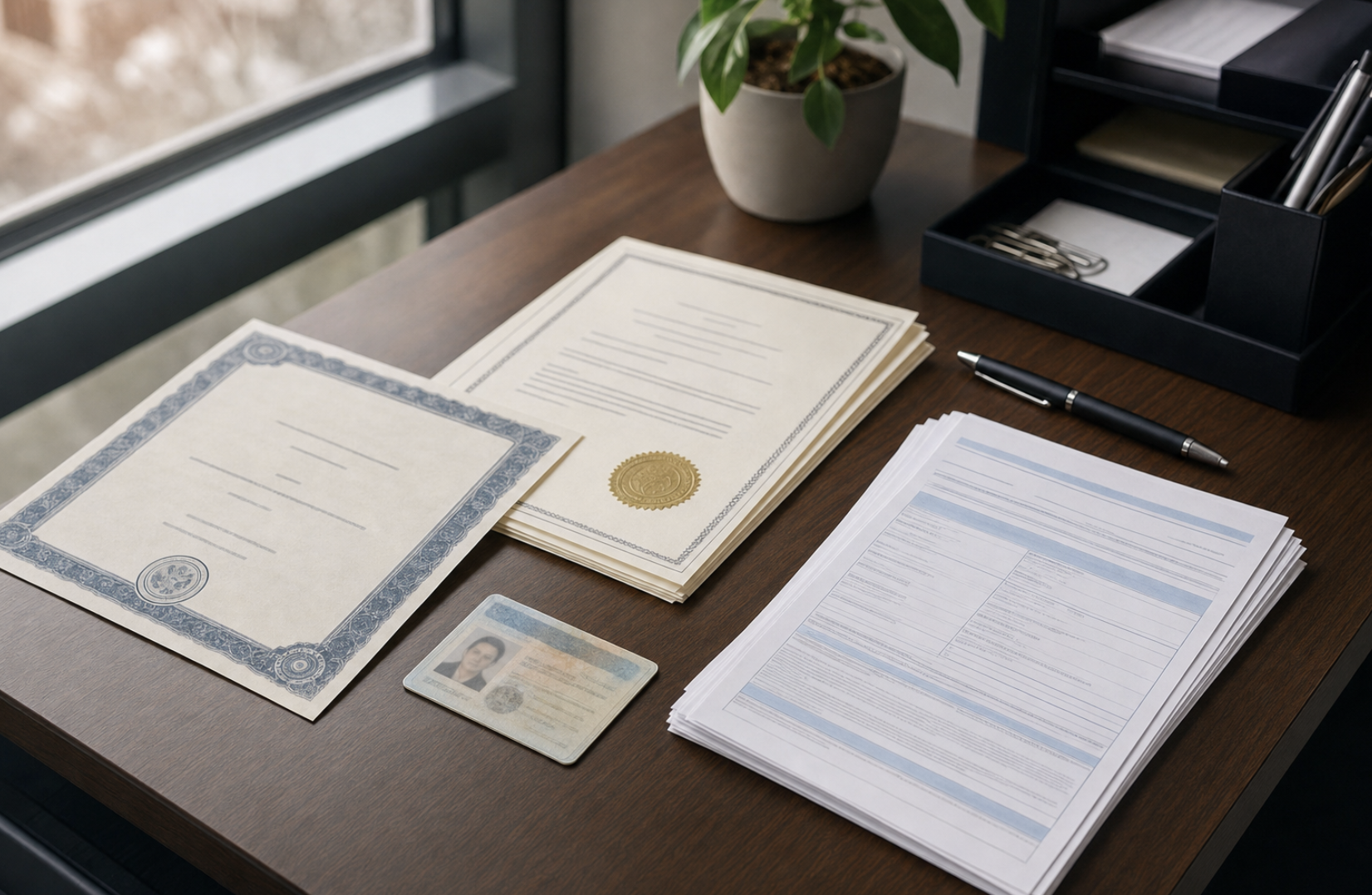
Proof of authority typically means one of these:
- Letters testamentary from the probate court
- A court order naming you personal representative or administrator
- Successor trustee documentation, if a trust is involved (confirm with your post office, since USPS names executors and administrators)
USPS asks for proof of appointment as executor or administrator, so a death certificate alone is not enough. If probate hasn't been filed and you lack these documents, collect and safeguard the mail without opening anything not addressed to you until your appointment is official.
How to Forward a Loved One's Mail Through USPS
With your legal authority documents ready, head to your local post office. USPS requires an in-person request, not an online one.

Bring the following:
- Your government-issued photo ID
- Proof of your legal authority (letters testamentary, court appointment order, or successor trustee documentation)
- Your loved one's name and last known address
You'll complete a change-of-address form redirecting their mail to your address. Per USPS forwarding rules, standard forwarding typically lasts 12 months and covers First-Class Mail, Priority Mail, and USPS Ground Advantage items. Periodicals forward free for only 60 days when the sender prepays, and USPS Marketing Mail is generally not forwarded unless the sender pays forwarding postage. Senders often will not forward sensitive financial or medical documents, so direct outreach still matters.
Forwarding is temporary. Senders still have the old address on file, so contact them directly to update records before the window closes.
Data cited November 2026. Information subject to change.
What to Do With Each Type of Mail Before Forwarding
Not all mail deserves the same attention. Sort it before you forward or discard anything.
| Mail Type | What to Do |
|---|---|
| Bills and creditor notices | Log the creditor, amount, and due date, but hold off paying until the estate's formal claim process runs. |
| Bank and investment statements | Open and file, since these may reveal accounts you didn't know existed as part of a probate asset search. |
| Government correspondence | Open right away, since IRS, Medicare, and Social Security notices can be time-sensitive. |
| Tax documents (1099s, W-2s) | Set aside in a folder for the final income tax return. |
| Subscription renewals | Note the service and cancel to stop auto-renewals from draining estate funds. |
| Solicitations and junk mail | Hold for now and handle through the opt-out process covered in the next section. |
Creditor mail trips up most executors. Paying out of order before the claim window closes can expose you to personal liability, so log the notice and let the formal process run, per a broader executor checklist. Rules on timing and priority vary by state. With Alix, your estate settlement specialist organizes and tracks medical bills, credit card balances, mortgage servicer notices, and utility arrears, while an attorney from our network handles the formal creditor claim work.
Data cited November 2026. Information subject to change.
How to Stop Junk Mail After a Death
Two ANA tools can cut junk mail for a loved one who has passed. The Deceased Do Not Contact (DDNC) registry is most direct: a $6 fee adds your loved one's name, address, phone, and email to a monthly suppression file sent to subscribing marketers, with mail typically dropping within three months, per the ANA. DMAchoice, from the same organization, lets you opt out of broad marketing categories. Neither stops everything, government mail, active accounts, and non-subscribing senders keep arriving, so direct outreach still matters.
Data cited November 2026. Information subject to change.
How to Contact Senders Directly to Update Records
Suppression registries reduce volume over time. Direct outreach stops it at the source, in this order of priority:
- Financial institutions (banks, brokerages, credit card issuers): Notify each of the death and ask what documentation is needed to freeze or close the account, bringing your legal authority documents.
- Government agencies: Notify Social Security, Medicare, the IRS, and the VA individually. Social Security needs prompt notification since benefits are not payable for the month of death.
- Insurance companies: Update life, health, auto, and homeowners policies, since some may generate refunds while others need to stay active while estate property is still held.
- Subscription services: Cancel streaming, magazines, meal kits, and software to stop auto-renewal charges; see our guide on how to cancel credit cards after death for card-specific steps.
- Loyalty and rewards programs: Airlines, hotels, and retailers often allow points to transfer to beneficiaries if claimed within a set window.
Keep a running log of who you contacted, the date, and what was requested.
Writing "Deceased Return to Sender" on Mail
Writing "Deceased - Return to Sender" works only in narrow cases: one-off solicitations or mail from senders you have no other way to reach. For piling creditor notices, see our guide to credit card debt after death on who's responsible for paying it. Returning mail doesn't guarantee a sender updates its list, so never use this for time-sensitive mail, which you should open instead.
Write "Return to Sender" on one line and "Deceased" on another, without covering the address or barcode. Treat it as a complement to forwarding and direct outreach, which cover the sensitive mail, not a replacement.
Protecting the Estate Against Identity Theft and Mail Fraud
Mail is one way a thief can gather what's needed for identity theft after a death. Pre-approved credit offers, financial statements, and Medicare correspondence sitting in an unmonitored mailbox give a thief enough to open new accounts in your loved one's name. As the California Attorney General's office explains, delays in reporting a death give thieves more time, so notify the credit bureaus promptly.

Contact all three bureaus, Equifax, Experian, and TransUnion, in writing to flag your loved one's file. You'll need a death certificate and proof of authority for each, which reduces the risk of new credit in their name.
Beyond the credit bureaus:
- Secure the mailbox. If the property is vacant, add a keyed lock or redirect mail through USPS forwarding.
- Shred financial documents instead of discarding them whole.
- Monitor open accounts for unauthorized transactions until each is closed. See our guide on closing a bank account after death for the documentation needed.
Managing Mail When You Live Out of State
Managing mail from another state takes coordination. USPS forwarding must be set up in person, so if traveling is a barrier, call ahead to confirm what it will accept before relying on a local contact.
You will likely need someone on the ground to collect early mail and check the box periodically, part of your role as executor. A P.O. box in your city is another option, though in-person signatures still need a local contact.
A Weekly Mail Cadence That Keeps the Estate on Track
Set a day each week to review and sort the mail. Consistency matters more than frequency, since letting mail pile up means juggling several urgent items at once.
Each weekly pass may take about 20 minutes:
- Act on government notices and anything marked "urgent" or "final notice"
- File statements, 1099s, and policy documents for the estate inventory
- Log and hold creditor notices in a running claims log
- Cancel or return subscriptions and marketing mail
The log matters: many probate courts require an accounting of creditor claims received, and requirements vary by state, so your mail record becomes part of that documentation, much like the records you keep for the estate account itself.
Mail monitoring also feeds asset discovery: an unfamiliar statement, a utility refund, or a dividend notice can surface through review. Keep the log running until the estate is formally closed. If you work with Alix, your estate settlement specialist handles that discovery work as part of one coordinated settlement process.
How Alix Handles Asset Discovery and Property Coordination as Part of Estate Settlement

Mail management rarely stays isolated. A statement from an unfamiliar brokerage, a notice about a safe deposit box, an uncashed refund check: these surface through incoming mail and feed estate asset discovery. Miss them, and the estate may close with assets still unclaimed.
Alix's estate settlement specialists handle asset discovery as part of the standard settlement process, watching for items executors commonly overlook: uncashed checks, brokerage accounts at smaller institutions, safe deposit box notices, and digital account correspondence. Specialists request statements, obtain freeze or closure forms, and follow up on stalled transfers.
For out-of-state executors, this matters especially. Alix folds asset discovery, institution outreach, property tasks, and creditor management into one process with a dedicated settlement team that gives you two direct points of contact, acting on your behalf across state lines. Locksmith access, utility transfers, insurance continuation, and routine maintenance are coordinated through Alix's vendor partners.
Alix charges one transparent fee, paid from the estate's assets once they're secured, not out of your pocket, that covers Alix's service and an attorney from its network for standard probate work. Vendor costs like locksmiths, appraisals, and real estate services, plus court filing and legal notice fees, are typically paid by the estate separately. The fee covers the 150+ administrative tasks specialists manage for you.
FAQs
Can I open a loved one's mail before probate is finalized?
Opening mail addressed to someone else can be a federal offense under 18 U.S.C. § 1702, and a death certificate alone is not enough. You generally need letters testamentary, a court appointment order, or successor trustee documentation. USPS notes that people who share a mailing address with the person who died may open and manage that mail. Otherwise, hold it unopened until your appointment is official.
How do I forward a loved one's mail through USPS?
USPS requires an in-person request at a Post Office. Bring your photo ID, proof of your legal authority, and your loved one's name and last known address. Forwarding typically runs 12 months, but it is temporary, so contact senders directly to update their records.
What do I do with creditor mail that arrives for a loved one's estate?
Log the creditor name, amount, and due date, but do not pay on arrival. Paying creditors out of order or before the claim window closes can expose you to personal liability if the estate later lacks funds for higher-priority debts. Keep every envelope, since your log may become part of the court accounting.
Final Thoughts on Staying on Top of the Mail
A consistent approach to a a loved one's mail, weekly sorting, USPS forwarding, and direct outreach to senders, protects the estate and keeps asset discovery on track through the whole settlement process. Most executors find that the mail piece connects naturally to everything else: accounts they didn't know about, refunds sitting uncashed, and creditor notices that need logging. If you want a dedicated settlement team coordinating the broader estate work, start your Alix onboarding and a specialist will take it from there.

Related resources