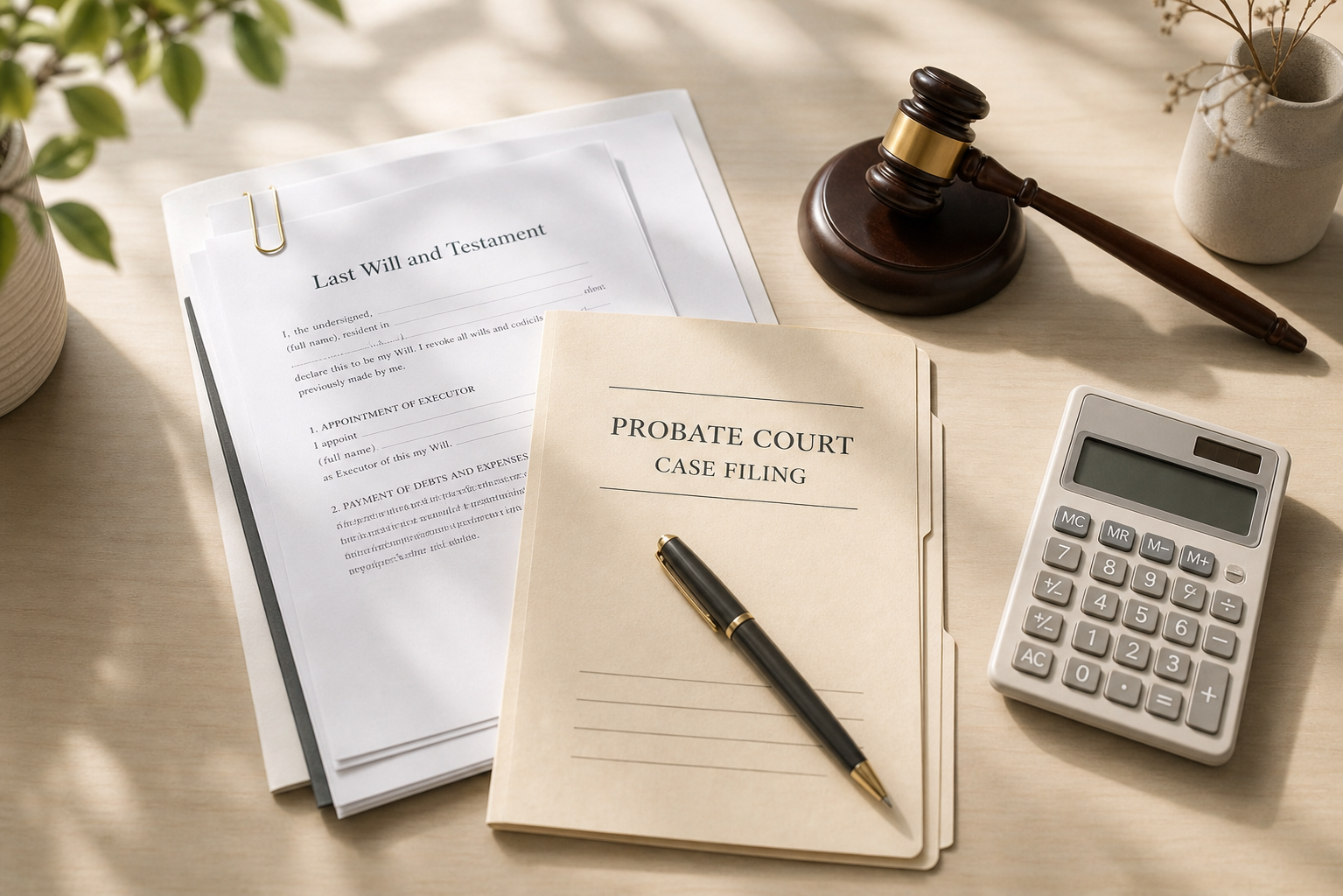
You're an executor, the will is in your hands, and you're seeing the word "testate" pop up everywhere. It just means your loved one passed with a valid will in place, but understanding what that actually unlocks, and what it doesn't, will help you avoid some real surprises once probate gets started.
Key Takeaways:
- Testate means your loved one left a valid will, giving you a clear legal mandate as executor to carry out its terms
- A will does not skip probate; the court must validate it and issue letters testamentary before you can act on any assets
- Without court appointment, you have no legal standing to transfer assets, close accounts, or pay creditors
- Intestate estates follow state law instead of your loved one's wishes; testate estates follow the will precisely
- Alix coordinates 150+ administrative tasks alongside a probate attorney who handles will validation and court filings
What is Testate?
Testate is a legal term meaning the person who passed left behind a valid will. The word comes from the Latin testatus, meaning "having made a will," and it shows up constantly in probate documents, court filings, and correspondence from attorneys.
When your loved one passes with a valid will, that will controls how assets get distributed. As the executor, you have a clear legal mandate: carry out the instructions in that document, subject to court oversight and applicable state law. Your authority flows directly from the will itself, which the probate court formally validates before you can act on it.
That court validation step is part of the broader probate process, and it shapes nearly every task in your executor duties from there. Dying testate gives you a starting point most estates need: a documented record of what your loved one wanted.
Testate vs. Intestate
The contrast between testate and intestate comes down to one document: the will.
When someone passes intestate, no valid will exists. That moves control away from your loved one's personal wishes and hands it to state intestacy laws, which determine who inherits what based on a fixed hierarchy of relatives. According to Cornell Law's Legal Information Institute, intestate succession laws vary by state and govern exactly that distribution. The court also appoints an administrator in place of a named executor, typically a surviving spouse or adult child, following the process for probate without a will.
As executor of a testate estate, your authority is grounded in the will. You have a document to point to, a set of instructions to follow, and a court that validates your role based on what your loved one wrote down.
| Testate | Intestate | |
|---|---|---|
| Will present? | Yes, valid will exists | No will, or will deemed invalid |
| Asset distribution | Per your loved one's documented wishes | Per state intestacy laws |
| Who manages the estate | Executor named in the will | Court-appointed administrator |
| Probate required? | Typically, yes | Typically, yes |
| Guiding document | The will | State statute |
One thing that table makes clear: probate is typically required either way. Testate status alone does not skip the court process. It just gives you a clearer foundation going into it.
Testate and the Probate Process
Most states require you to file the will with the probate court within a set window after death, commonly 30 to 90 days, though deadlines vary by jurisdiction. Missing that window does not void the will, but it can complicate your appointment as executor and delay every step that follows.
The probate court still needs to formally validate the will and issue your authority to act before you can do anything with estate assets. That process takes time. Most estates typically run 12 to 18 months, and a Trust & Will 2024 study found the national average probate timeline is 20 months.

Will Validation in Probate Court
The court reviews the will for proper signatures, required witnesses, and any signs of undue influence. Until it clears that review and formally appoints you, you have no legal authority to transfer assets, close accounts, or pay creditors. Your appointment is confirmed through a document called letters testamentary, which is what financial institutions and government agencies will ask to see before they deal with you. According to the American Bar Association's executor handbook, that legal authority flows from both the will itself and the court's formal appointment order, often with guidance from a probate attorney.
What a Testate Executor Is Authorized to Do
Once appointed, your authority covers the full scope of settling an estate: marshaling assets, notifying creditors, paying estate debts, filing tax returns, and distributing assets to beneficiaries according to the will's terms. Deviating from those terms requires court approval, and creditor claims must clear before any distributions go out. The ABA is direct on this point: executors carry personal liability if they distribute assets before the creditor-claim deadline expires.
Testate Estates and Related Legal Terms
Working through a testate estate means reading documents filled with terms that look interchangeable but carry distinct legal meanings. Here is a quick-reference breakdown of the vocabulary you will run into most.

| Term | Definition |
|---|---|
| Testator | The person who created and signed the will |
| Beneficiary | Any person or entity named to receive assets under the will |
| Legatee | A beneficiary who receives personal property or a cash bequest |
| Devisee | A beneficiary who receives real property (land or a home) |
| Personal representative | Broad term for the court-appointed executor or administrator |
| Letters testamentary | Court document granting the executor legal authority to act |
A few of these trip people up. Legatee and devisee are both beneficiaries, just specific ones. According to Cornell Law's Legal Information Institute, a testator must have testamentary capacity, meaning legal age and sound mind, at the time of signing for the will to hold up in court. If that capacity is challenged, the whole document can be contested.
Letters testamentary come up in nearly every task on your executor checklist. Banks, title companies, and government agencies all ask for them before they will deal with you. We have a full breakdown of what letters testamentary are and how beneficiaries and heirs differ, since those terms get conflated often. There is also a guide covering personal representative vs. executor if your state uses different terminology in its court filings.
Why Testate Matters in Estate Settlement
Being named executor of a testate estate sets your legal authority and your obligations in motion at the same time. Here is what that means in practice:
- Your authority flows from the will, but only after the probate court formally appoints you using it. Until that appointment happens, you have no legal standing to move assets, close accounts, or pay debts.
- Distribution follows the will, not state default rules. A testate estate sidesteps intestacy statutes entirely, meaning your loved one's actual wishes govern who receives what. Your job is to honor those terms precisely.
- Will validity can still be contested. Even a testate estate can face challenges if heirs believe the will was signed under undue influence or without proper testamentary capacity, and resolving such disputes can extend the probate timeline. If a will contest is filed, in most cases distributions may be delayed or halted until the dispute resolves.
- Probate is almost always still required. A will does not skip court. The probate process validates the will and issues letters testamentary before you can act, and it typically runs 12 to 18 months. Per a Trust & Will 2024 study, the national average is 20 months.
- The will determines your compensation and powers. Executor compensation, your discretionary authority, and any conditions on distribution are all spelled out in the will. Read it carefully before accepting the role.
The administrative work behind each of these points is substantial: tracking creditor claim windows, coordinating appraisals, handling title work, and setting up the estate account. If a will contest or any other court dispute over the estate is open, it needs to be fully resolved before Alix can begin; once it is, Alix coordinates that work alongside a probate attorney from its network. If you are ready to get moving, start your Alix onboarding.
Final Thoughts on Testate Estates and Executor Authority
Knowing the estate is testate tells you where your authority comes from and what document governs every distribution you make. The probate process still runs its course, and your job is to follow the will's terms precisely while it does. Start your Alix onboarding to work through the administrative side with people who know the process well.
FAQ
What does testate mean in probate?
Testate means the person who passed left behind a valid will. In probate, a testate estate gives you a documented record of your loved one's wishes and grounds your authority as executor, but the probate court still needs to validate the will and issue letters testamentary before you can act on any assets.
Does a testate estate skip probate?
No. Most executors assume a will bypasses court, but it does not. The probate court still reviews the will for proper signatures and witnesses, formally appoints you as executor, and issues letters testamentary, a process that typically runs 12 to 18 months. Per a Trust & Will 2024 study, the national average is 20 months.
Testate vs. intestate: what actually changes for the executor?
In a testate estate, your authority flows from the will and the court validates that document to confirm your role. In an intestate estate, no valid will exists, state intestacy laws control who inherits, and the court appoints an administrator instead of honoring a named executor. Either way, probate is typically required; testate status just gives you a clearer legal foundation going into it.
How do legatee, devisee, and beneficiary differ in a testate estate?
All three are people set to receive something under the will, but the terms are specific: a beneficiary is anyone named to receive assets, a legatee receives personal property or a cash bequest, and a devisee receives real property like land or a home. Knowing which term applies matters when you are reading court filings and distributing assets correctly.
Can a testate estate still face legal challenges after the will is filed?
Yes. Even with a valid will in place, heirs can file a will contest if they believe the document was signed under undue influence or without proper testamentary capacity. In most cases, distributions may be delayed or halted until that dispute resolves, which is one reason you should not distribute assets before the creditor-claim deadline expires regardless of how clear the will appears.

Related resources